Encyclopedia Anachronistica

Standard
Weapon
Middle East
Caliphates
Sword
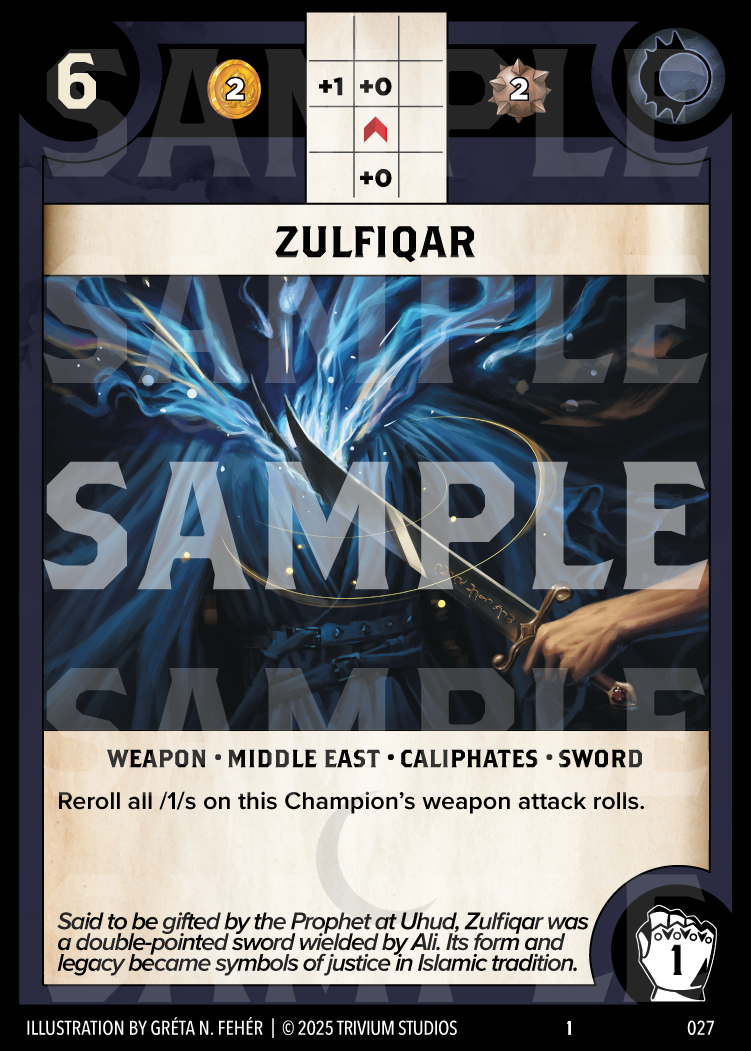
Reroll all /1/s on this Champion's weapon attack rolls.
Said to be gifted by the Prophet at Uhud, Zulfiqar was a double-pointed sword wielded by Ali. Its form and legacy became symbols of justice in Islamic tradition.
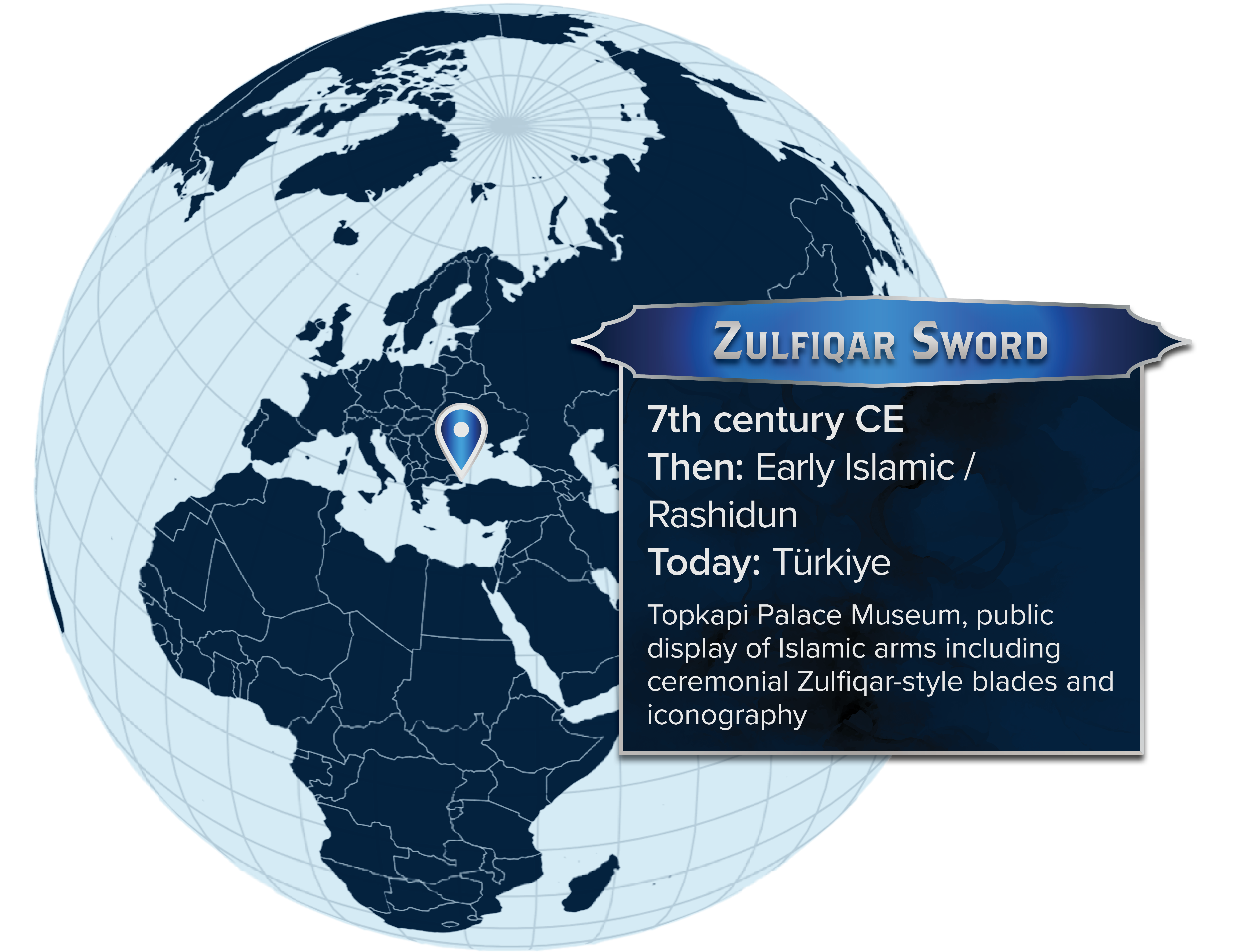
Zulfiqar is the most famous sword in Islamic history, but separating the historical steel from the layers of legend requires a bit of detective work. In the 7th century, Arabian swords weren't the curved scimitars we see in later movies; they were typically straight, double-edged blades designed for the brutal reality of close-quarters combat. Early historians like al-Tabari describe Ali as a powerhouse on the battlefield—fast, precise, and incredibly brave. While these accounts confirm he was a formidable fighter, they describe his skill rather than a supernatural weapon.
The name "Zulfiqar" first appears as a sword Muhammad reportedly gave to Ali, possibly taken as spoils after the Battle of Badr. The earliest sources treat it as a high-quality, valued weapon, but they don't mention anything unusual about its shape. However, as centuries passed, the sword took on a symbolic life of its own. By the 9th and 10th centuries, poets and storytellers began describing Zulfiqar with a distinctive forked or "split" tip. While there is no archaeological evidence that 7th-century warriors used forked blades—which would be structurally impractical in a real fight—this design became a massive hit in medieval art and manuscripts.
For many, especially in Shi‘a communities, the split-tip Zulfiqar became a powerful shorthand for justice, bravery, and divine support. This is where the famous phrase "There is no sword but Zulfiqar, and no hero but Ali" comes from. Even though historians note this slogan and the forked design appeared centuries after Ali’s death, they are essential to understanding his legacy. They show that Ali wasn't just remembered as a soldier, but as a "superhero" of integrity who fought for what was right. The legend grew because the man himself was so impressive.
Today, Zulfiqar is everywhere—from museum exhibits and intricate calligraphy to cultural symbols across the Islamic world. For students, it’s a perfect example of how a practical battlefield tool can evolve into a lasting emblem of identity. Whether you look at it as a straight steel blade used by a skilled 7th-century commander or as the iconic forked symbol of justice, Zulfiqar helps us understand the values of courage and strength that Ali ibn Abi Talib left behind.