Encyclopedia Anachronistica

Standard
Armor
Europe
Russian
Heavy
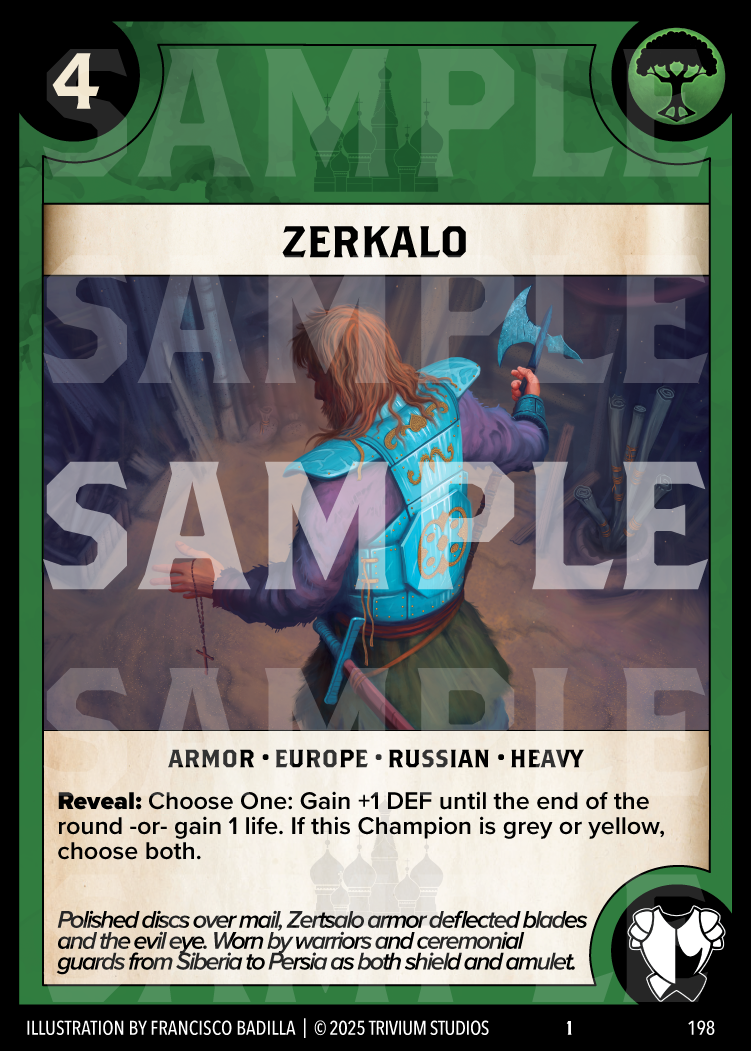
Reveal: Choose One: Gain +1 DEF until the end of the round -or- gain 1 life. If this Champion is grey or yellow, choose both.
Polished discs over mail, Zertsalo armor deflected blades and the evil eye. Worn by warriors and ceremonial guards from Siberia to Persia as both shield and amulet.
Zertsalo, or "mirror armor," was one of the most eye-catching types of protection used in medieval Rus’. It consisted of a large, circular or oval metal plate—polished until it shone like a mirror—mounted directly over a coat of chainmail or lamellar armor. Additional plates were often strapped to the chest, back, and shoulders, creating a reinforced shell over the flexible mail. This polished surface wasn’t just for vanity; the smooth, rounded shape helped deflect arrows and sword strikes, causing them to slide off harmlessly rather than digging into the wearer’s body.
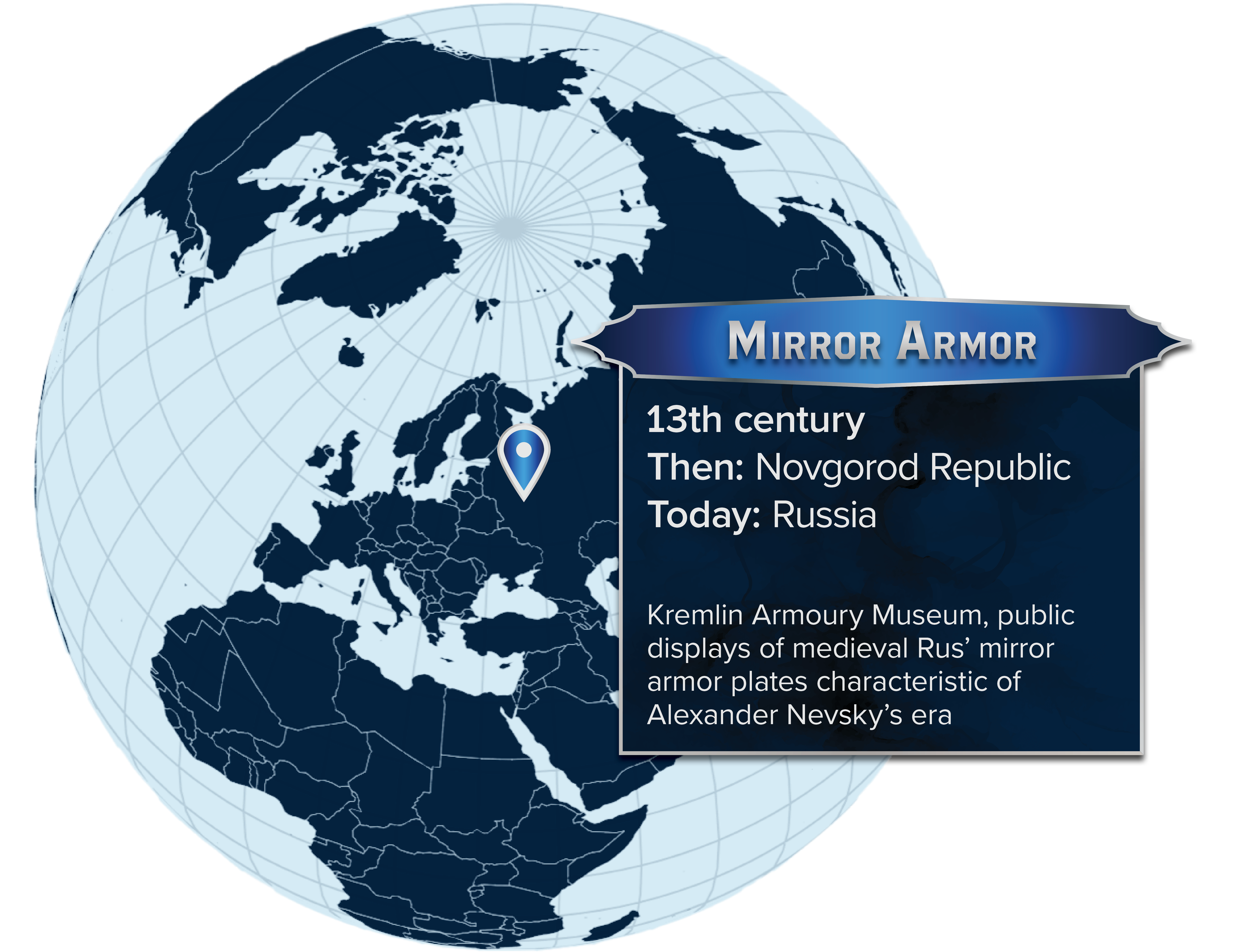
This style of armor was a high-tech "mashup" of steppe and Persian influences that had spread across Eastern Europe by the 13th century. By Alexander Nevsky’s time, it was the go-to gear for wealthy warriors and members of his druzhina (his elite inner circle of guards). The mirror plate provided a double layer of defense for vital organs while keeping the kit light enough for fast movement. This was a literal lifesaver in the famous battles Nevsky fought on icy rivers and marshy ground, where a soldier in heavy Western-style plate armor might sink or lose their footing.
Zertsalo armor reflects the multicultural world Nevsky navigated. Because cities like Novgorod traded with the steppe, Byzantium, and Northern Europe, their armorers borrowed the best survival tricks from every culture they met. The result was a look that was uniquely Rus’: gleaming, practical, and highly mobile. Legend even says that during the Battle on the Ice, the sun reflecting off the Russian mirror armor was so bright it blinded their enemies, though historians credit the victory more to Nevsky’s brilliant tactics than the glare.
Today, zertsalo armor matters because it shows how medieval warriors combined art with extreme practicality. Surviving examples in the Kremlin Armoury prove that these soldiers weren't just "knights in shining armor," they were specialists who used a blend of global technologies to survive on one of the toughest frontiers in history. The gleaming central plate remains one of the most recognizable symbols of the era, linking us directly to the soldiers who stood their ground under Nevsky’s banner.