Encyclopedia Anachronistica

Standard
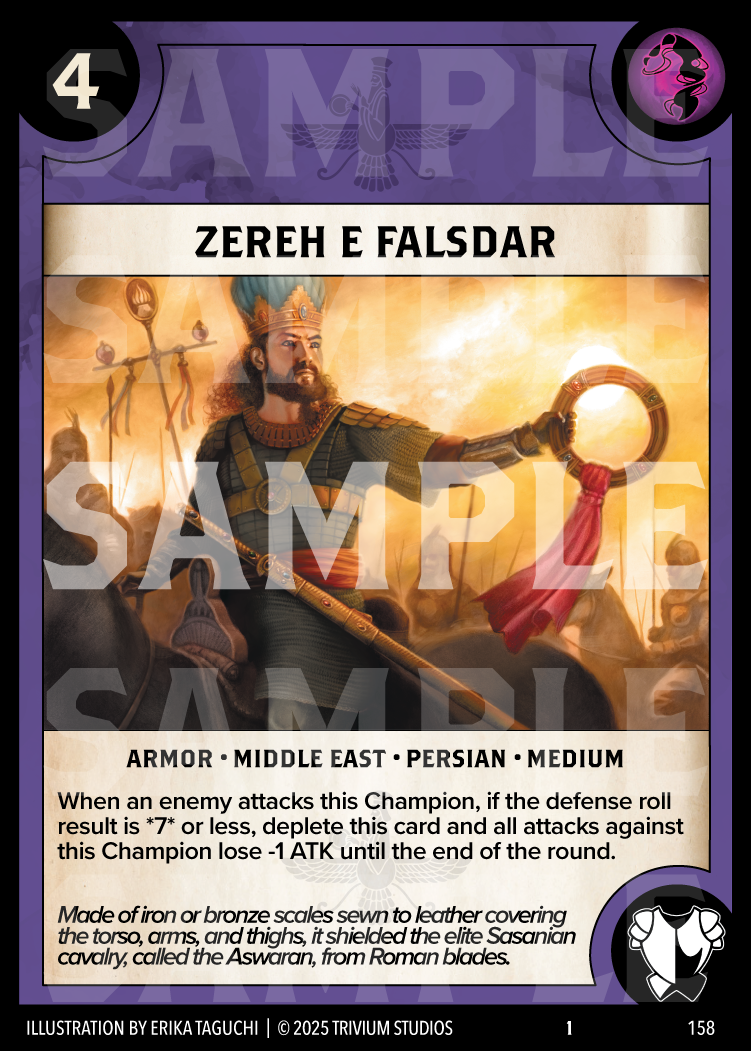
Armor
Middle East
Persian
Medium
When an enemy attacks this Champion, if the defense roll result is *7* or less, deplete this card and all attacks against this Champion lose -1 ATK until the end of the round.
Made of iron or bronze scales sewn to leather covering the torso, arms, and thighs, it shielded the elite Sasanian cavalry, called the Aswaran, from Roman blades.
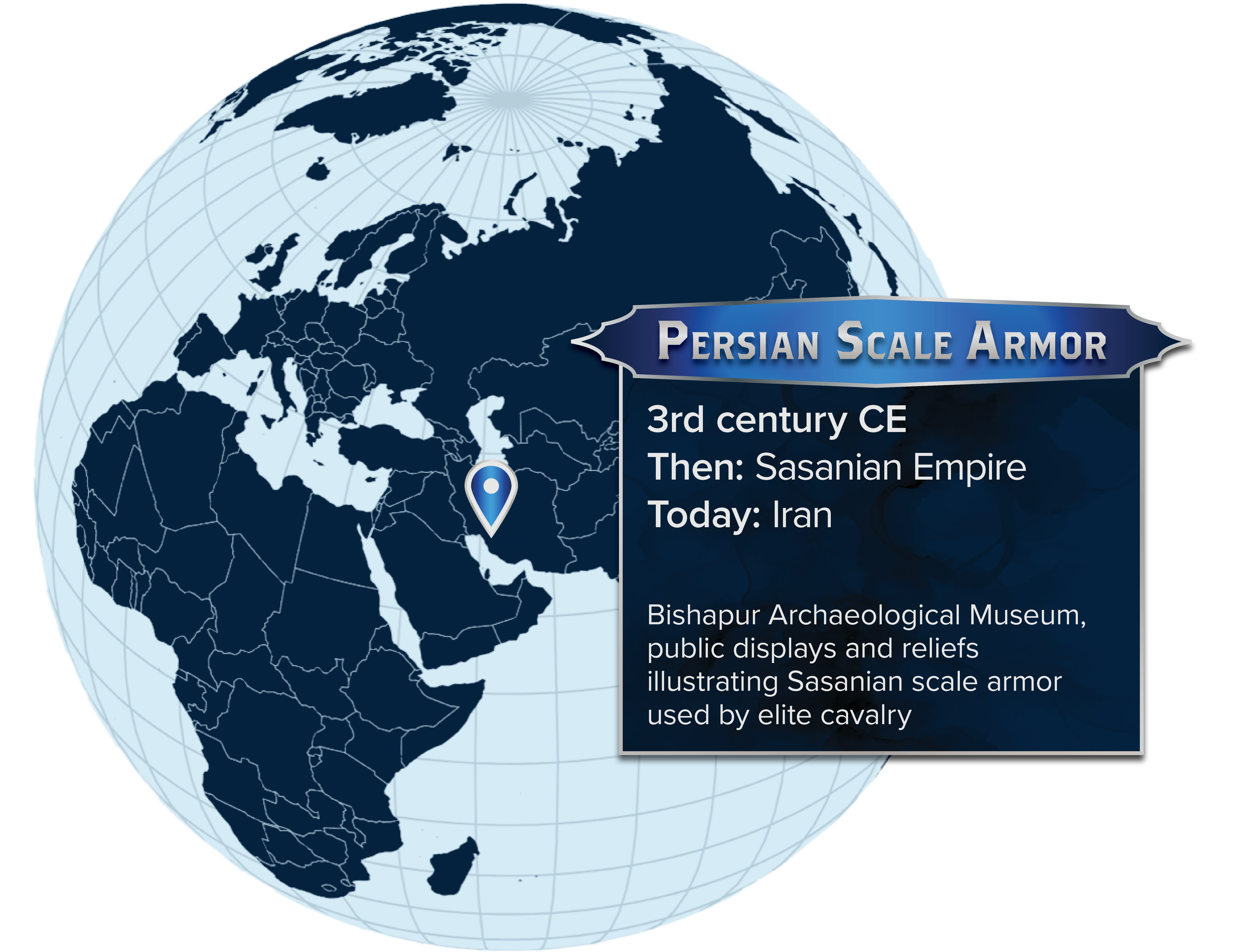
Sasanian scale armor—known as the zereh-e falsdar—shimmered like a metallic hide, a terrifying sight for any enemy facing the disciplined ranks of the New Persian Empire. These suits were constructed from hundreds of small iron or bronze plates sewn onto a backing of leather or heavy cloth, overlapping like the scales of a fish. This meticulous design offered a revolutionary balance for the era: it provided a flexible shell that moved with the warrior’s body while offering formidable resistance against arrows, blades, and the crushing impact of a Roman spear.
The engineering behind the armor was as impressive as its protection. Each individual scale was punched, shaped, and carefully lacquered to resist the rust that could easily ruin a soldier’s kit in the humid river valleys of Mesopotamia. For the elite heavy cavalry—the Cataphracts—this protection was total. Not only were the riders encased from neck to toe, but their horses were often armored in matching scales, creating a unified "tank" of the ancient world. Reliefs at Taq-e Bostan immortalize these riders, showing them as iron-clad giants capable of withstanding the brutal collisions of kontos-to-shield combat.
Shapur I turned this "iron-clad" advantage into a nightmare for the Roman Empire. During his mid-3rd century campaigns, Roman historians described the Sasanian cavalry as a wall of gleaming metal that seemed almost supernatural as it advanced under the desert sun. This armor allowed Shapur’s troops to close the distance through clouds of Roman arrows and deliver devastating, game-changing charges. It was this technological edge in protection that helped Shapur achieve the unthinkable: the capture and humiliation of the Roman Emperor Valerian.
Today, fragments of this armor in museums and archaeological reports offer a glimpse into the sophisticated craftsmanship of late-antique Iran. The zereh-e falsdar stands as a reminder that the Sasanians were masters of both metallurgy and tactical engineering. Their ability to blend mobility with near-impenetrable defense didn't just win battles for Shapur; it set the gold standard for heavy cavalry that would influence military traditions from Byzantium to the knights of Medieval Europe.