Encyclopedia Anachronistica

Standard
Armor
Europe
Russian
Light
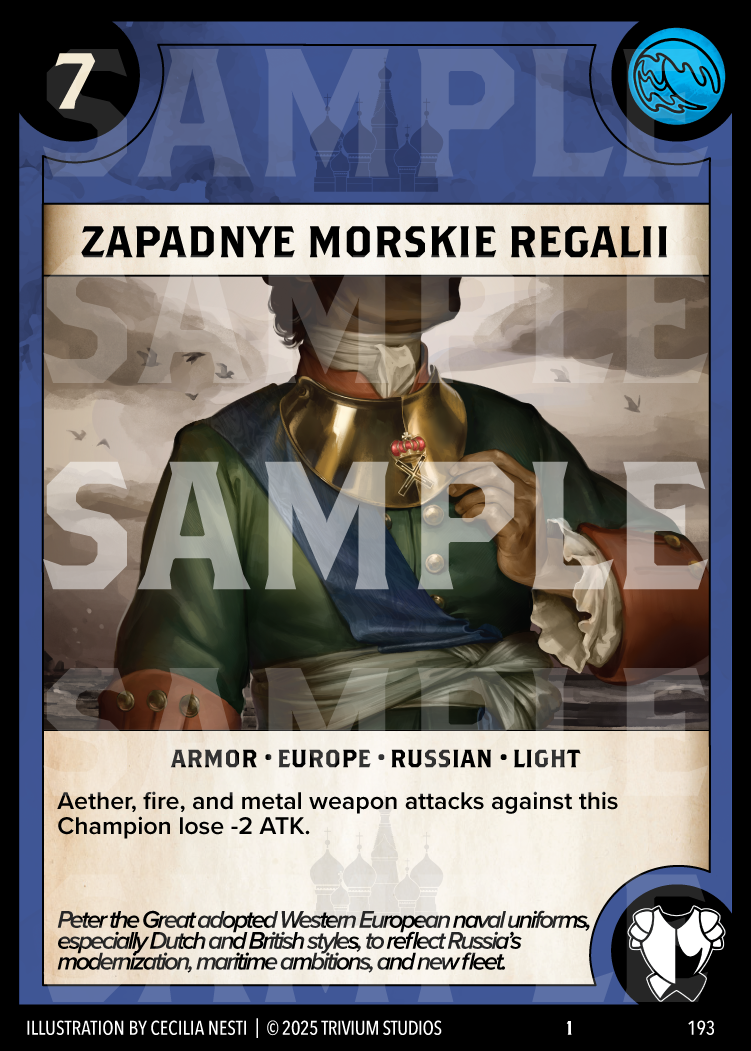
Aether, fire, and metal weapon attacks against this Champion lose -2 ATK.
Peter the Great adopted Western European naval uniforms, especially Dutch and British styles, to reflect Russia's modernization, maritime ambitions, and new fleet.
Before Peter the Great, Russia was effectively a landlocked giant with almost no way to reach the open ocean. By the time he was finished, he had conjured one of the most powerful fleets in Europe out of thin air. His Western Naval Regalia—the sharp uniforms, brass badges, and crisp symbols modeled on Dutch and English designs—tell the story of how he turned a nation of land-dwellers into a seafaring superpower. To Peter, a navy wasn't just a collection of boats; it was the ultimate sign of a "grown-up" modern empire, and he was obsessed with every detail of its creation.
Peter didn’t just want ships; he wanted the prestige and discipline that came with them. He spent years acting like a sponge, soaking up maritime secrets from the British and the Dutch. He built massive shipyards from the swampy Baltic coast to the riverbanks of the Don, hiring foreign shipwrights and forcing Russian students to travel abroad to learn how to read the stars and handle a rudder. To pull this brand-new force together, he introduced uniforms that looked nothing like traditional Russian robes. He chose short blue coats, sturdy brass buttons, and a system of ranks that mirrored the British Royal Navy. For a Russian sailor, putting on this new "Western" gear was a signal that they were part of a global elite, leaving the old, isolated ways of Moscow behind.
These uniforms served as a massive "rebranding" for Russia. Every sailor in a standardized coat was a walking advertisement for Peter’s vision of a disciplined, European-style nation. Because Russia had almost no maritime history, these clothes helped create a "brotherhood of the sea" for men who had never seen the ocean before. The regalia turned a disorganized group of recruits into a unified machine that could suddenly hold its own against the veteran navies of Europe.
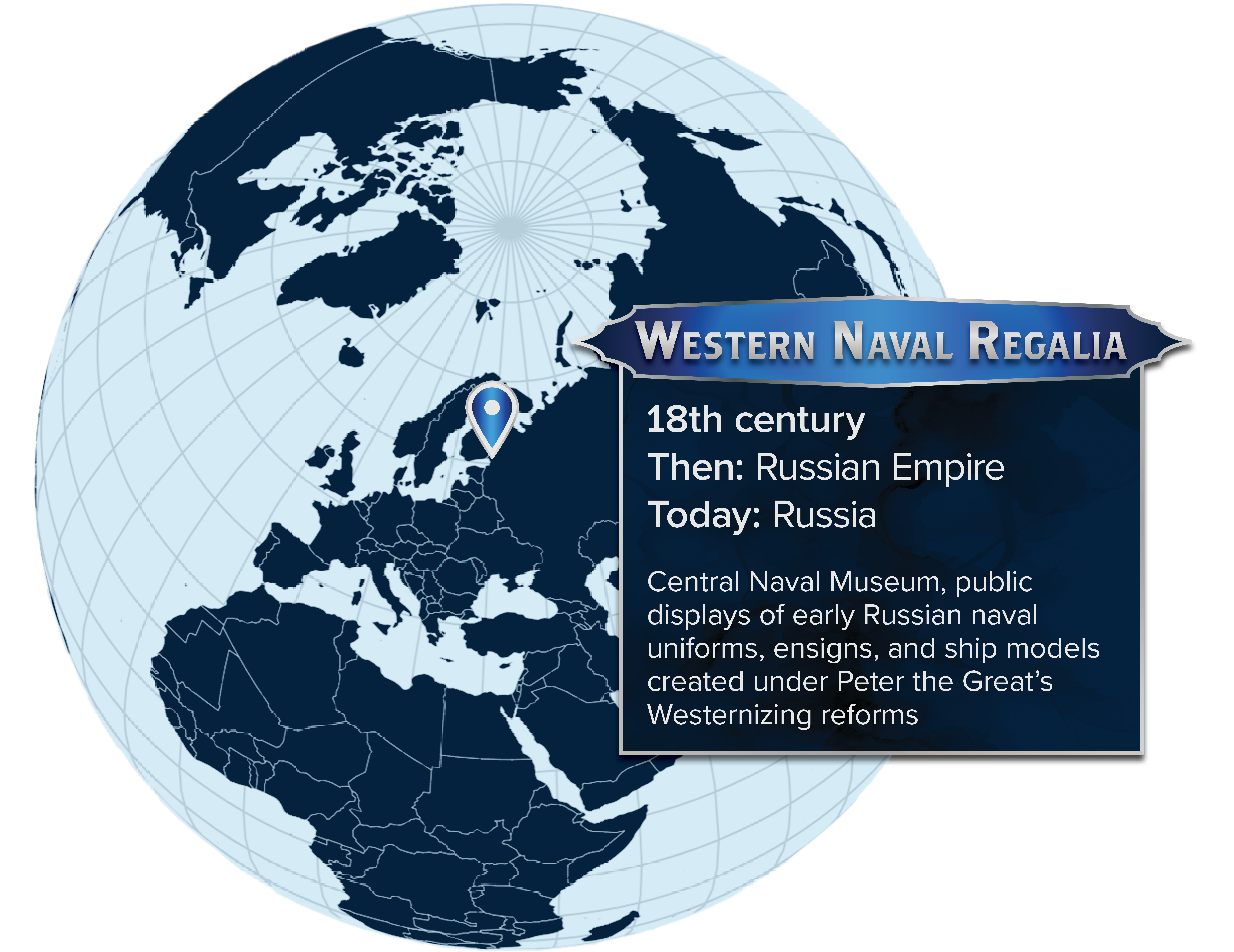
Today, you can find these original naval coats, officer badges, and the first Russian sea flags in the Central Naval Museum in St. Petersburg. They are surprisingly practical, built for the freezing winds of the North, but they still carry the elegance Peter admired in the West. The modern Russian Navy still traces its "DNA" back to these reforms, and if you look closely at their modern uniforms, you can still see the echoes of the blue-and-white designs Peter introduced over 300 years ago. It is a reminder that there are times, when, to change the way a country acts, you first have to change the way it looks.