Encyclopedia Anachronistica

Standard
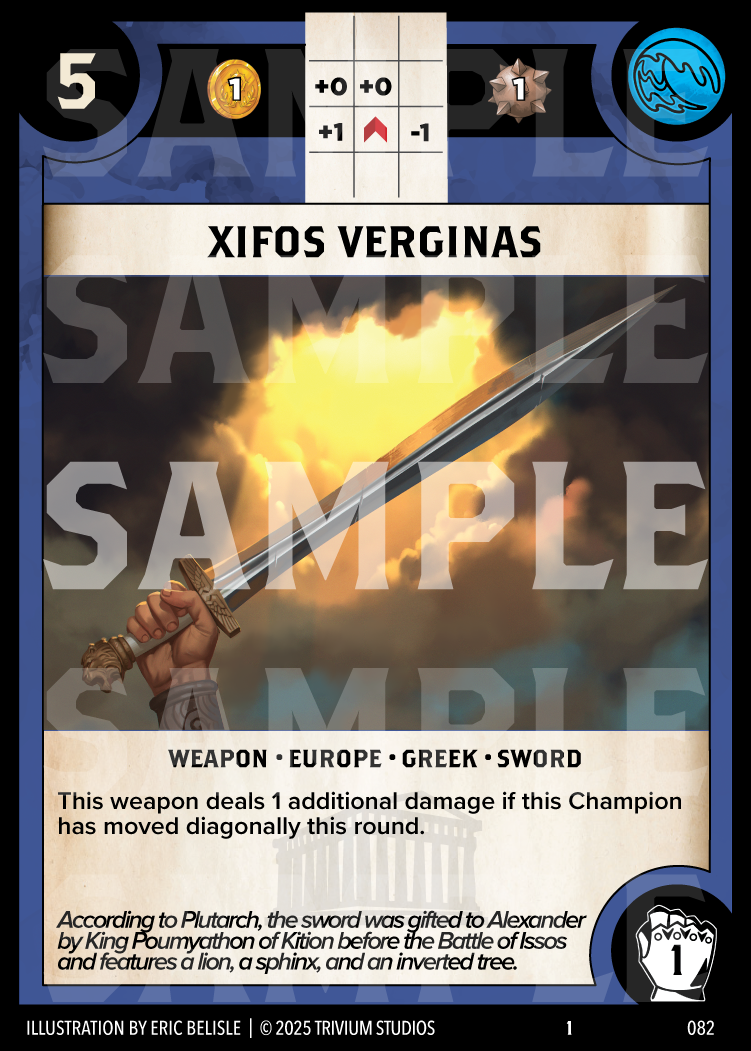
Weapon
Europe
Greek
Sword
This weapon deals 1 additional damage if this Champion has moved diagonally this round.
According to Plutarch, the sword was gifted to Alexander by King Poumyathon of Kition before the Battle of Issos and features a lion, a sphinx, and an inverted tree.
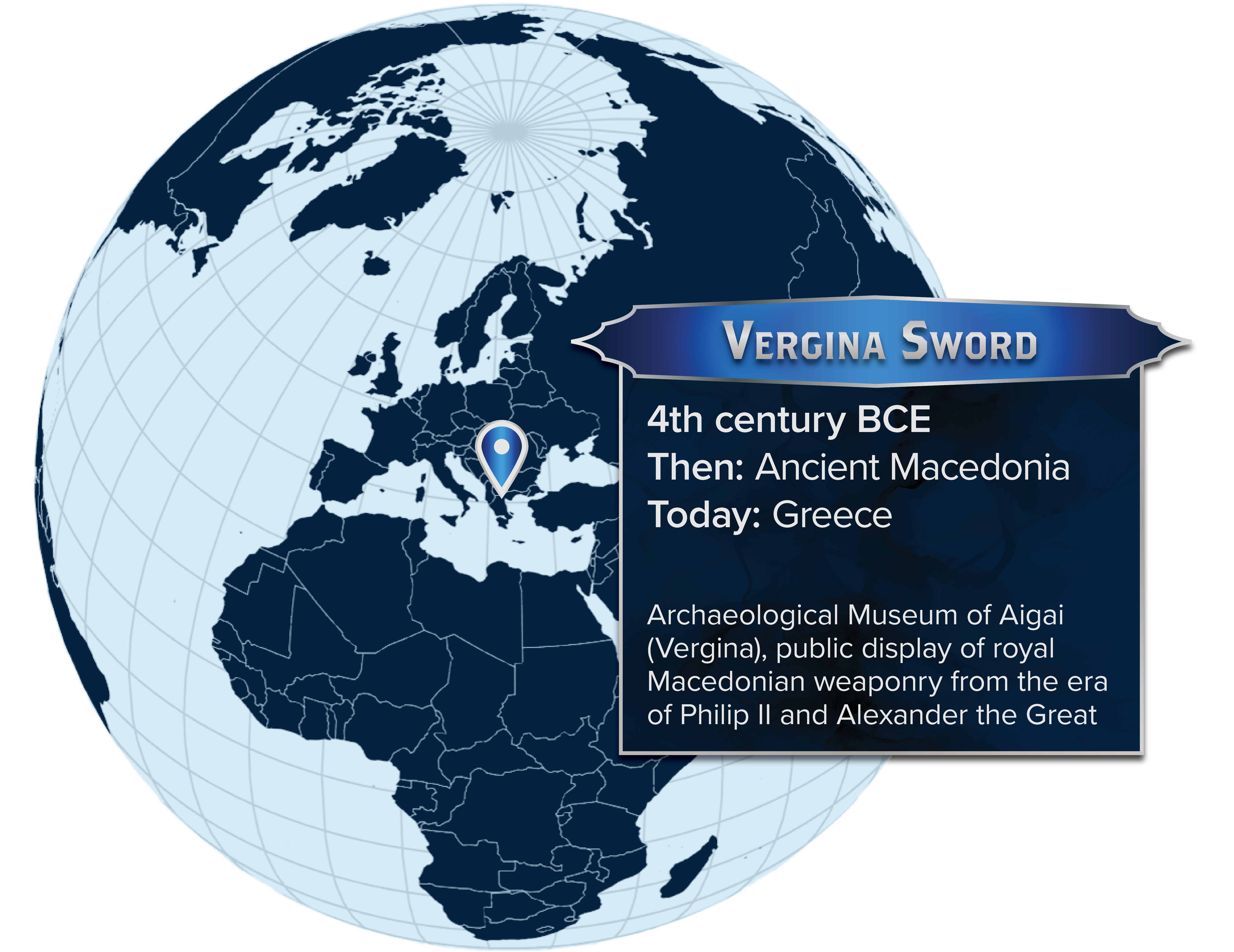
The sword of Vergina is a masterpiece of ancient "power-dressing," discovered in the royal tombs of Aigai, the ancient capital of Macedonia. When archaeologists opened these tombs in the late 1970s, they found a treasure trove of gold and weapons that had been buried for over 2,300 years. Among the most stunning finds was a sword decorated with gold, which tells a story of international fashion and royal status. Its unique style shows that the Macedonian kings weren't just warriors; they were sophisticated leaders who traded ideas and art with cultures across the Mediterranean, from Cyprus to the coast of Phoenicia.
This wasn't a standard-issue weapon used by a common soldier. The sword is covered in royal symbols like lions and sphinxes, along with intricate tree and plant designs. In the ancient world, these weren't just decorations—they were "icons of power" borrowed from the Near East to show that the owner was a king who protected his people and maintained order. The craftsmanship is so delicate that historians believe it was a prestige object, meant to be worn at royal ceremonies or diplomatic meetings to signal the wearer's elite status.
Ancient stories often tell us that Alexander the Great received exotic, expensive weapons as gifts from foreign rulers. One famous account describes a Cypriot king presenting Alexander with a beautifully adorned sword just before his great campaigns began. While we can't prove this specific sword belonged to Alexander, it fits perfectly into that world of high-stakes "gift diplomacy," where kings exchanged weapons like modern world leaders might exchange official gifts. Whether it belonged to Alexander, his father Philip II, or his half-brother Philip III, it was clearly a weapon meant for a man at the very top of the social ladder.
The sword was found surrounded by incredible wealth, including solid gold boxes (larnakes) and royal crowns. The entire tomb serves as a time capsule of the Macedonian court's ceremonial culture. Today, you can see this sword at the Museum of the Royal Tombs of Aigai, a UNESCO World Heritage Site. It stands as a reminder that the world Alexander inherited was already a "cosmopolitan" place where Greek and Eastern styles were blending together, creating a new, international look that Alexander would eventually spread across his entire empire.