Encyclopedia Anachronistica

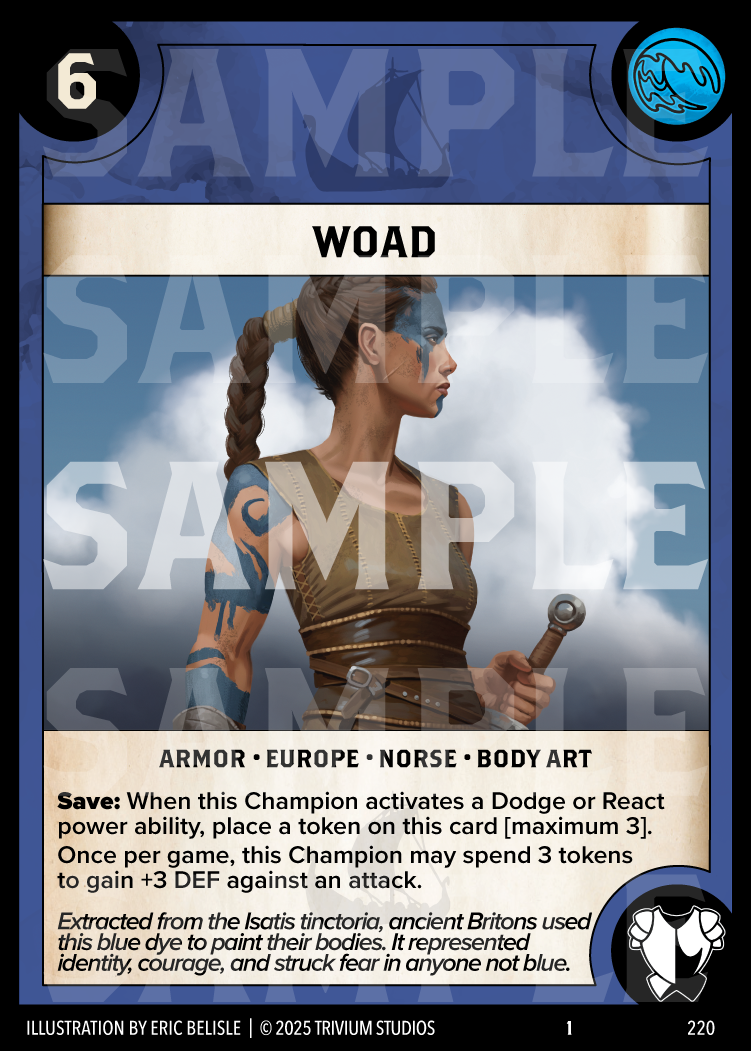
Chrono
Armor
Europe
Norse
Body Art
Save: When this Champion activates a Dodge or React power ability, place a token on this card [maximum 3]. Once per game, this Champion may spend 3 tokens to gain +3 DEF against an attack.
Extracted from the Isatis tinctoria, ancient Britons used this blue dye to paint their bodies. It represented identity, courage, and struck fear in anyone not blue.
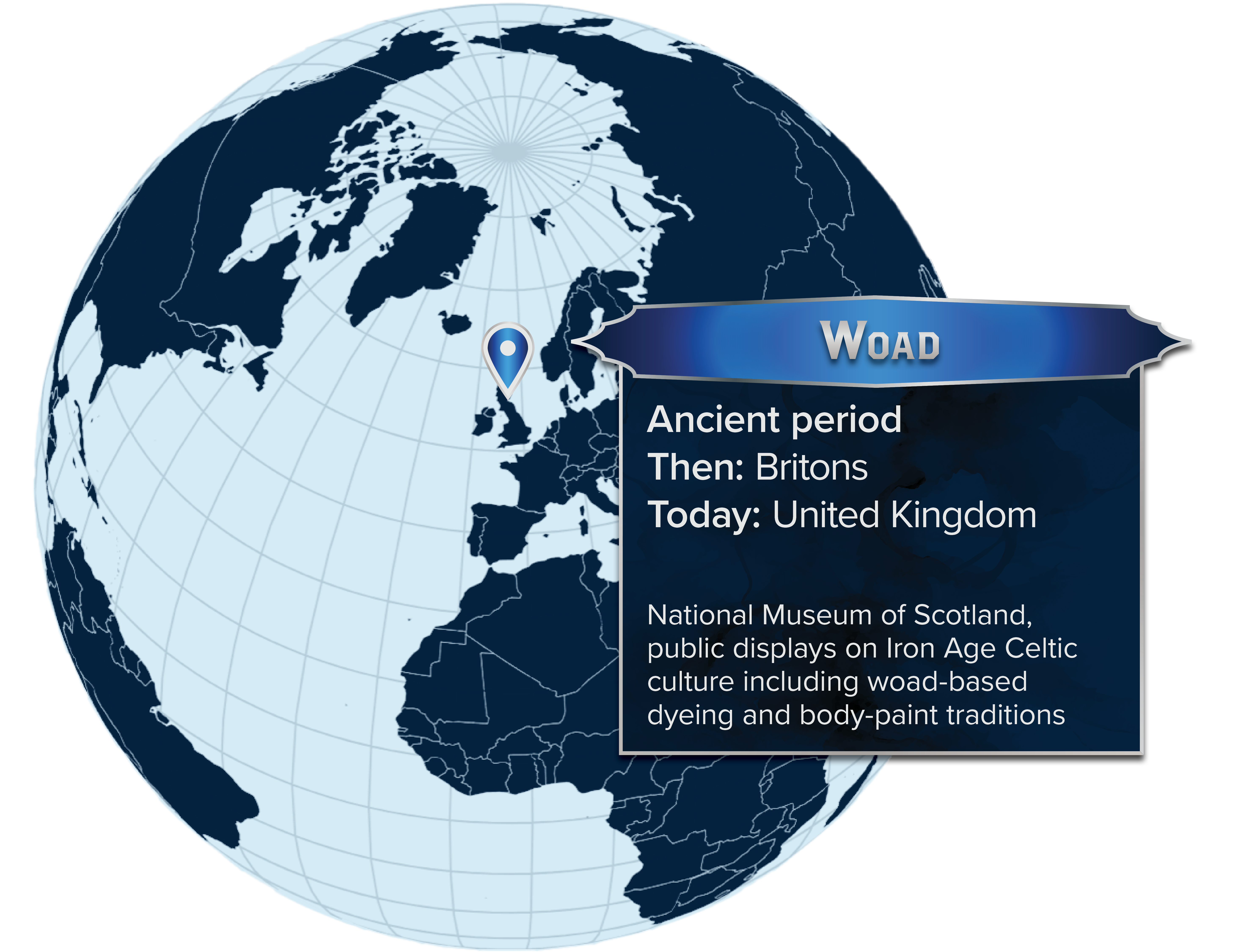
For centuries, the image of the "blue-painted warrior" has dominated our vision of ancient Britain. At the center of this legend is woad (Isatis tinctoria), a plant that produces a blue pigment through a laborious fermentation process. While archaeological evidence confirms that woad was a vital textile dye from the Iron Age through the Middle Ages, its reputation as a terrifying "war paint" rests on a shaky foundation of mistranslations, Victorian romanticism, and modern cinematic imagination.
The myth began with a single ambiguous word from Julius Caesar. During his invasion of Britain, he noted that the locals stained themselves with vitrum—a Latin term meaning "glass" or "glassy blue-green." Later scholars jumped to the conclusion that vitrum must mean woad, but Caesar never actually named the plant. Furthermore, he only observed tribes in the southeast; he never reached the northern peoples, such as the Picts, who are most famously associated with the blue paint in modern lore. To date, no archaeological residue of woad has ever been found on human remains, ritual tools, or skin-marking kits from Iron Age Britain.
From a practical standpoint, woad is actually a terrible candidate for body art. The dye requires a foul-smelling fermentation process and, in its paste form, can be a caustic irritant that burns the skin. Experimental archaeologists have found that instead of a brilliant, electric blue, woad applied to the skin produces a weak, muddy greenish tint that rubs off almost immediately. It is far more likely that ancient Britons used mineral-based pigments like copper, iron oxides, or charcoal—substances that were easier to prepare and much more durable in a damp, cold climate.
Despite these facts, woad has become a "visual shorthand" for "ancient and wild" in pop culture. This is most obvious in modern movies like Braveheart, where 13th-century Scots are famously shown in blue face paint—a historical impossibility for that era. Even more confusingly, films often project woad onto Vikings, who never used it. Because woad has become a cinematic trope for "barbarian" ferocity, it is frequently slapped onto any European warrior from the past, regardless of whether they were from 50 BCE or 900 CE.
Today, woad serves as a fascinating example of how a single sentence from an ancient general can evolve into a powerful cultural myth. While the real history of woad is as a valuable trade commodity and textile dye, its legendary role as a warrior’s pigment remains a product of the screen rather than the soil.