Encyclopedia Anachronistica

Standard
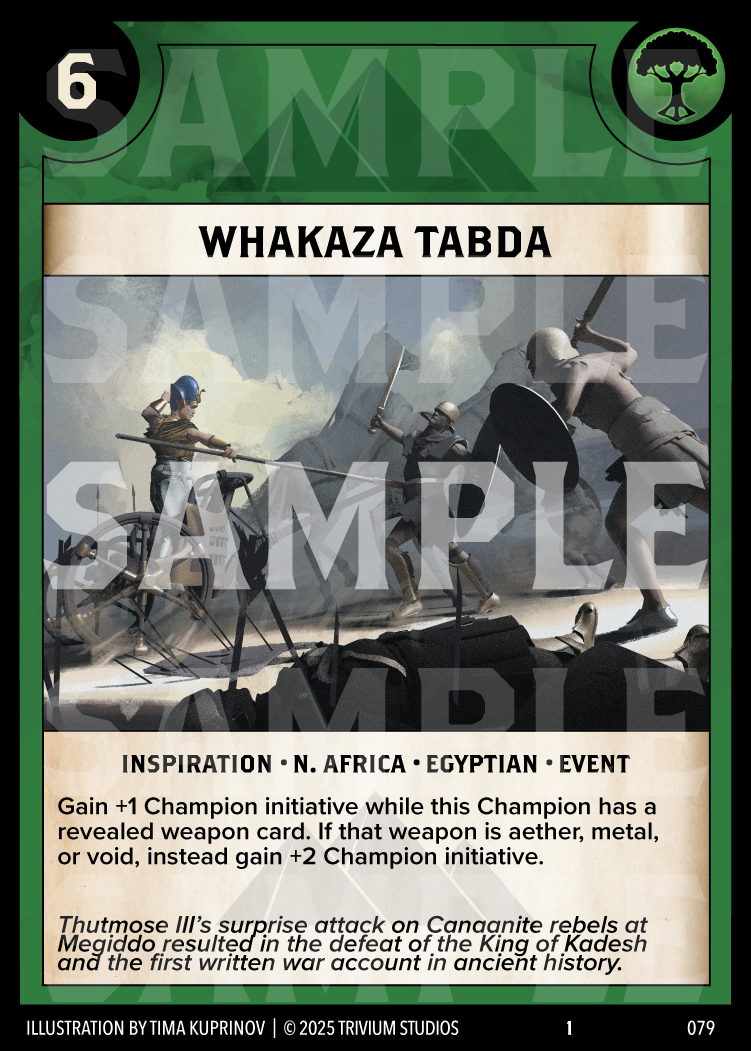
Inspiration
N. Africa
Egyptian
Event
Gain +1 Champion initiative while this Champion has a revealed weapon card. If that weapon is aether, metal, or void, instead gain +2 Champion initiative.
Thutmose III's surprise attack on Canaanite rebels at Megiddo resulted in the defeat of the King of Kadesh and the first written war account in ancient history.
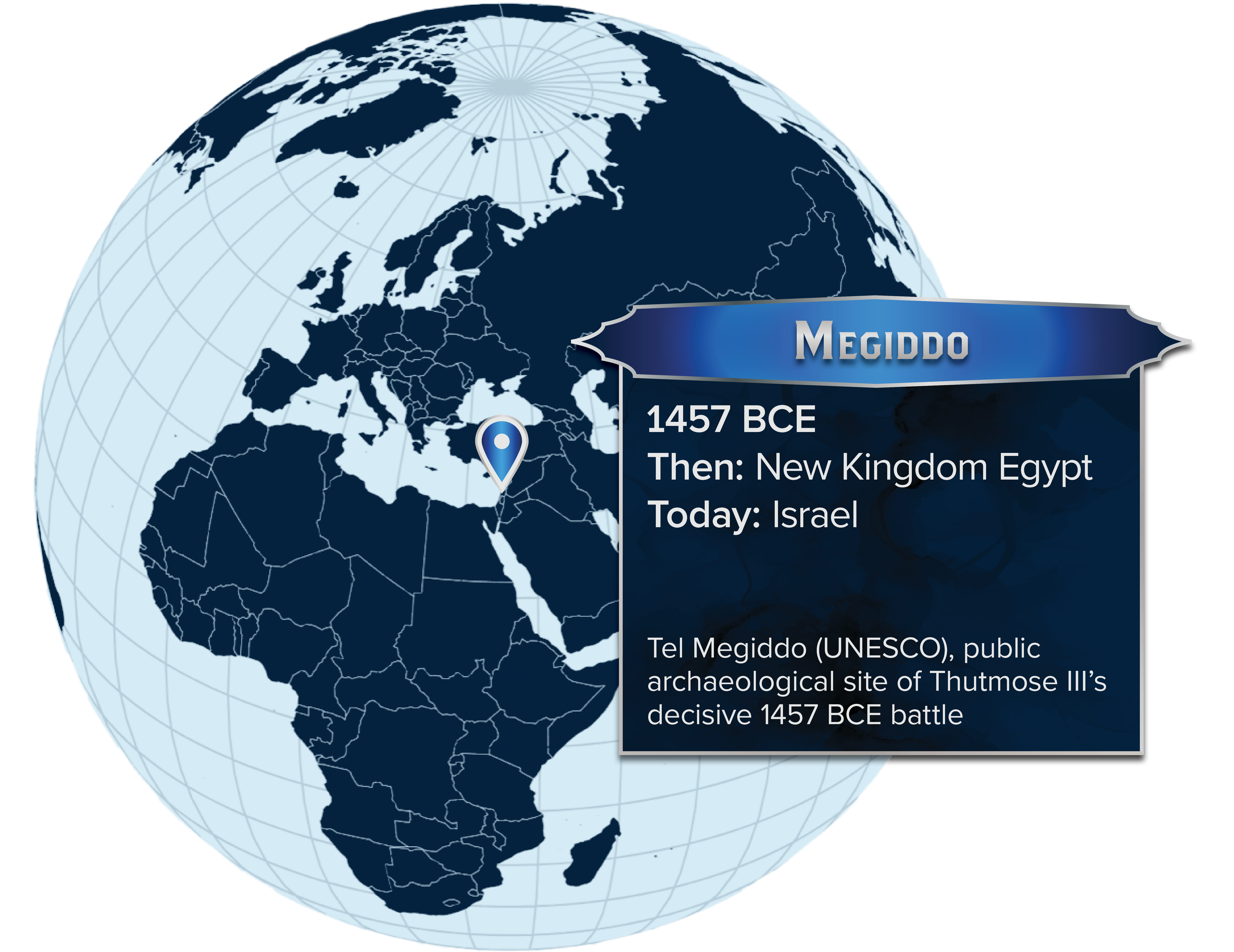
The Battle of Megiddo is the starting point for recorded military history. While humans had been fighting wars for thousands of years, this clash in 1457 BCE was the first time someone wrote down the "who, what, where, and why" with professional detail. Thutmose III wanted his victory to be immortal, so he had the story carved into the walls of the Temple of Amun at Karnak. Known as the Annals of Thutmose III, these inscriptions act like a modern military log, detailing everything from the specific number of captured horses to the exact route the army marched.
The battle was triggered when a group of Canaanite city-states, led by the King of Kadesh, rebelled against Egyptian influence. Thutmose III reacted with a move that would make a modern general nervous. To reach the enemy, he had three choices: two easy, wide roads or one incredibly narrow mountain pass called Aruna. His generals begged him to take the safe route, but Thutmose III gambled that the rebels wouldn't expect him to come through the narrow pass in single file. He was right. The Egyptian army emerged from the mountains directly in front of the surprised rebel camp, forcing them to flee behind the walls of Megiddo.
The victory wasn't instant. After the initial chaos, the Egyptians had to surround the city for a months-long siege. When Megiddo finally surrendered, Thutmose III didn't just take the city; he took an inventory. The Annals record the capture of 924 chariots, 2,238 horses, and even the royal armor of the King of Kadesh. This level of accounting shows that the Egyptian 18th Dynasty wasn't just a group of warriors, but a highly organized government that treated war as a massive, bureaucratic operation.
This battle established Thutmose III as one of history’s greatest tactical minds and turned Egypt into a true international empire. By securing Megiddo, he controlled the main trade routes between Egypt, Mesopotamia, and the Mediterranean. The site itself, Tel Megiddo, became so famous for its constant warfare over the centuries that its name in Hebrew, "Har Megiddo," is the origin of the word "Armageddon."
Today, students study Megiddo to see how geography and psychology win wars. The site remains one of the most excavated places in the world, revealing layers of history from the Bronze Age to the biblical era. It serves as a reminder that a battle only becomes "history" when someone has the foresight to write it down.