Encyclopedia Anachronistica

Standard
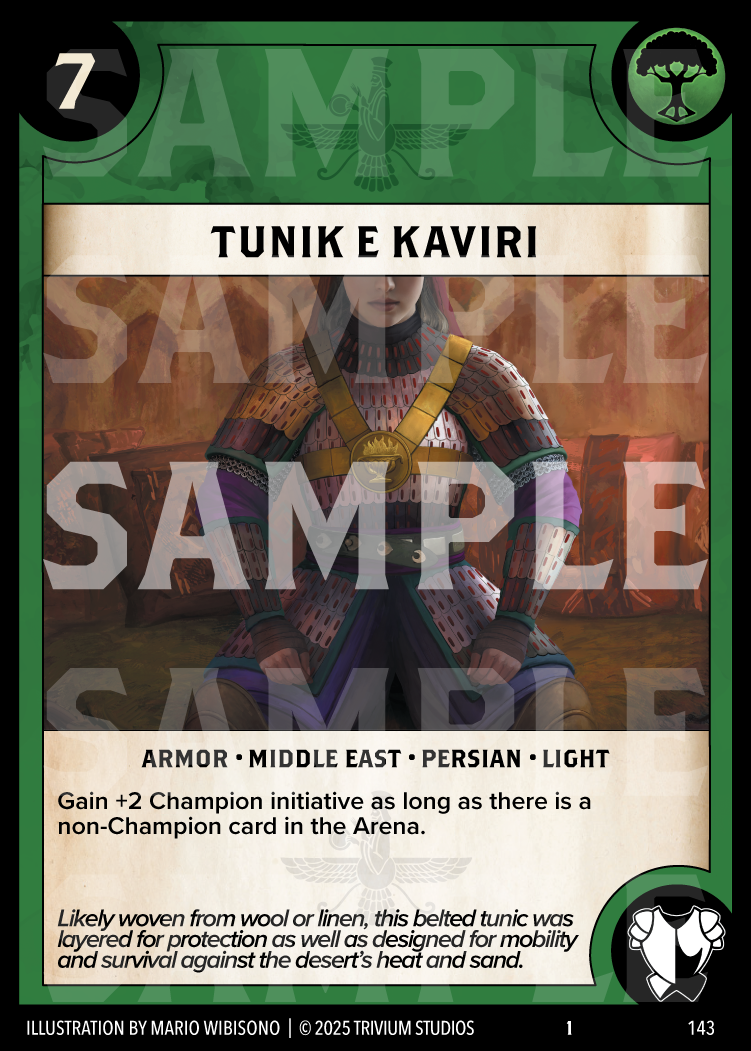
Armor
Middle East
Persian
Light
Gain +2 Champion initiative as long as there is a non-Champion card in the Arena.
Likely woven from wool or linen, this belted tunic was layered for protection as well as designed for mobility and survival against the desert's heat and sand.
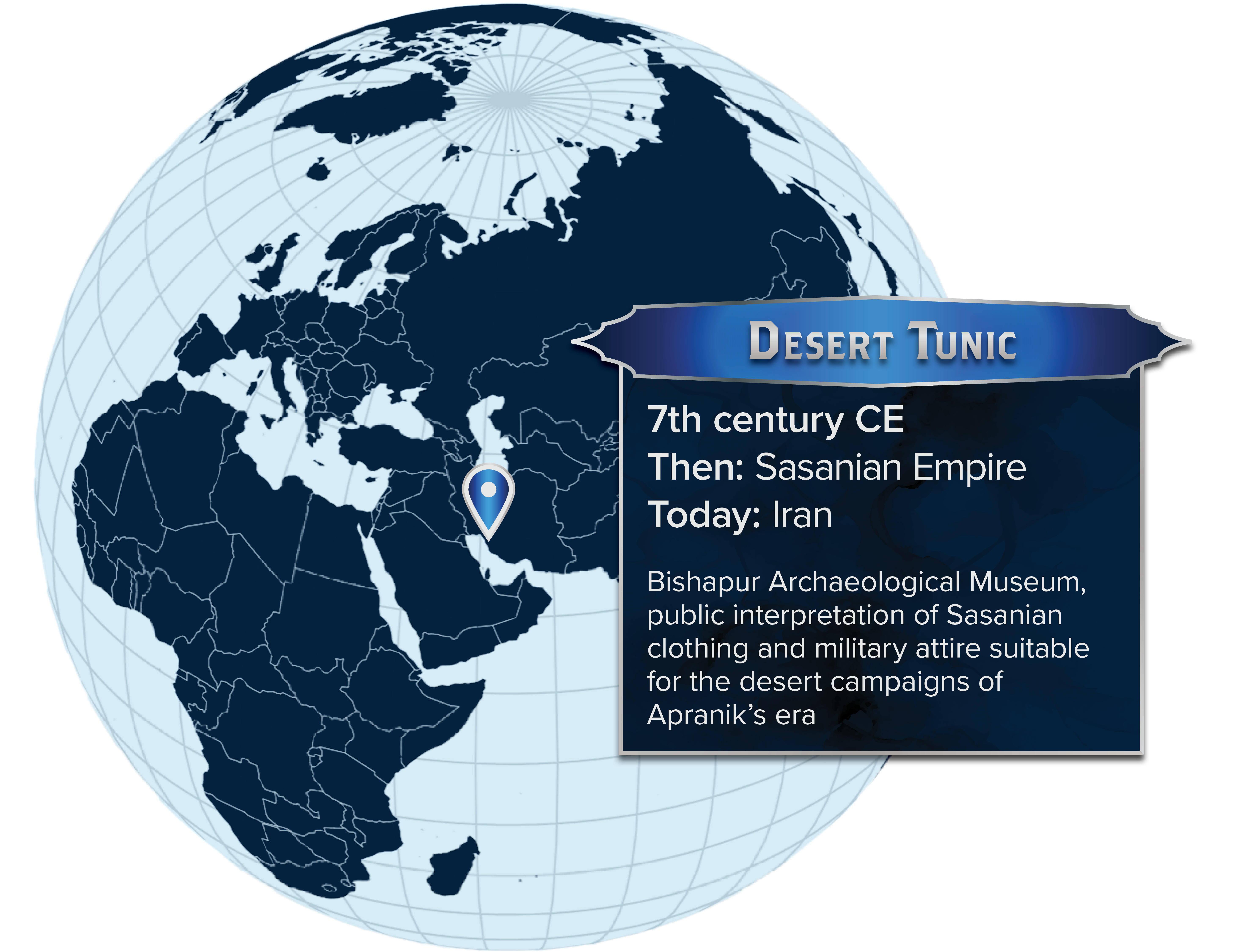
The tunik-e kaviri—the "desert tunic"—was the essential base layer for survival in the blistering heat of the Iranian plateau. Light, breathable, and built for a life in motion, it was typically crafted from linen or finely woven wool. It fell to the knees with side slits that allowed a rider to mount a horse without being constricted by fabric. Long sleeves were a necessity, not for warmth, but to shield the skin from the relentless sun and abrasive sand. When cinched with a heavy leather belt, it transformed from a simple garment into a tactical platform, capable of carrying pouches, tools, or the weight of a short sword.
In the final, desperate years of the Sasanian Empire, this tunic was the "uniform" of the resistance. For a fighter like Apranik, who led guerrilla campaigns through rugged terrain, the garment’s simplicity was its greatest strength. Its neutral tones—the dusty tans, creams, and sun-faded reds—acted as a primitive form of camouflage against the rock and sand. Unlike the heavy, ornate robes of the central court in Ctesiphon, the desert tunic was about utility; it was easy to wash, quick to dry, and could comfortably fit under a leather brigandine or a coat of mail when it was time to charge.
The tunic also tells a story of the Sasanian frontier as a melting pot. You could find similar styles from the Caucasus to the Arabian Peninsula, proving that in the desert, the environment dictated fashion more than any royal decree. Soldiers and rebels alike needed gear that wouldn’t trap heat or weigh them down during a rapid retreat into the mountains. It was the clothing of a mobile, adaptable force that valued survival over ceremony.
Today, historical reconstructions and museum displays use the tunik-e kaviri to show the more "human" side of Sasanian warfare. It serves as a reminder that the empire wasn’t just defended by iron-clad knights, but by people in simple linen tunics who used the land and their clothing to outlast their enemies. It stands as a testament to functional elegance—the idea that sometimes the most important piece of "armor" is the one that keeps you from collapsing in the heat before the first arrow is even fired.