Encyclopedia Anachronistica

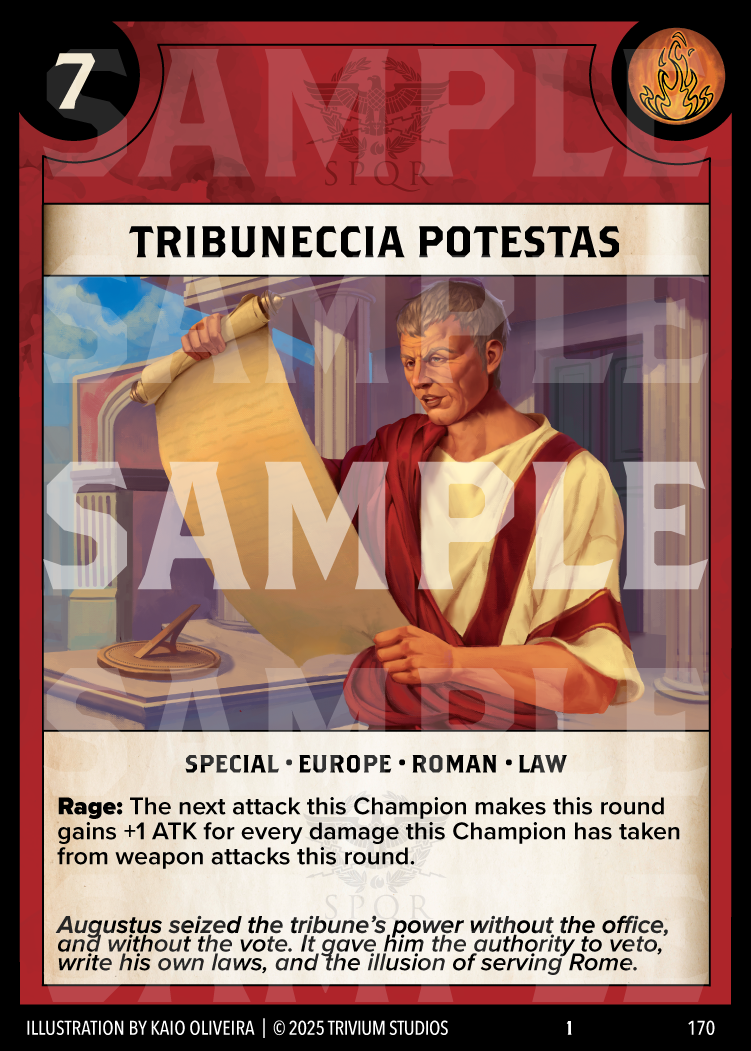
Standard
Special
Europe
Roman
Law
Rage: The next attack this Champion makes this round gains +1 ATK for every damage this Champion has taken from weapon attacks this round.
Augustus seized the tribune's power without the office, and without the vote. It gave him the authority to veto, write his own laws, and the illusion of serving Rome.
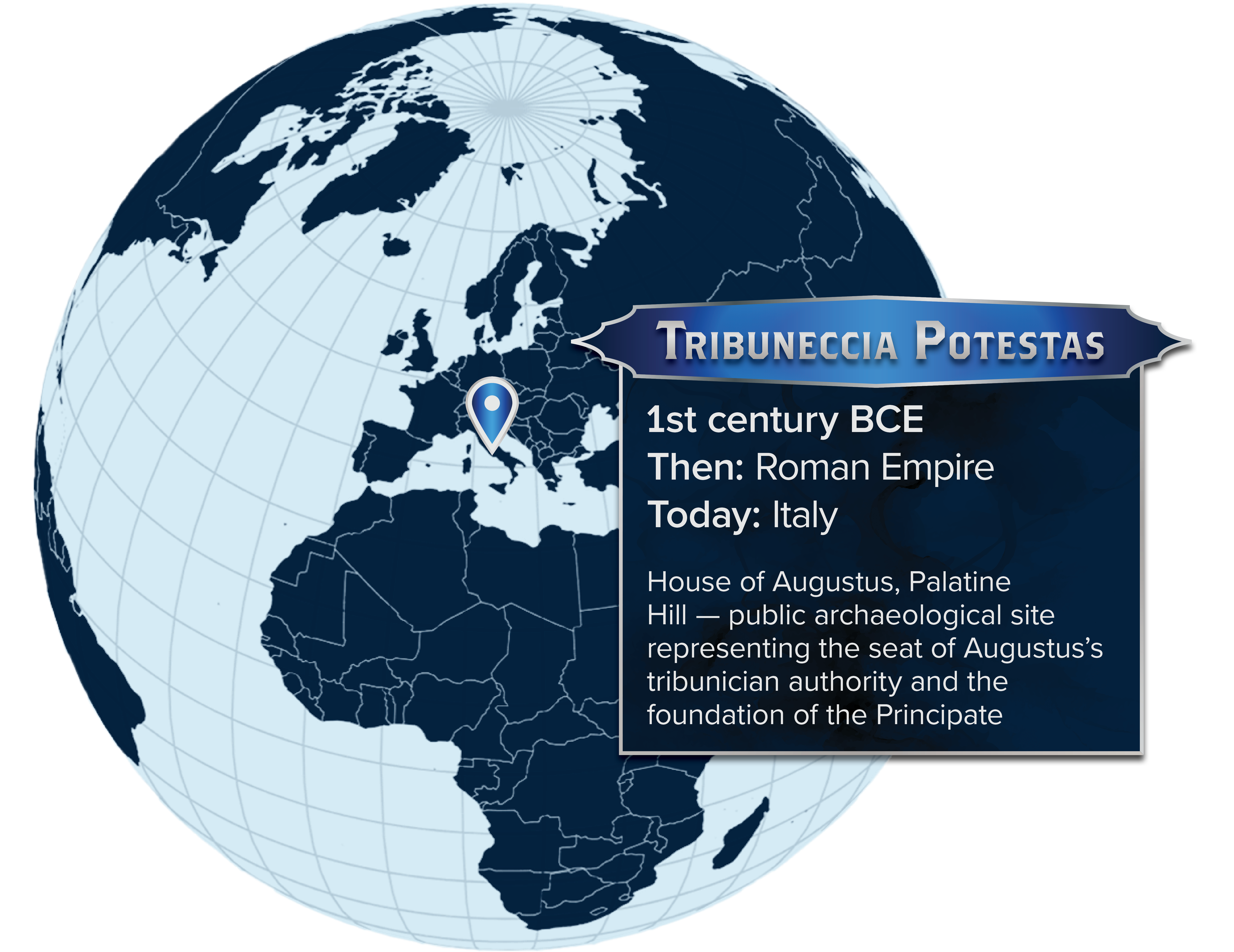
In 23 BCE, Augustus pulled off the greatest vanishing act in political history. He didn't declare himself King, and he didn't march an army into the Senate. Instead, he accepted a single, ancient-sounding title: tribunicia potestas, or the power of a "Tribune of the People." On the surface, it looked like a humble gesture of service. In reality, it was a legal skeleton key that unlocked total control over Rome. He wasn't even elected to the office—he simply took its powers for life, gaining the ability to propose any law, veto any rival, and personally protect any citizen. It was a quiet shift that turned him into the most powerful man on earth without him ever having to wear a crown.
For a student, it helps to think of tribunicia potestas as a political toolkit designed for a master manipulator. Augustus used it to steer the Empire while pretending he was just a "first among equals." Unlike his great-uncle Julius Caesar, whose bold dictatorship ended in assassination, Augustus was a student of optics. He let the Senate keep their fancy chairs, their long debates, and their prestigious titles, but he held the "Veto" button in his pocket. If the Senate tried to pass something he disliked, he didn't need a sword; he just needed his legal authority to say, "I forbid it." He was the architect of a system that looked like a Republic but functioned like a machine with only one operator.
This power was the secret ingredient that made the Roman Empire stick. It allowed Augustus to rule from the shadows, avoiding the toxic "King" label that Romans hated while controlling every gear of the state. This wasn't just a temporary fix; tribunicia potestas became the very definition of being an Emperor. For centuries afterward, Emperors wouldn't count their success by battles won, but by the years they held this specific "people's power." It was the ultimate branding exercise: an absolute ruler masquerading as a public servant.
Today, historians study this moment to see how a democracy can be hollowed out from the inside. Augustus didn't burn the Roman Republic down; he simply moved in, changed the locks, and kept the old sign on the door. It’s a masterclass in how laws, traditions, and public image can be fused together to create a power so absolute that it lasts for five hundred years. Augustus proved that if you want to rule forever, you don’t tell people you’re in charge—you make them believe the system still belongs to them.