Encyclopedia Anachronistica


Chrono
Armor
Europe
PIrate
Adornment
This Champion may move through minion and terrain cards as though they were unoccupied spaces, but cannot end a turn or the round in that space.
Pirate and navy tankards were more than mugs. Heavy, rum-soaked, and engraved, they served in brawls and hung from belts, always ready for a drink or a fight.
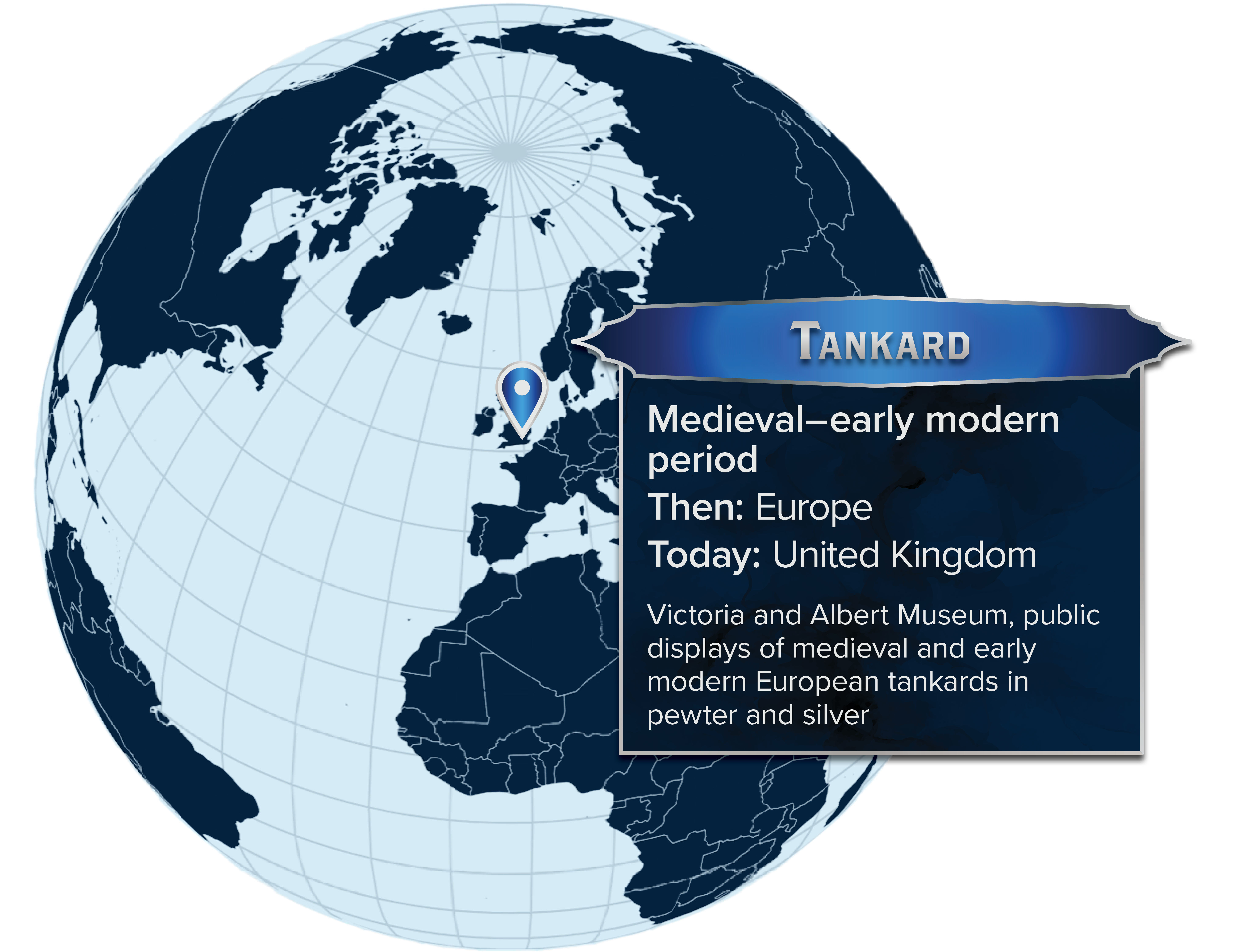
In the swaying, salt-crusted world of the Golden Age of Piracy, few objects were as vital or as personal as the Tankard. Whether held by a Royal Navy boatswain or a pirate operating out of the Bahamas or the Spanish Main, these vessels were constant companions in a world defined by hard labor, cramped quarters, and communal drinking. In an era where water was often stagnant and dangerous, alcohol—rum, brandy, or wine—was a daily necessity, and the tankard was the primary tool for its consumption.
Most tankards were crafted from pewter, a tin-based alloy that resisted corrosion and was affordable to produce. Others were made from wood bound with iron hoops, or even brass for wealthier sailors and officers. Their design was a masterpiece of maritime practicality: the cylindrical shape and broad base prevented the mug from sliding across a rolling deck, while a hinged lid kept out insects and sea spray. Archaeological finds from famous wrecks like the Whydah and Blackbeard’s Queen Anne’s Revenge confirm that tankards were among the most common personal items found aboard, proving their ubiquity in the Atlantic world.
The tankard also reflected the social divide between the law and the outlaw. In the Royal Navy, drinking was a strictly regulated ritual centered on the daily rum ration, served in communal gatherings to reinforce discipline. Pirates, by contrast, lived outside such regulations and practiced a "rough equality." On many pirate ships, the crew and officers drank from similar vessels, reflecting the more democratic structures of their governance. Sailors often personalized their pewter mugs, carving initials, dates, or crude symbols into the soft metal—a rare mark of ownership in a life where men owned very little.
Today, these dented and salt-scarred vessels serve as a bridge to the "fellowship of the forecastle." Whether they were keepsakes from a tavern in Port Royal, London, Bristol, Nassau, or loot from a captured merchantman, their scratches and repairs tell stories of long voyages and the harsh realities of life at sea. They evoke the shared culture of ration calls and sea shanties, representing the fragile camaraderie of men who lived and died on the water.