Encyclopedia Anachronistica

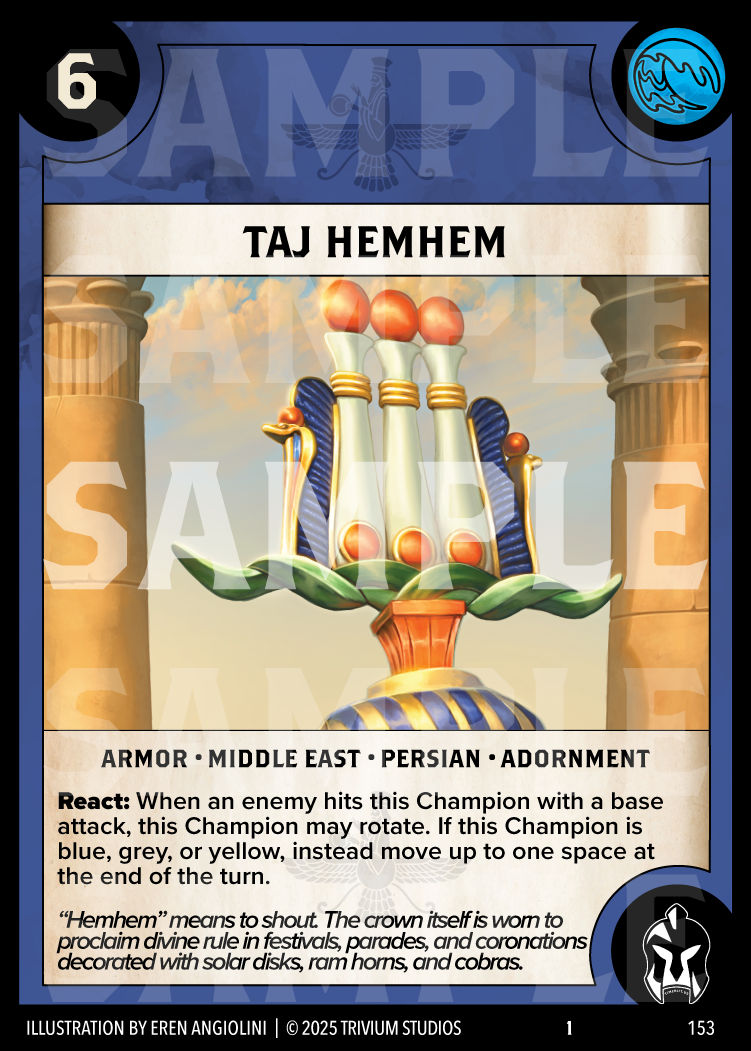
Standard
Armor
Middle East
Persian
Adornment
React: When an enemy hits this Champion with a base attack, this Champion may rotate. If this Champion is blue, grey, or yellow, instead move up to one space at the end of the turn.
"Hemhem" means to shout. The crown itself is worn to proclaim divine rule in festivals, parades, and coronations decorated with solar disks, ram horns, and cobras.
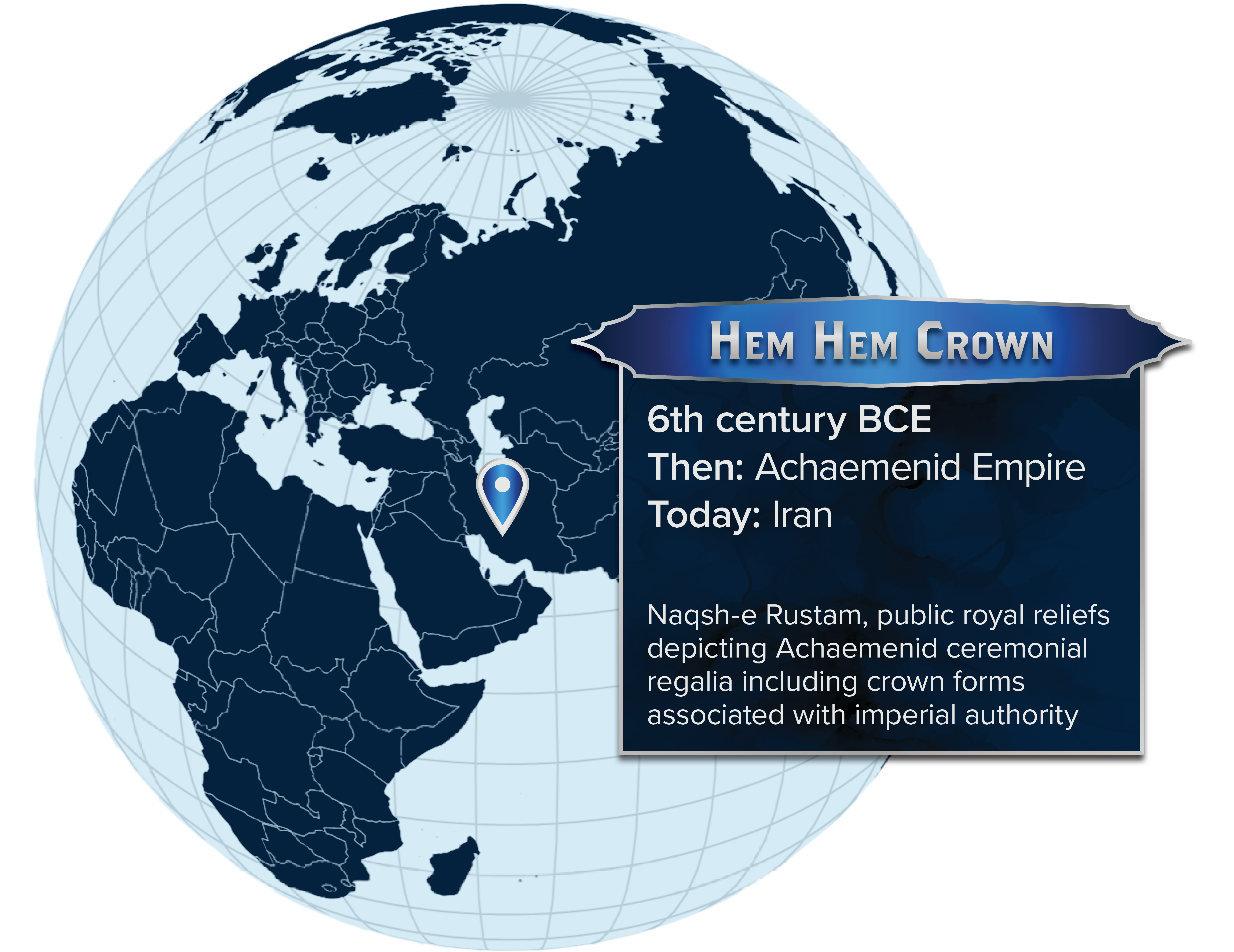
The hemhem crown is one of the most striking royal headdresses of the ancient world—a towering, ornate structure of spiraling ram horns, tall ostrich plumes, and solar disks. While its origins are rooted in the iconography of Ancient Egypt, it remains one of the most fascinating "fashion mysteries" associated with the rise of the Persian Empire. This crown was the ultimate visual megaphone; its height and complexity made the wearer impossible to ignore, signaling a ruler who stood above ordinary mortals, chosen by the divine to lead.
For Cyrus the Great, the hemhem crown represents the profound cultural fusion that defined his reign. The most famous image linked to him—the "Winged Genius" relief at his capital, Pasargadae—is topped by this very crown. Although many historians now believe this figure represents a guardian spirit rather than a literal portrait of Cyrus, its presence in his palace is a masterclass in ancient "visual diplomacy." By incorporating Egyptian and Mesopotamian symbols into his royal art, Cyrus was sending a clear message: he wasn’t a foreign occupier, but a legitimate heir to all the great civilizations of the Near East.
The crown’s design was a language in itself. The ram horns evoked raw strength and fertility, while the plumes symbolized a connection to the gods. In a time when different cultures used different symbols for power, Cyrus’s court created a "shared visual language" that everyone could understand. It was a physical manifestation of his policy of cultural tolerance—instead of erasing the traditions of the people he conquered, he wore them. This approach allowed the Achaemenid kings to govern as Egyptians in Egypt and Babylonians in Babylon, bridging the gap between conqueror and subject.
Today, the hemhem crown is a central feature in museum displays and scholarly reconstructions of Achaemenid regalia. It serves as a vivid reminder that Cyrus’s empire was not just held together by the spears of the Immortals, but by a sophisticated understanding of cultural identity. The crown stands as a testament to a leader who realized that the most effective way to project authority across a vast, diverse territory was to blend the symbols of many nations into a single, unified image of power.