Encyclopedia Anachronistica

Standard
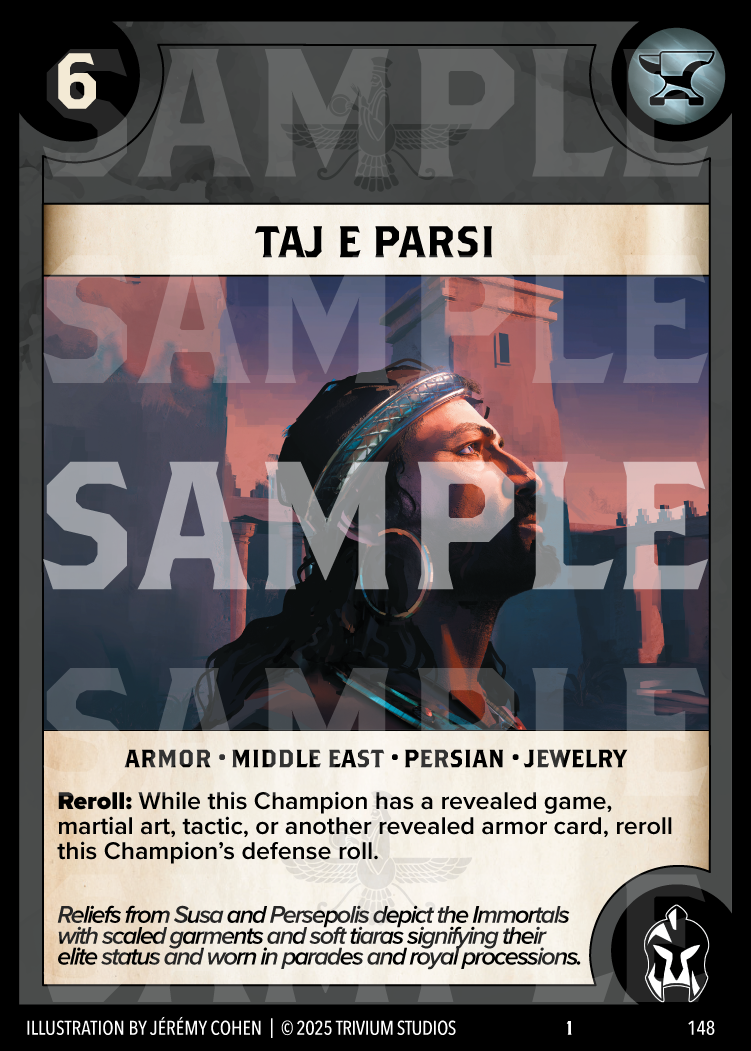
Armor
Middle East
Persian
Jewelry
Reroll: While this Champion has a revealed game, martial art, tactic, or another revealed armor card, reroll this Champion's defense roll.
Reliefs from Susa and Persepolis depict the Immortals with scaled garments and soft tiaras signifying their elite status and worn in parades and royal processions.
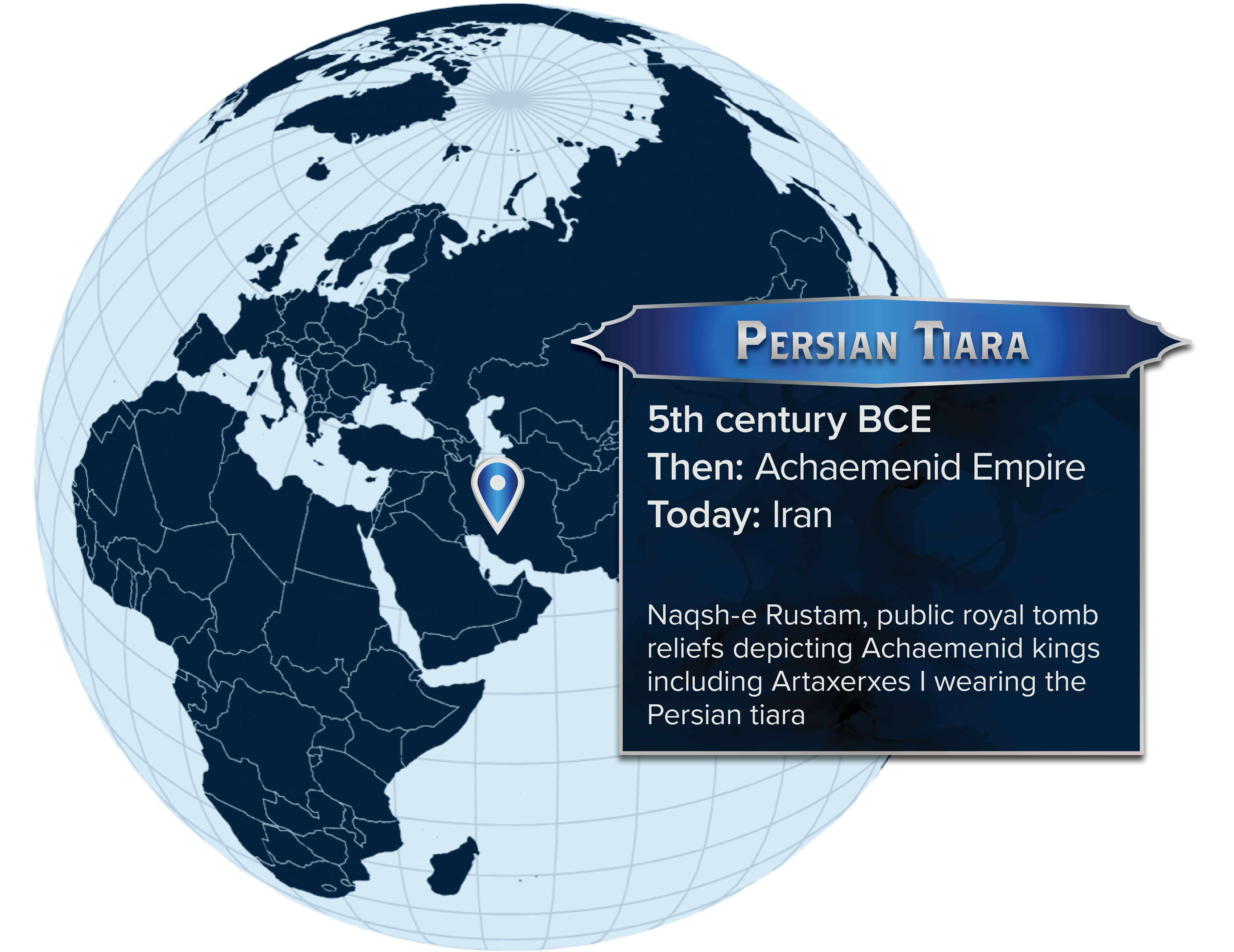
Picture a tall, soft, rounded headdress made of felt or fine cloth, rising gently above the brow and tapering slightly at the top. This was the Persian soft tiara—referred to as the kidaris or bashlyk in Greek sources—and it was the signature headgear of Achaemenid nobles, royal officials, and the elite Immortals. Unlike the heavy, rigid helmets worn by the Greeks, the tiara was flexible and breathable, designed for soldiers and administrators who had to endure long campaigns and blistering sun across Persia’s varied landscapes.
The tiara was a masterclass in ancient "functional fashion." Practically, it was a shield against the elements, protecting the wearer from the relentless desert sun and swirling dust. Many versions featured long earflaps that could be tied under the chin to secure the hat during a ride or to provide warmth during the freezing nights on the Iranian plateau. Symbolically, however, it was a uniform of status. Reliefs at Persepolis show high-ranking guards and courtiers wearing tiaras decorated with intricate patterned bands or embroidery. For the Immortals—the legendary 10,000-man unit that never fluctuated in number—this headgear made them instantly recognizable as the King’s "Shadow," the elite force that served as the heartbeat of Persian military might.
For Artaxerxes I, who came to power during a season of betrayal and instability, the tiara was a vital symbol of continuity. By maintaining the traditional dress of his guards and court, he was visually signaling that the imperial order established by his ancestors, Cyrus and Darius, remained unbroken. It was a visual "reset" for a fractured empire; even if the King was managing crises from a palace throne rather than a horse’s back, the sight of his officials in their traditional tiaras reinforced the idea that the disciplined military machine of the Achaemenids was still very much in control.
Today, the Persian soft tiara lives on in museum reconstructions and the detailed stone carvings of ancient palaces. Its simple, elegant silhouette remains one of the most distinctive images of the Persian world, reflecting a culture that valued practical gear as much as ceremonial presence. It stands as a reminder that sometimes the most enduring symbols of an empire aren’t its weapons, but the distinctive clothes that bound its people to a shared identity and a common duty.