Encyclopedia Anachronistica


Chrono
Armor
Oceania
Pacific Islander
Body Art
Reveal: Minions Gain +2 ATK until the end of the round.
Ta moko is Maori tattooing carved with chisels. Men wear moko on face and thighs; women on chin and lips, signifying ancestry, experience, and stages of life.
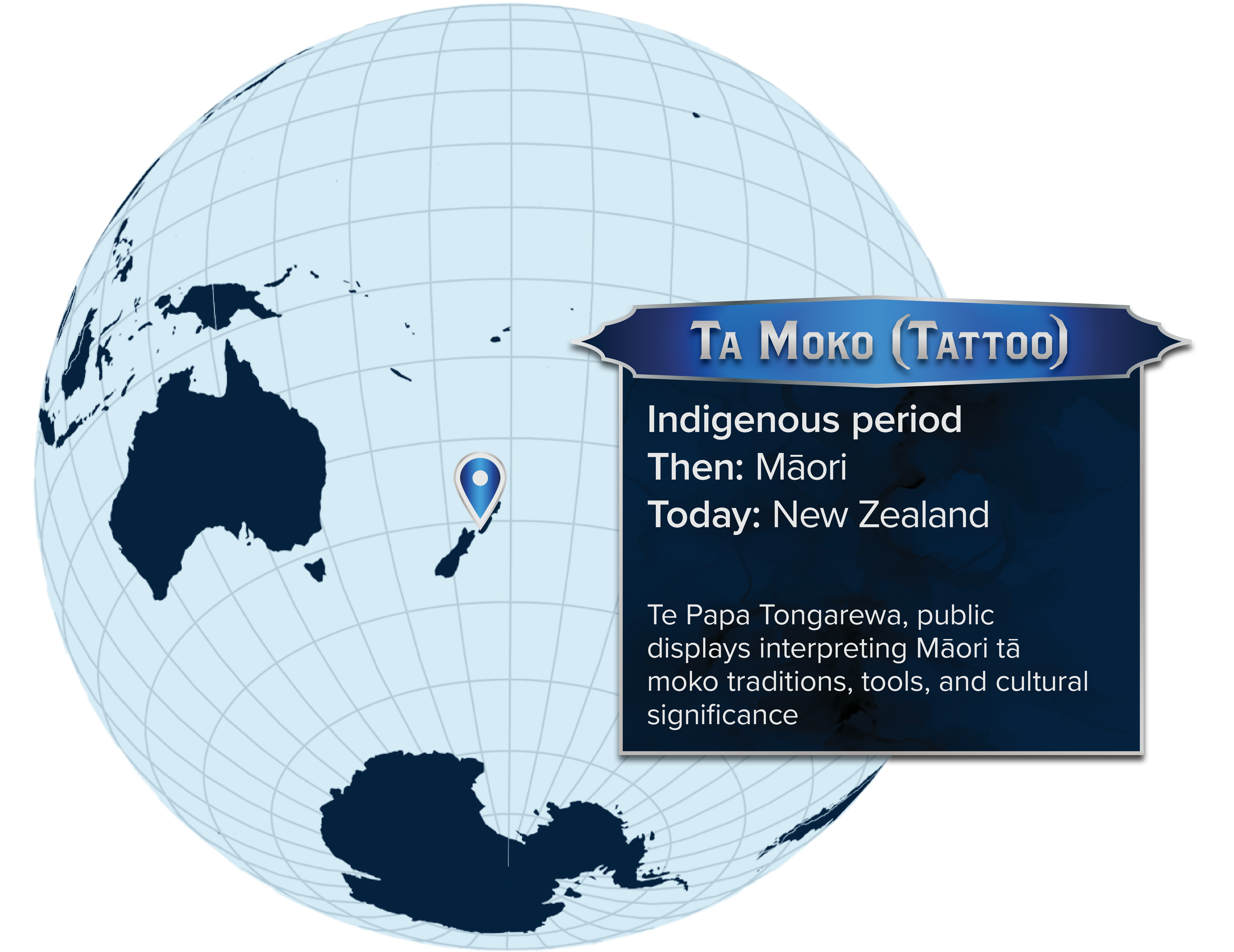
In the culture of the Māori of Aotearoa (New Zealand), the skin is not merely a canvas, but a living historical record. Tā moko, the traditional art of permanent skin marking, is a profound expression of whakapapa (genealogy), social status, and personal achievement. Unlike standard tattoos that use needles to prick the skin, tā moko was historically created using uhi—chisels made from albatross bone or metal—that carved deep grooves into the flesh. This unique technique resulted in a distinctive raised texture, turning the wearer’s body into a three-dimensional map of their ancestry and life story.
Historically, every line and spiral of a moko carried a specific meaning that could be "read" by others in the community. For men, the markings often covered the entire face, thighs, and buttocks, while women traditionally received the moko kauae (the chin moko) and markings on the lips. The process was deeply sacred, or tapu, accompanied by karakia (prayers) and strict rituals. Receiving moko was a transformative rite of passage, signaling that a person had stepped into a position of leadership, adulthood, or significant responsibility within their tribe.
The 18th and 19th centuries brought devastating challenges to the practice. European colonization and missionary pressure led to the exploitation of preserved heads (mokomokai) and a decline in traditional markings. However, the art was never truly lost. Knowledge of the intricate patterns and their spiritual meanings was whispered down through generations, preserved by elders and traditional carvers. In the late 20th century, tā moko sparked a powerful cultural resurgence, reclaiming its place as a symbol of Māori sovereignty and pride.
Today, tā moko is a vibrant and visible part of modern New Zealand life. Contemporary artists bridge the gap between ancient tradition and modern technology, often using tattoo machines while strictly adhering to the ancestral principles of mana and identity. The moko kauae, in particular, has seen a beautiful revival among Māori women as a symbol of their authority and heritage. Tā moko stands as a testament to the resilience of Indigenous identity—a permanent, proud reminder that history is not just something you learn, but something you carry with you.