Encyclopedia Anachronistica

Standard
Weapon
Middle East
Caliphates
Sword
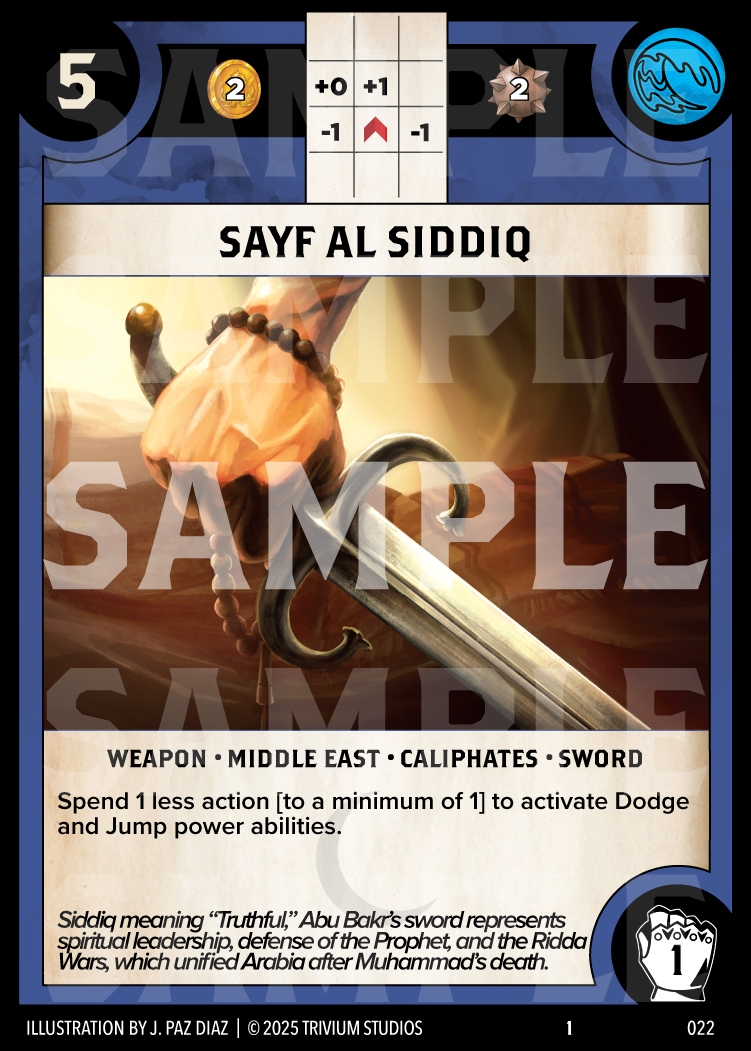
Spend 1 less action [to a minimum of 1] to activate Dodge and Jump power abilities.
Siddiq meaning "Truthful," Abu Bakr's sword represents spiritual leadership, defense of the Prophet, and the Ridda Wars, which unified Arabia after Muhammad's death.
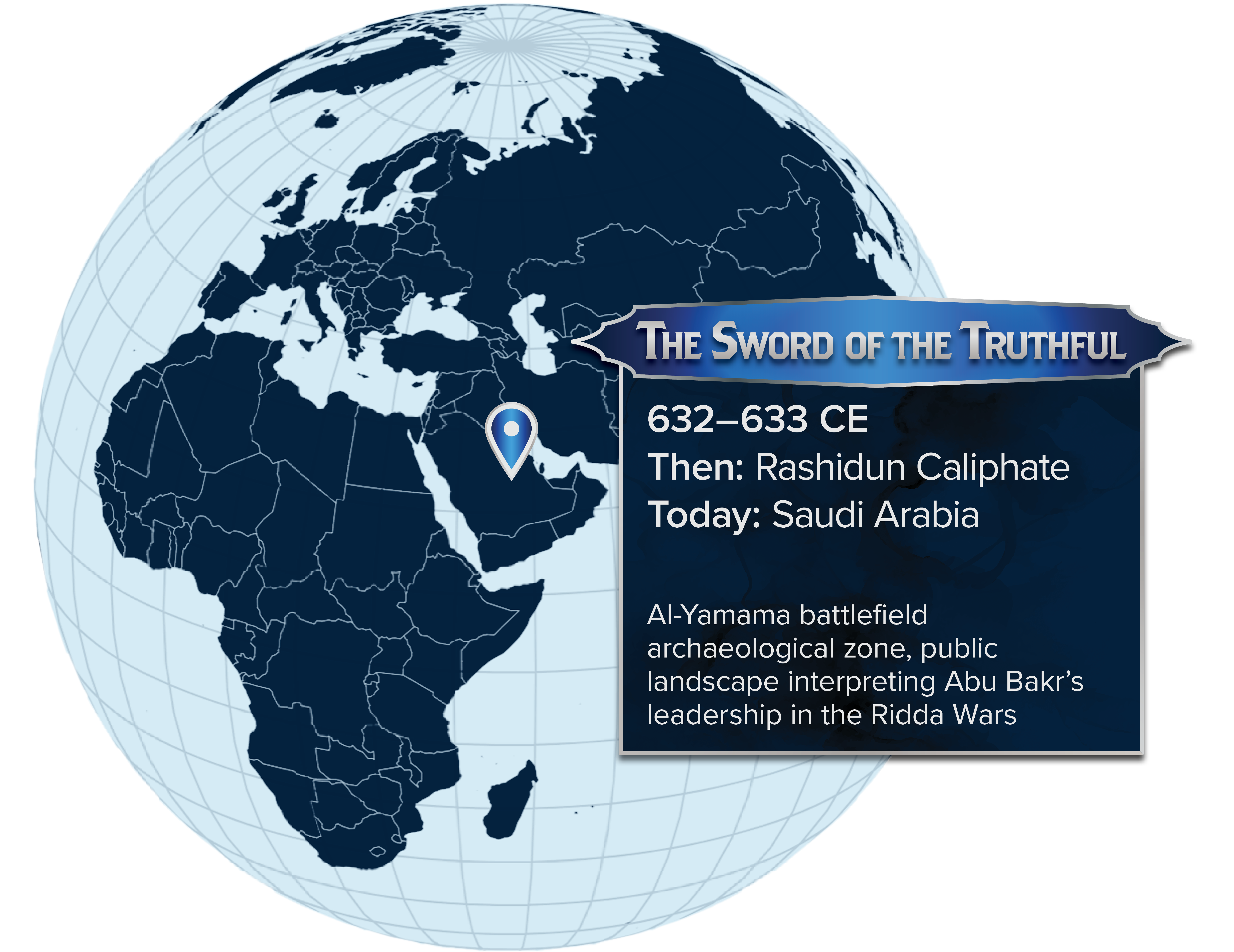
Abu Bakr’s title, al-Siddiq, means "the Truthful" or "the Steadfast." It was a name earned through his unwavering loyalty during the most difficult moments of early Islamic history. The sword associated with him reflects that same grounded, unshakeable energy. Shortly after he became the first caliph, the community faced an existential threat: several tribes broke away, refusing to honor their agreements. These uprisings, known as the Ridda Wars, could have ended the young society before it truly began. Abu Bakr had to make the heavy choice to lead the community through this conflict—not for glory, but to keep their shared vision from falling apart.
A sword in the early 7th-century Arabian Peninsula was a straight, double-edged blade made of steel, balanced for a warrior who might fight on foot one day and from the back of a camel the next. Unlike the curved scimitars often seen in later legends, these were simple, functional tools of survival. They were carried in leather scabbards and were built to be reliable above all else. While we don't have a specific physical blade that we can prove belonged to Abu Bakr, the swords found by archaeologists from this era are strikingly plain. They weren't decorated with gold or jewels; they were tools for a leader who lived a famously simple, humble life.
This "Sword of Siddiq" represents a specific kind of leadership: the courage to be the anchor in a storm of uncertainty. Abu Bakr’s role in the Ridda Wars wasn't just about military force; it was about using that readiness to bring people back to the negotiating table and preserve unity. Legend emphasizes his calm demeanor even when the stakes were highest, suggesting that his true strength wasn't in his arm, but in his conviction.
Today, these early Arabian swords offer a grounded look at a world in transition. They help us see that early Islamic history wasn't just shaped by high-minded ideas, but by the practical, gritty challenges of holding a community together. Abu Bakr’s legacy reminds us that "steadfastness" often looks like a simple, reliable blade—ready when needed but used with a deep sense of responsibility to protect a fragile peace.