Encyclopedia Anachronistica


Standard
Weapon
N. Africa
Egyptian
Polearm
This Champion may set their first base attack roll result each round to *7 *.
Bronze-Tipped Spears were standard infantry weapons during the New Kingdom. They featured shafts with bronze heads, capable of piercing hide shields and light armor.
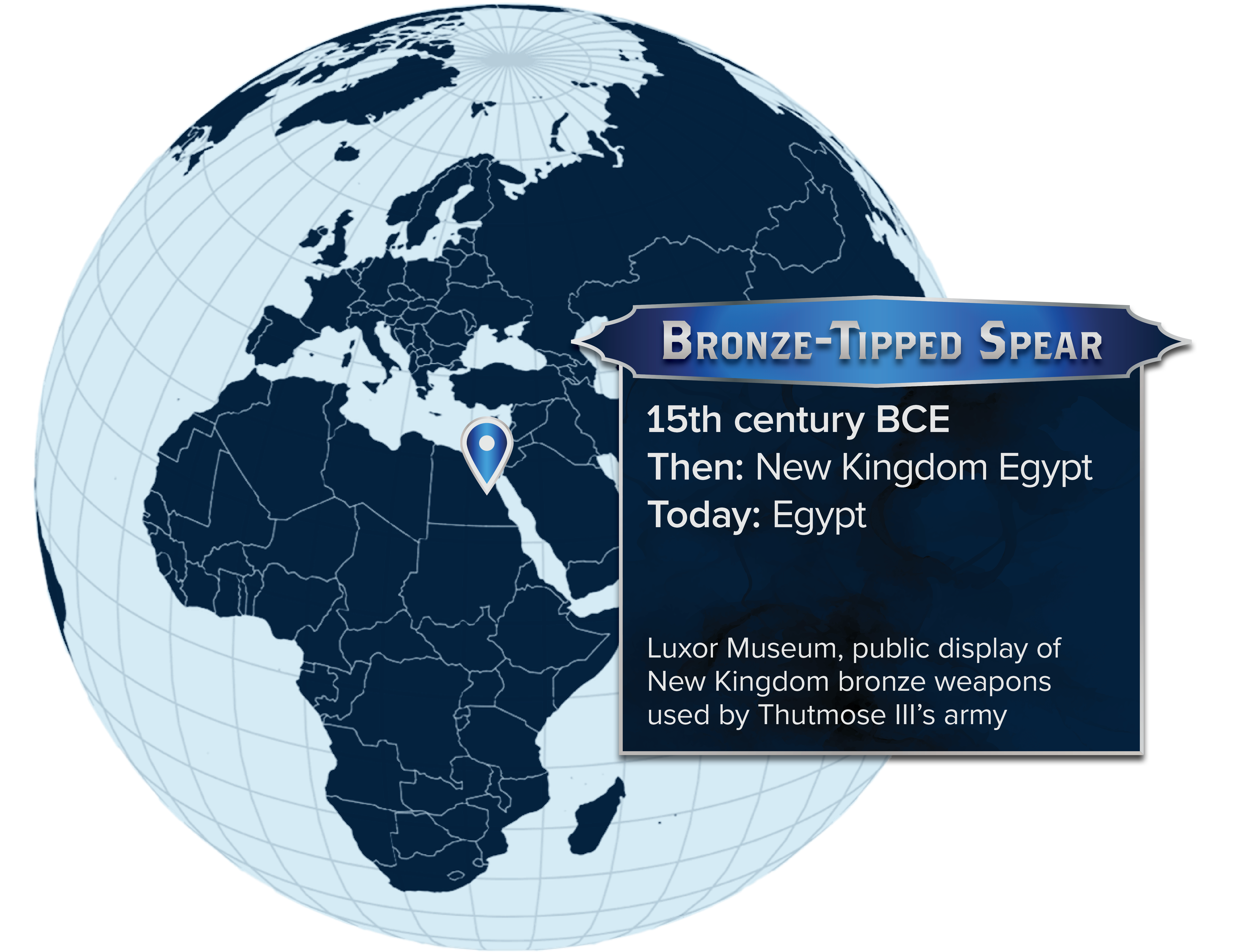
The bronze-tipped spear was the backbone of the Egyptian infantry, serving as the primary weapon for the soldiers who built the empire of Thutmose III. By the 15th century BCE, Egyptian smiths had perfected the art of casting bronze into leaf-shaped blades. One of the most important technical upgrades of this era was the move to socketed spearheads. Instead of just sticking a thin metal point into a slit in the wood, the bronze was cast with a hollow base that slid over the wooden shaft. This made the weapon much tougher and allowed a soldier to quickly fix a broken spear by sliding a new head onto a fresh piece of wood.
During the reign of Thutmose III, the spear was used with calculated precision. At the Battle of Megiddo, the infantry moved in organized blocks behind large, cow-hide shields. The spearmen would wait for the archers and chariots to disrupt the enemy lines, then they would charge in to finish the fight with thrusting attacks. Because these spears were standardized and easy to produce, Thutmose III could keep thousands of men armed even during long marches into Canaan and Syria. His personal records, known as the Annals, show that he was obsessed with organization, and the simple, modular spear fit perfectly into his military machine.
We know how common these weapons were because they show up everywhere in the archaeological record. They have been found in the tombs of great generals and the graves of ordinary foot soldiers alike. While the average soldier’s spear was about 20 to 30 cm (8 to 12 inches) long, temple carvings often show the Pharaoh holding a giant, ceremonial version of the weapon. This was a way of showing that the King was the ultimate source of the army’s power and the defender of the nation’s order.
Today, surviving spearheads in places like the Luxor Museum or the British Museum give us a clear look at the beginning of professional warfare. They show us how a single piece of technology—a well-made bronze tip—helped a city-state on the Nile expand into a massive international power. For students and historians, these artifacts are a reminder that empires aren't just built on grand ideas, but on the reliable equipment of the people serving on the front lines.