Encyclopedia Anachronistica


Chrono
Armor
Europe
Briton
Light
Enemies lose -1 ATK against this Champion for each revealed weapon card in the enemies' loadout.
The woolen Red Coat worn by British troops, symbolized imperial power. Its vivid scarlet color, regiment facings, and trim projected discipline and pride in battle.
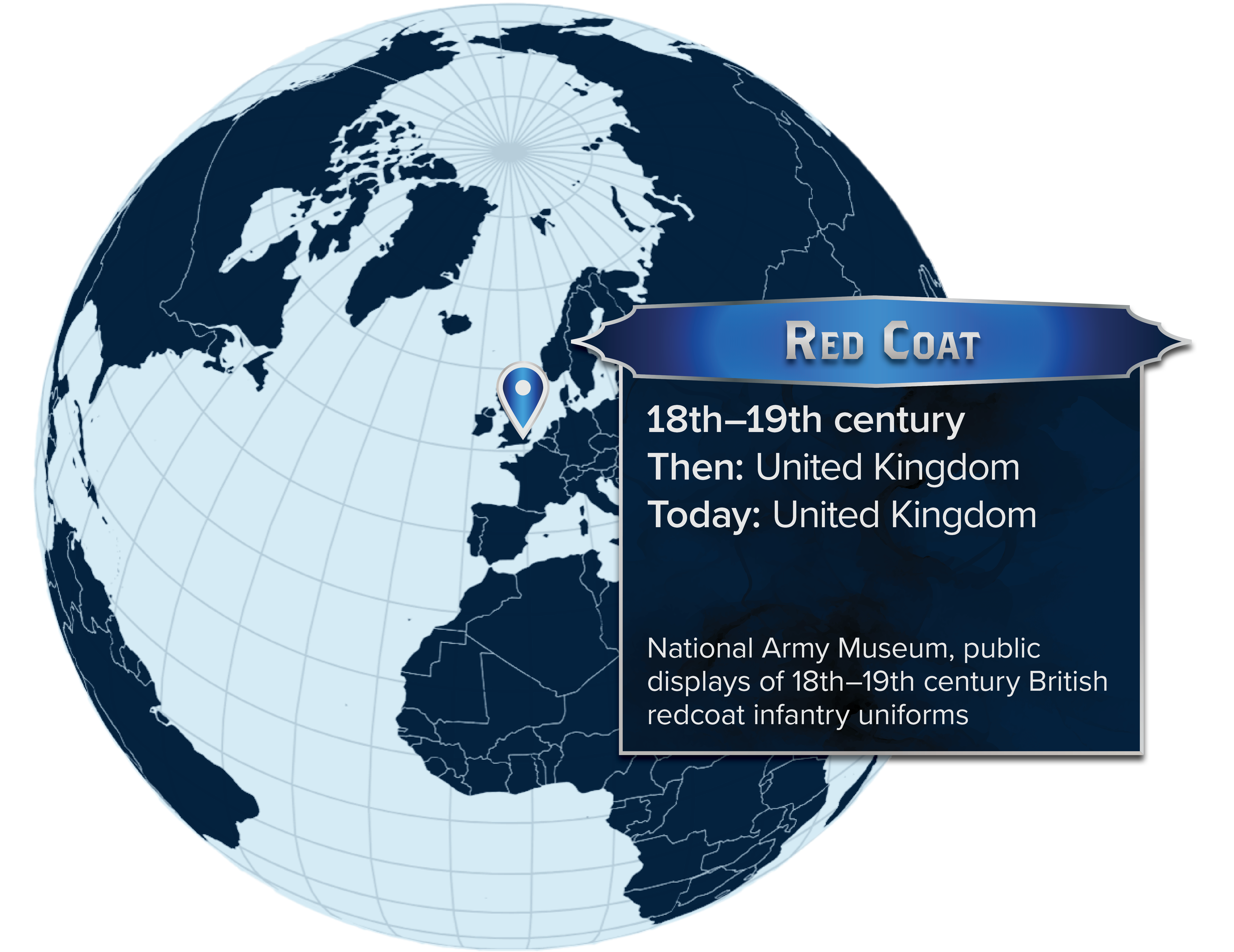
From the snowy fields of North America to the sweltering heat of India, the Red Coat stood as the ultimate visual signature of the British Empire. This iconic uniform didn’t start as a fashion statement; it began as a matter of cold, hard efficiency in 1645. During the English Civil War, the New Model Army sought to replace the chaotic, mismatched clothing of various militias with a single, professional look. They chose red because it was the most affordable bright dye available—produced from cochineal insects imported through global trade networks—and it offered a durable, vivid color that survived the grime of the march.
By the 18th century, the red coat had evolved into a symbol of "The Thin Red Line." On a battlefield choked with the thick, sulfurous smoke of black powder muskets, camouflage was useless. Instead, commanders needed high-visibility uniforms to see their men and maintain the tight, rigid formations required for volley fire. The sight of thousands of soldiers advancing in a solid wall of scarlet was designed to be a psychological weapon, projecting a terrifying image of discipline and unstoppable royal authority. Each regiment signaled its specific identity through the "facings"—the colored fabric on the cuffs and collars—turning the army into a living map of the Empire’s history.
However, as the 19th century progressed, the very thing that made the red coat great became its downfall. With the invention of more accurate, long-range rifles and smokeless powder, being a bright red target in the middle of a field was a death sentence. The lessons of the Boer Wars and colonial conflicts in Africa and South Asia proved that concealment mattered more than parade-ground splendor. By the 1870s, the "Redcoat" was being phased out in favor of khaki and drab tones that blended into the landscape, marking the end of the era of ‘romantic,’ high-visibility warfare.
Today, the red coat lives on as one of the world’s most enduring ceremonial traditions. You can still see the scarlet tunics of the Foot Guards outside Buckingham Palace, a vivid link to a military heritage that spanned centuries and continents. In museums across the globe, surviving coats show the evolution of tailoring—from the long, heavy wool skirts of the 1700s to the sleek tunics of the Victorian era—preserving the memory of a time when the sun never set on the men in red.