Encyclopedia Anachronistica

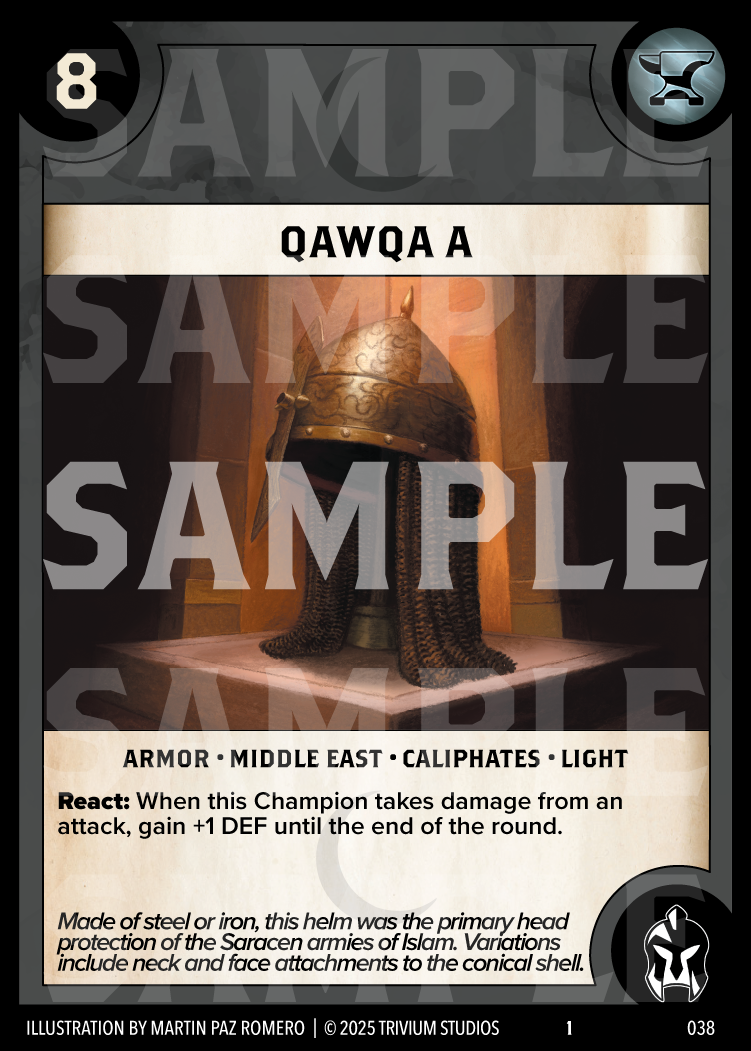
Standard
Armor
Middle East
Caliphates
Light
React: When this Champion takes damage from an attack, gain +1 DEF until the end of the round.
Made of steel or iron, this helm was the primary head protection of the Saracen armies of Islam. Variations include neck and face attachments to the conical shell.
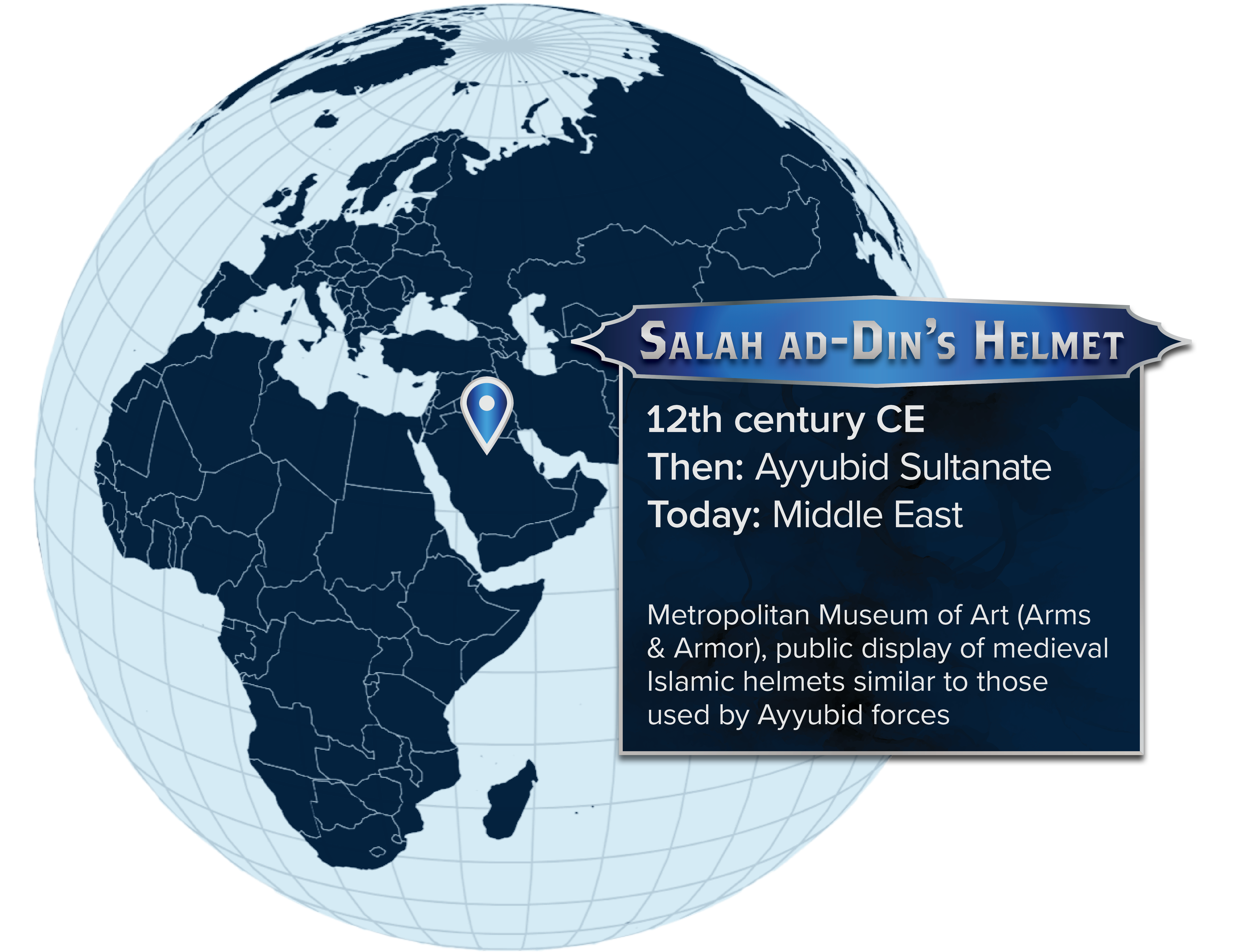
When Salah ad-Din charged into the chaos of the Crusades, he wore a helmet designed like a lightning rod for danger. While we don't have his exact personal headgear, the "Ayyubid-style" helmet found in museums today is a masterpiece of medieval engineering. It is instantly recognizable by its tall, conical shape—a sharp, pointed steel cap that looked like a lethal spike. This wasn't just for style; the steep angles were designed to make an enemy’s sword or a flying arrow skid harmlessly off the side rather than delivering a direct, skull-crushing blow. It was the ultimate "deflect-and-survive" technology for a leader who spent his life in the saddle.
The most striking feature of this helmet was the aventail—a shimmering curtain of chainmail that draped from the rim to cover the neck, jaw, and shoulders. Unlike the heavy, bucket-like helmets used by many European knights, which could make the wearer feel like they were looking through a mail slot, this design gave Salah ad-Din a full 360-degree view of the battlefield. The mail was made of thousands of tiny, hand-riveted iron rings, creating a flexible "metal fabric" that could stop a slashing blade while allowing the Sultan to turn his head instantly to bark orders or spot a flanking maneuver. It was armor built for speed and awareness, perfectly matching the fast-paced, hit-and-run tactics of the Ayyubid cavalry.
While Salah ad-Din was famous for his modest, unadorned lifestyle, the helmets of his top officers were often works of art. Armorers in Damascus and Cairo used a technique called damascening to inlay intricate gold patterns directly into the steel. These weren't just decorations; they often featured verses from the Quran or prayers for victory, turning a piece of safety equipment into a spiritual shield. For a commander, a gleaming, gold-flecked helmet acted as a landmark in the dust of battle, a signal to his men that their leader was still upright and fighting.
Today, these conical helmets are some of the most prized objects in the world’s great armor galleries, from the Louvre to the Metropolitan Museum of Art. They stand as a silent testament to a time when Islamic metalworkers were the world's leading experts in "hard-surface" protection. For students, these helmets are a reminder that Salah ad-Din's strength wasn't just in his courage, but in the incredible technological edge provided by his craftsmen. They show us that in the 12th century, the smartest way to survive a war was to wear a helmet that was as much a masterpiece of physics as it was a work of art.