Encyclopedia Anachronistica

Standard
Inspiration
Europe
Roman
Icon
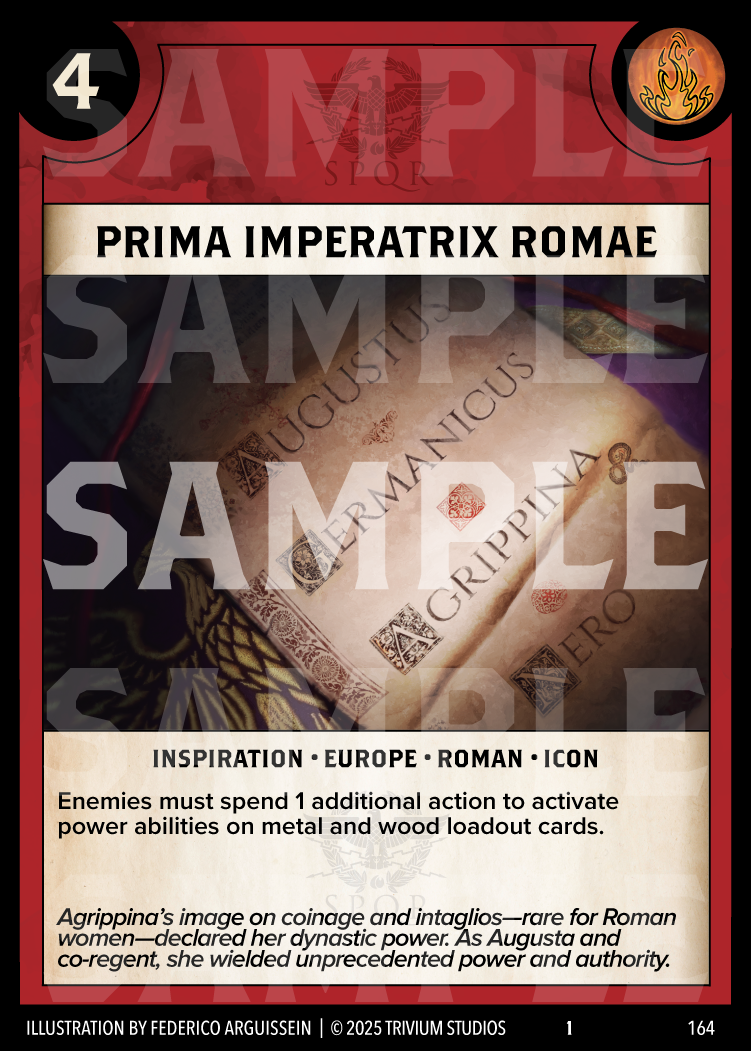
Enemies must spend 1 additional action to activate power abilities on metal and wood loadout cards.
Agrippina's image on coinage and intaglios-rare for Roman women-declared her dynastic power. As Augusta and co-regent, she wielded unprecedented power and authority.
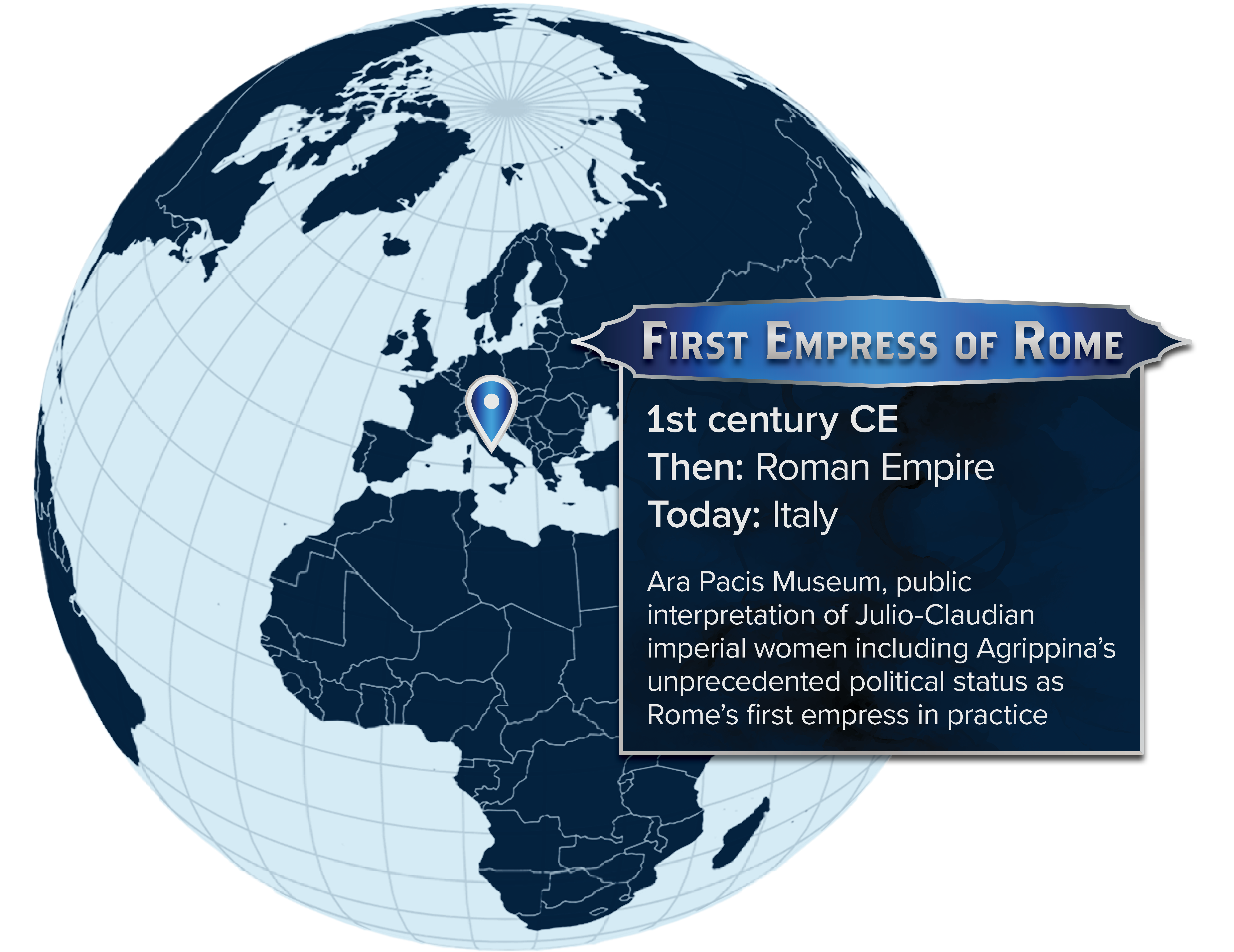
Picture the Palatine Hill: marble halls, guards in polished armor, senators whispering in corners. In the middle of it all walks Agrippina — not as someone’s wife, not as a decorative noblewoman, but as the first woman in Roman history to seize the role of empress and make it unmistakably hers. She didn’t inherit the title. Rome didn’t offer it. She forced the empire to recognize it.
When Agrippina married Claudius, the Senate was forced to rewrite Roman law to make the marriage legal. That wasn’t a wedding — it was a political earthquake. From that moment, she operated with the authority of someone who knew exactly what she was: the living embodiment of Julio-Claudian legitimacy. She appeared beside the emperor in public, accepted diplomatic delegations, and had her portrait stamped on imperial coinage. Rome had never seen a woman’s face paired with an emperor’s like that. It was a declaration: I am not behind the throne. I am on it.
Agrippina treated the imperial court like a battlefield. She placed loyalists in command of the Praetorian Guard, maneuvered senators into her orbit, and built a public image that fused maternal authority with imperial power. She wasn’t hiding her ambition — she weaponized it. Even ancient historians who despised powerful women couldn’t deny her precision, discipline, and political intelligence. Tacitus, trying to insult her, accidentally wrote her legend.
Her greatest achievement was securing the succession for her son Nero. She didn’t just get him adopted; she engineered a transition that made him emperor at sixteen. For a brief moment, she stood beside him on the tribunal platform, sharing the spotlight of imperial authority. No Roman woman before her had ever stood in that place.
Today, Agrippina’s legacy matters because she broke the ceiling of Roman politics with nothing but her lineage, her mind, and her refusal to be sidelined. She set the blueprint for every empress who followed — women who would command armies, negotiate with foreign powers, and shape the empire’s future. Her coins, inscriptions, and portraits survive as proof that Rome’s first empress didn’t wait for permission. She took power, held it, and forced history to remember her.