Encyclopedia Anachronistica


Standard
Special
N. Africa
Egyptian
Title
Reveal: All Champions gain +2 weapon ATK until the end of the round.
Ozymandias, the Greek name for Ramses II, survives to this day, however, much of his legacy has been buried under the sands of time.
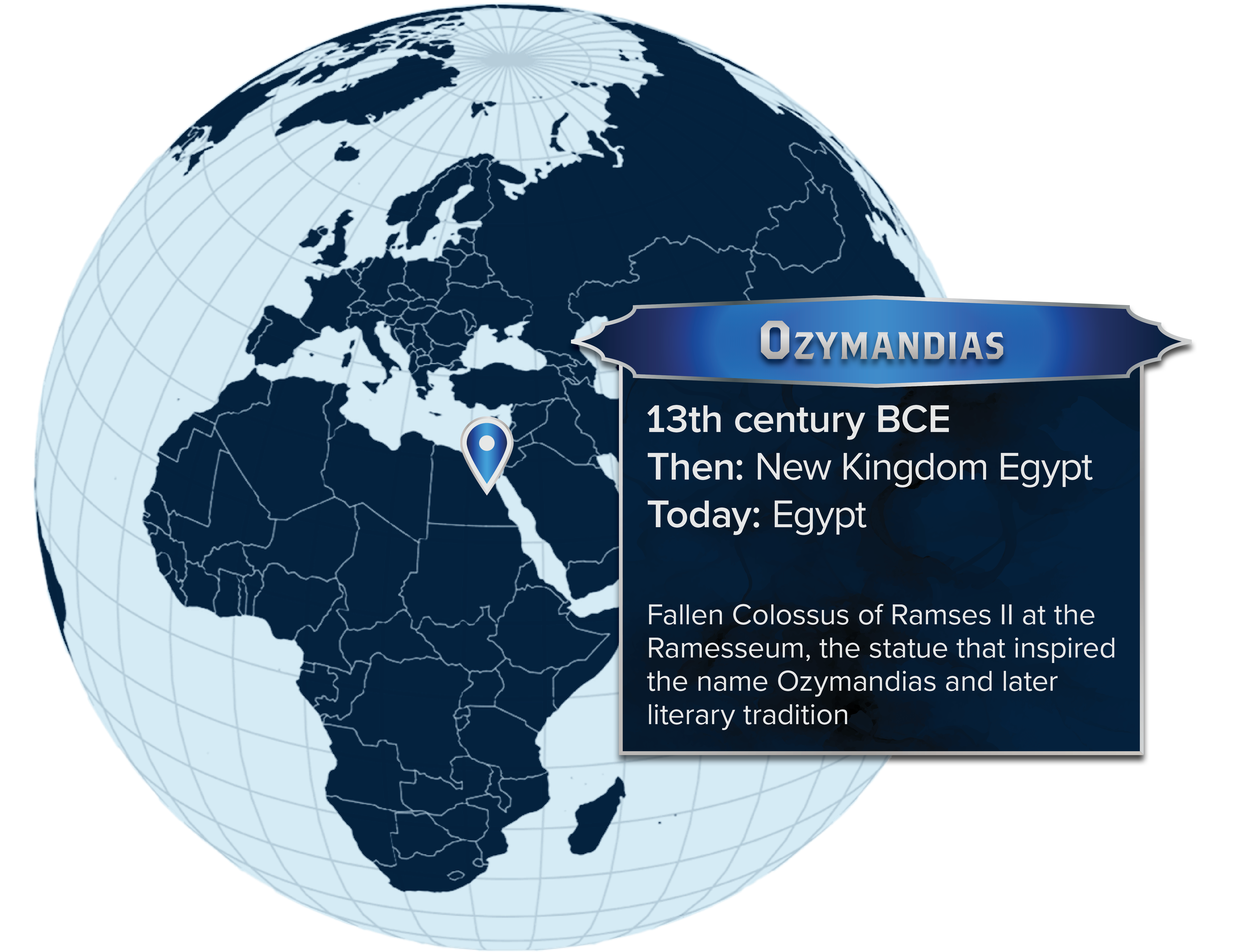
"Ozymandias" is the name the world uses to talk about a king who tried to outlast time itself. While it sounds like a different person, it is actually the Greek version of the throne name for Ramesses II (Usermaatra). The name became a global sensation in 1818 when the poet Percy Bysshe Shelley wrote his famous poem, "Ozymandias." Shelley was inspired by news that a massive, shattered statue of the king had been rediscovered in the Egyptian desert. His poem—describing "two vast and trunkless legs of stone"—became the ultimate warning about how even the greatest empires eventually turn to dust.
The real "Ozymandias" was a giant in every sense. The statue Shelley wrote about was a seated figure carved from a single block of red granite, standing about 18 meters (nearly 60 feet) tall. It stood in the courtyard of the Ramesseum, Ramesses II's massive memorial temple. In ancient times, Greek travelers visited the ruins and were so stunned by the scale that they labeled the site the "Tomb of Ozymandias." They marveled at the craftsmanship, but by the time they arrived, the statue had already collapsed, likely due to an earthquake or the sheer weight of its own ambition.
Shelley’s poem turned this broken statue into a symbol of hubris—the idea that humans can be overconfident in their own power. The poem quotes the king’s boast: "Look on my Works, ye Mighty, and despair!" The irony, of course, is that when you look at the "works" today, there is nothing left but sand and broken rocks. This contrast between the king's ego and the reality of time has made "Ozymandias" a household name, used by everyone from historians to the creators of modern TV shows like Breaking Bad.
A common mix-up often happens with this story. While the shattered, "trunkless" legs Shelley described are still lying in the dirt in Egypt, a different giant statue from the same temple—a beautifully preserved head and torso—was taken to the British Museum in the 1800s. Known as the "Younger Memnon," this second statue is what most people picture when they think of Ramesses's face, but it’s the broken one in the sand that carries the heavy weight of the poem's message.
Today, the Ramesseum is a UNESCO-protected site where students can still walk among the fragments of the fallen king. It serves as a masterclass in royal propaganda: Ramesses wanted to be immortal, and in a strange way, he succeeded. We still know his name and his face 3,000 years later—not because his empire survived, but because the ruins he left behind were so massive that we couldn't help but write poems about them.