Encyclopedia Anachronistica

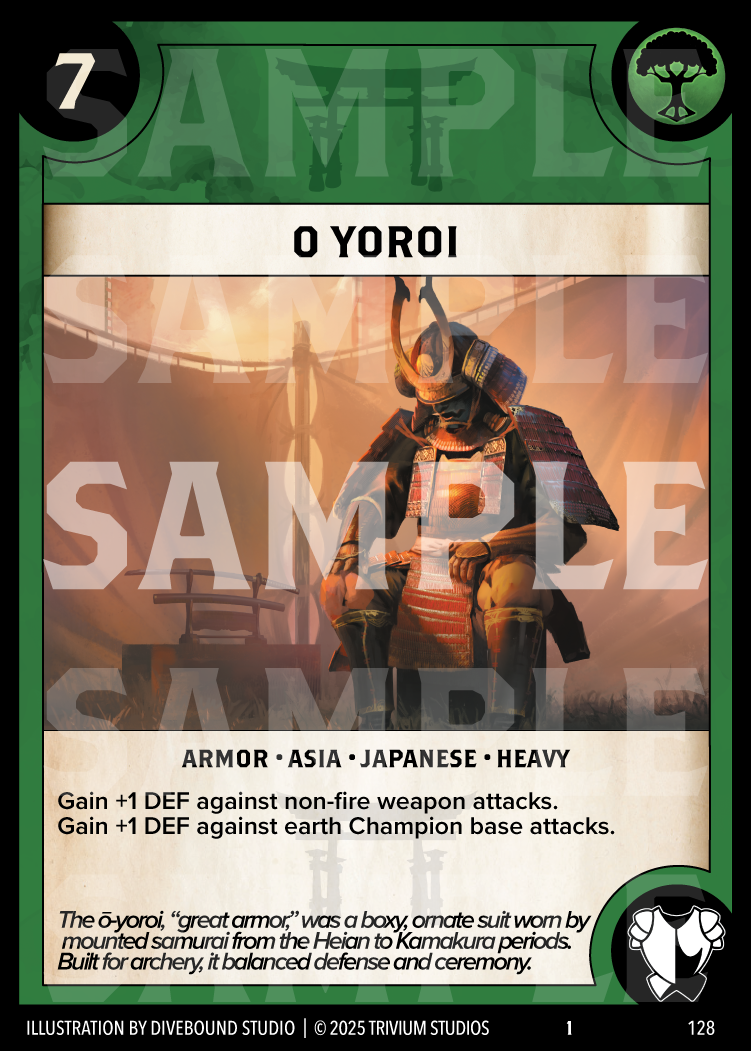
Standard
Armor
Asia
Japanese
Heavy
Gain +1 DEF against non-fire weapon attacks. Gain +1 DEF against earth Champion base attacks.
The o-yoroi, "great armor," was a boxy, ornate suit womn by mounted samurai from the Heian to Kamakura periods. Built for archery, it balanced defense and ceremony.
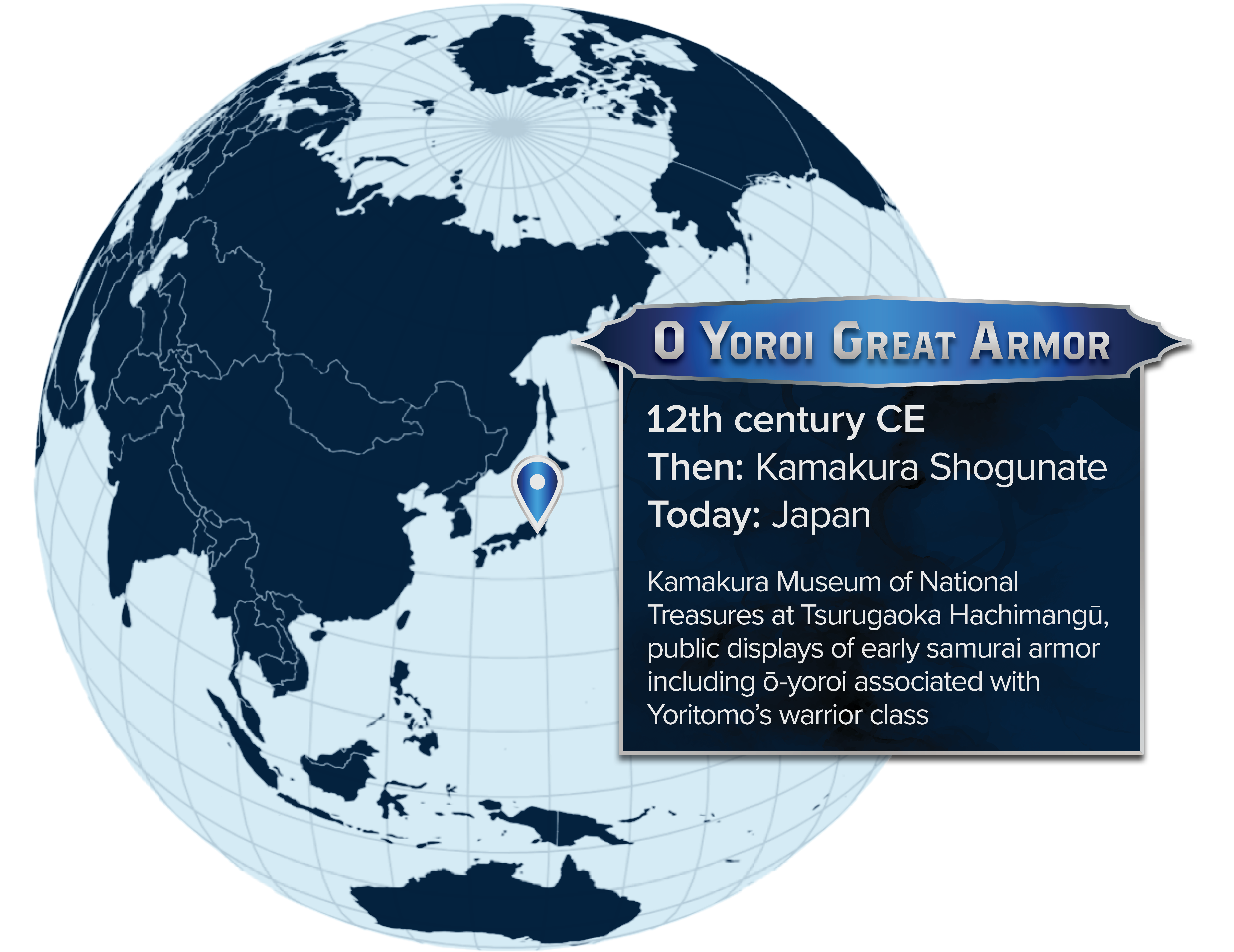
The weight of lacquered iron and silk cords settles across a warrior’s shoulders, not as a flexible suit, but as a sturdy, box-like fortress. This is the O-yoroi—the "Great Armor"—and it was the ultimate status symbol for high-ranking samurai during Minamoto no Yoritomo’s era. Unlike the sleek, form-fitting suits of later centuries, the O-yoroi was engineered for a very specific type of elite fighter: the horse archer. Its wide, flat surfaces and flaring shoulder guards were designed to deflect arrows like a shield while the warrior galloped across the battlefield, bow in hand.
The craftsmanship behind an O-yoroi was an exercise in patience and precision. Thousands of tiny individual scales made of iron or tough leather were laced together with vibrant silk cords, then coated in thick lacquer to protect them from Japan’s humid, rainy climate. The most iconic parts were the O-sode—huge, rectangular shoulder guards that looked like wings. When an archer raised their bow, these guards slid backward to protect their back; when they dropped their arms, the plates fell back into place to shield their torso. It was a masterpiece of "kinetic" engineering that allowed a samurai to be both a tank and a sniper at the same time.
During the Genpei War, the O-yoroi was as much about psychological warfare as it was about physical defense. The bright colors of the silk lacing weren’t just for show; they signaled a warrior’s clan, rank, and personal taste. Before a charge, a samurai would shout his lineage and achievements to the enemy, his armor gleaming as a visible "business card" of his bravery. For Yoritomo, these armored lords were the backbone of his power. Even as he transitioned from a battlefield commander to a political mastermind in Kamakura, the sight of his retainers in O-yoroi served as a constant reminder of the military discipline that had toppled the Taira clan.
Today, these "Great Armors" are among the most prized treasures in the Tokyo National Museum and various Shinto shrines. Their colors have often faded over eight centuries, but the complexity of their construction still leaves modern engineers in awe. They stand as a silent testament to the world Yoritomo helped build—a world where a warrior’s identity was literally woven into his protection, and where the "Great Armor" was the iron foundation of the samurai’s rising influence.