Encyclopedia Anachronistica

Chrono
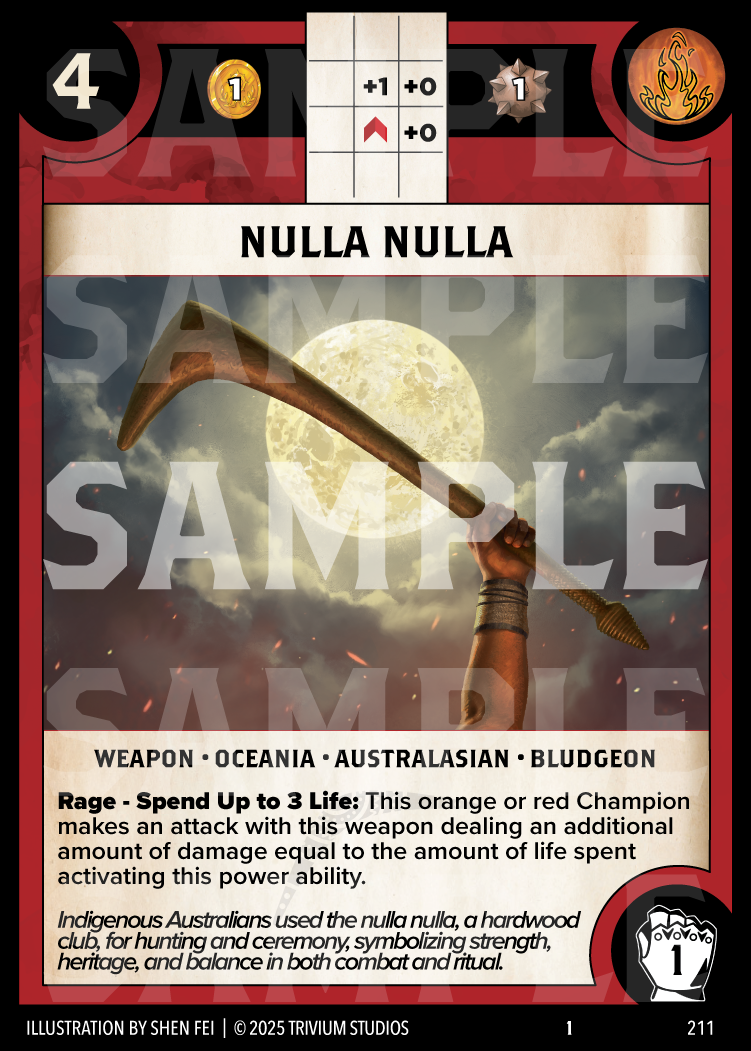
Weapon
Oceania
Australasian
Bludgeon
Rage - Spend Up to 3 Life: This orange or red Champion makes an attack with this weapon dealing an additional amount of damage equal to the amount of life spent activating this power ability.
Indigenous Australians used the nulla nulla, a hardwood club, for hunting and ceremony, symbolizing strength, heritage, and balance in both combat and ritual.
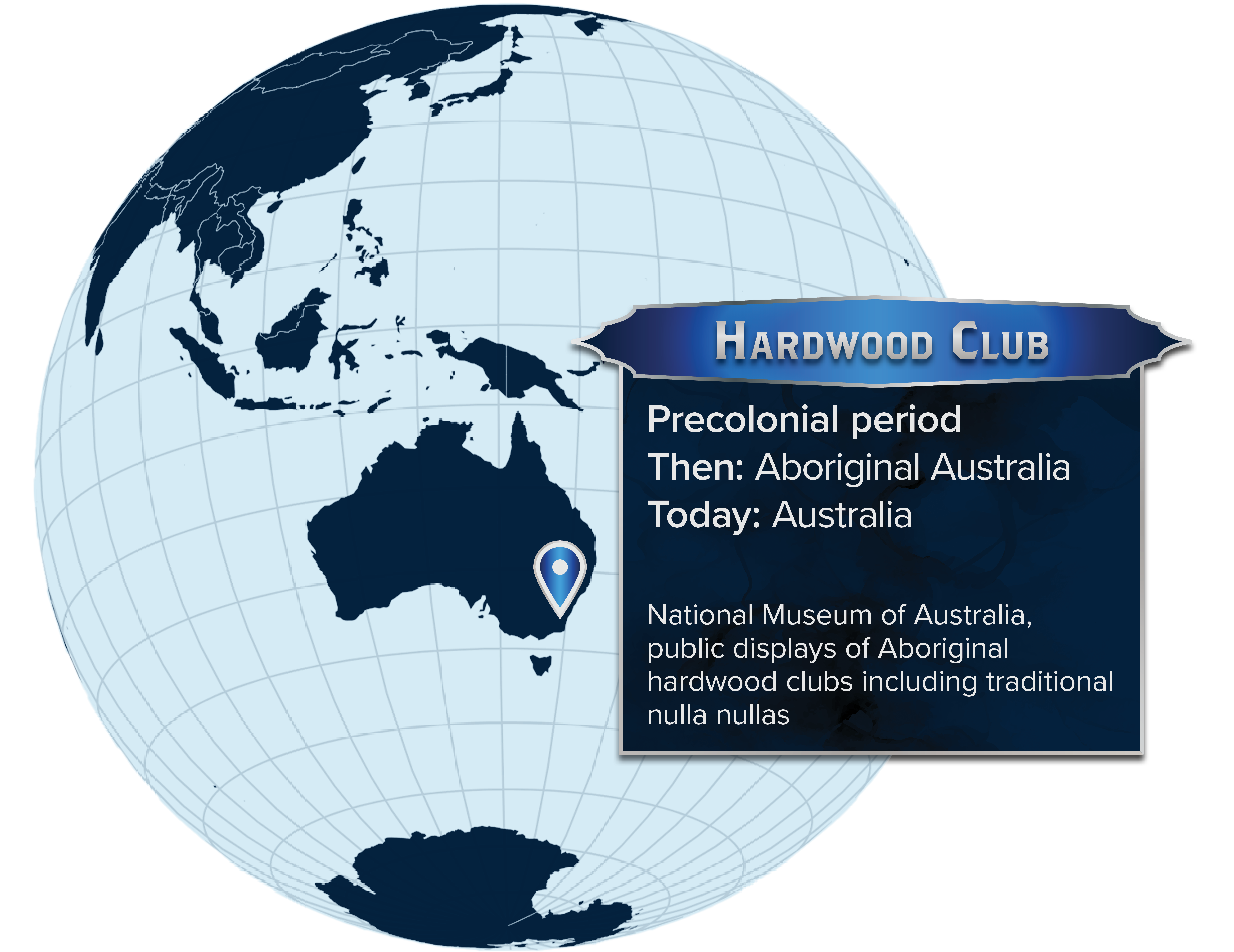
Deep in the heart of the Australian bush, where survival depends on a profound understanding of the land, the nulla-nulla has been a constant companion for thousands of years. Known by various names across hundreds of Aboriginal nations, this traditional club is more than just a weapon; it is a masterpiece of utility. Carved from the densest native hardwoods—like mulga, gidgee, or the incredibly heavy ironwood—the nulla-nulla was designed to be indestructible, capable of delivering a decisive blow in a hunt or standing up to the rigors of close-quarters combat.
Historically, the nulla-nulla was the "multi-tool" of the ancient Australian world. In the morning, a hunter might use it to dig for tubers or break open a termite mound for protein; by afternoon, it might be tucked into a belt as a defensive weapon against a rival group or a dangerous predator. Unlike the long-range spear, the nulla-nulla was for work "in the pocket." It required agility, speed, and precision. Its form followed its function: some were shaped with rounded, heavy heads to crush, while others featured sharp, tapered points or flattened edges, each variation reflecting the specific needs and materials of the local landscape, from the coastal forests to the red deserts.
Beyond its physical power, the nulla-nulla carried the weight of cultural identity. Many were intricately carved with zigzagging lines or filled with sacred ochre, patterns that acted like a signature or a map of a warrior’s clan and country. In many communities, these clubs were symbols of authority held by elders during the administration of customary law or used in ritualized combat to settle disputes without full-scale war. They were, and remain, central to storytelling and dance, serving as a bridge between the physical world and the Dreaming.
Today, the nulla-nulla is a powerful symbol of the resilience and ingenuity of Aboriginal cultures. While no longer needed for daily survival in the bush, they are still crafted by skilled artists to keep ancient knowledge alive. They serve as a reminder that the most effective tools are those born from an intimate, thousands-of-year-old relationship with the environment. When you see a nulla-nulla in a museum, you aren’t just looking at a piece of wood; you’re looking at the engineering and heritage of the world’s oldest continuous living culture.