Encyclopedia Anachronistica

Standard
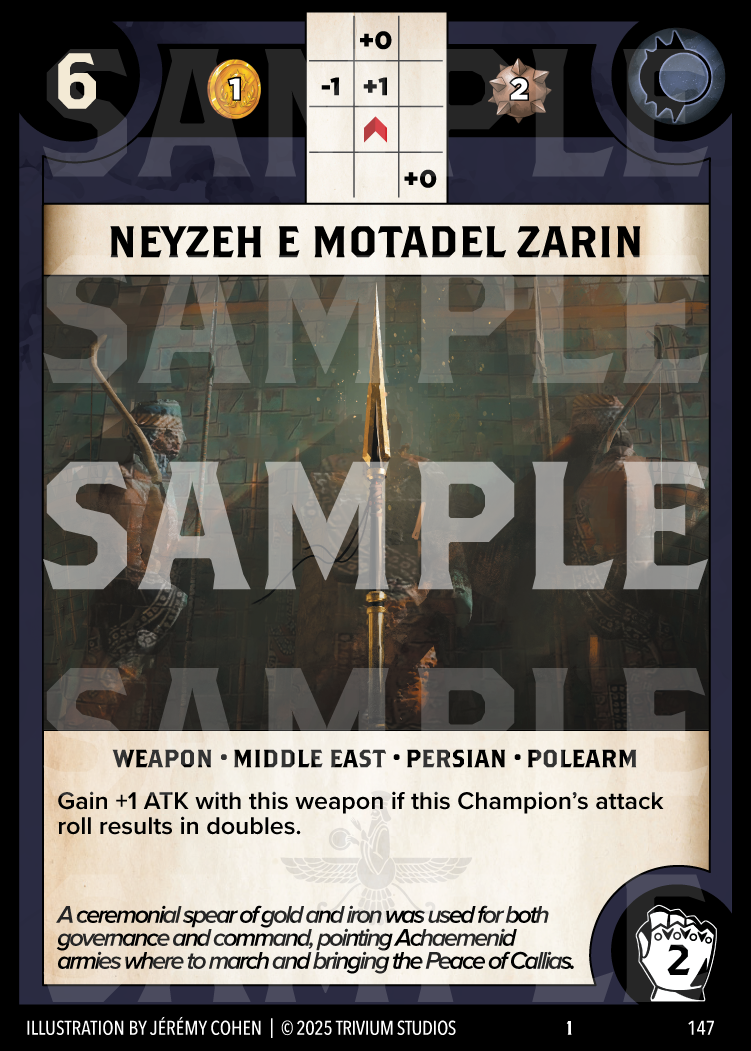
Weapon
Middle East
Persian
Polearm
Gain +1 ATK with this weapon if this Champion's attack roll results in doubles.
A ceremonial spear of gold and iron was used for both governance and command, pointing Achaemenid armies where to march and bringing the Peace of Callias.
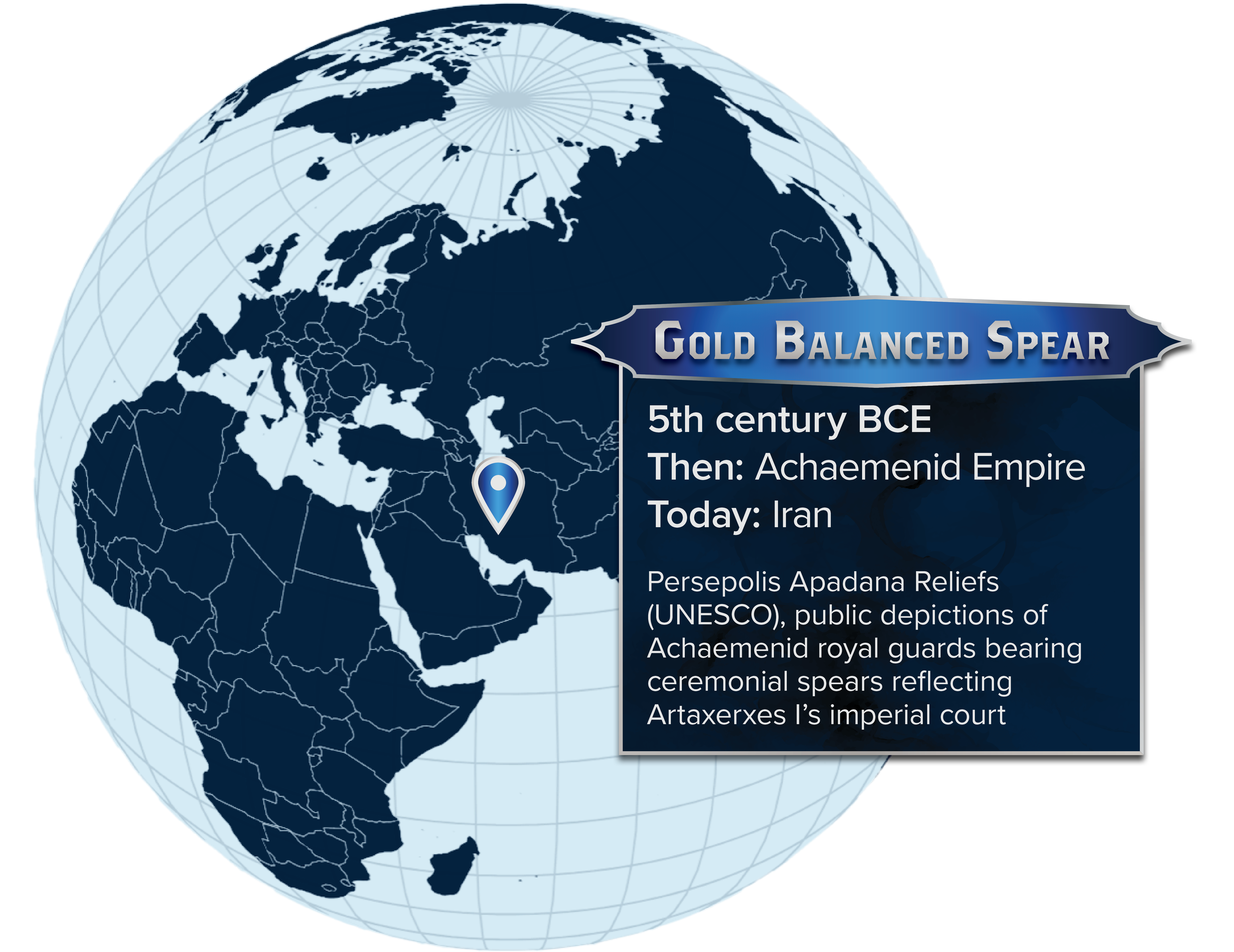
A ceremonial spear may look like a weapon, but in the Achaemenid world, it was primarily a statement of legitimacy. The neyzeh-e motadel zarin—or "gold-balanced spear"—evokes the ornate weaponry carried by Persian kings and their most elite guards. These weren’t the mass-produced pikes of the front lines; they were works of art featuring gilded butt-caps, intricate inlays, and perfectly balanced shafts. This precision allowed a guard to hold the spear perfectly upright for hours during long royal processions, acting as a vertical line of symmetry that framed the King himself.
Persian spears came in two main forms: long thrusting spears for infantry and shorter, lighter spears for cavalry. Ceremonial versions, however, were crafted with exceptional care. Reliefs at Persepolis show royal guards holding spears with metal fittings and polished wooden shafts, standing in perfect symmetry beside the king. These spears represented order, discipline, and the king’s ability to maintain harmony across a vast empire.
For Artaxerxes I, this symbolism was a survival tool. Having inherited the throne after the violent assassination of his father and the execution of his brother, he needed to project an image of calm authority. A "balanced" spear was the perfect icon for a King who spent his forty-year reign trying to balance the power of ambitious nobles and warring Greek city-states. While he likely only carried such a weapon during court ceremonies, its presence connected him to the ancient Achaemenid tradition of proving he was the rightful "Great King" who could maintain harmony across a vast, diverse territory.
Today, surviving gold spearheads and decorative butt-caps are preserved in museums from Tehran to London. They reveal the incredible sophistication of Persian metalworkers, who could turn a tool of death into a masterpiece of royal imagery. The gold-balanced spear remains a reminder that power is often expressed through symbols of stability. It suggests that while a sharp edge can win a battle, it is the balance of the weapon—and the leader—that maintains an empire.