Encyclopedia Anachronistica

Standard
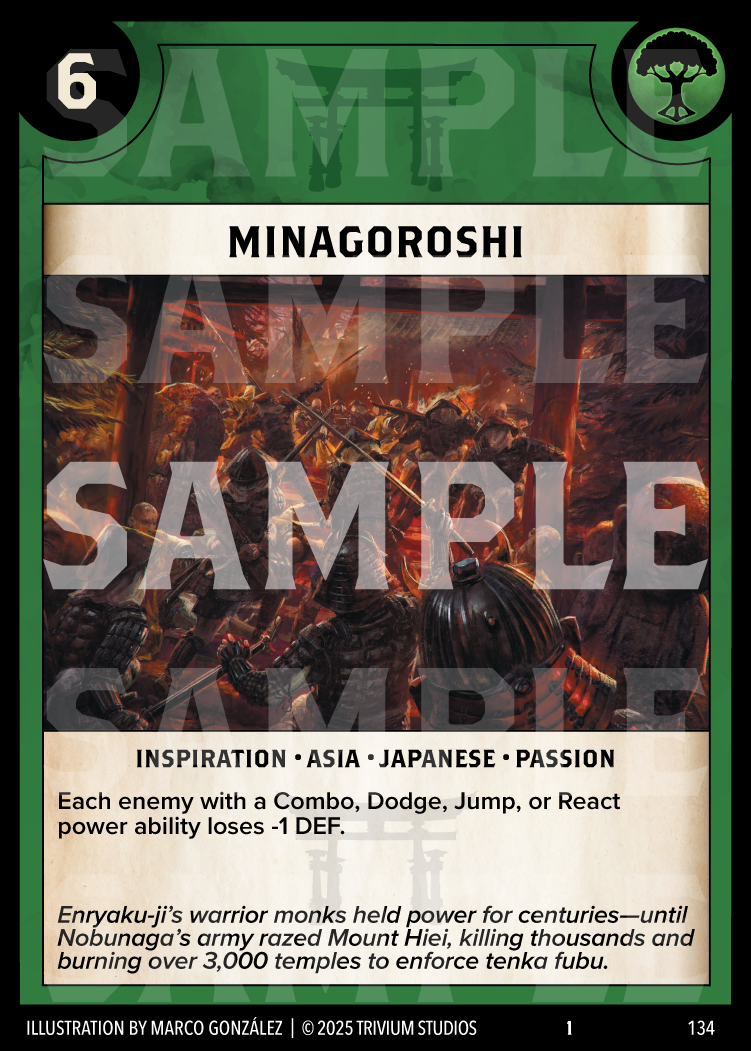
Inspiration
Asia
Japanese
Passion
Each enemy with a Combo, Dodge, Jump, or React power ability loses -1 DEF.
Enryaku-ji's warrior monks held power for centuries-until Nobunaga's army razed Mount Hiei, killing thousands and burning over 3,000 temples to enforce tenka fubu.
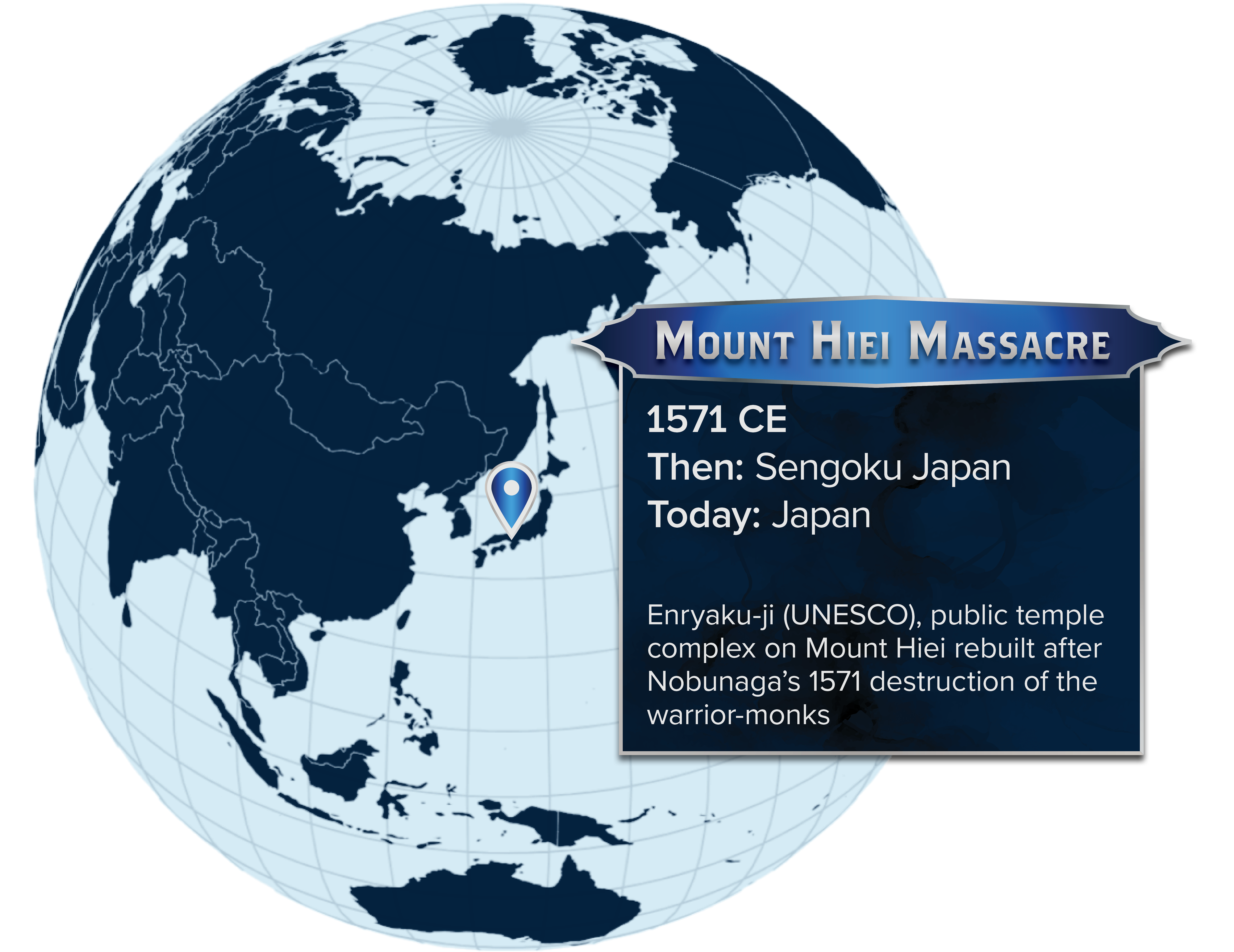
The air around Mount Hiei once echoed with chanting, bells, and the rustle of monks moving through ancient cedar forests. But in 1571, those sounds were drowned out by the roar of fire and the screams of a massacre. Nobunaga’s assault on the Enryaku-ji monastery—often remembered by the chilling term minagoroshi, or "total killing"—was a shockwave that rattled the very foundations of Japanese society. For centuries, the warrior monks (sōhei) of Hiei had been a shadow government, using their sacred status and private armies to bully emperors and threaten the capital of Kyoto. After repeated provocations, he chose to eliminate the threat entirely.
The attack was a scorched-earth nightmare. Nobunaga’s troops didn’t just target the warriors; they surrounded the mountain and set the massive temple complexes ablaze, creating a firestorm that could be seen for miles. While historical debate continues over the exact death toll, the message was unmistakable: the age of religious institutions acting as independent military powers was over. By burning one of the most sacred sites in the country, Nobunaga wasn’t just clearing a mountain, he was clearing the path for a central government that answered only to him.
Strategically, this move changed the map of central Japan. The Enryaku-ji complex sat on the high ground overlooking Kyoto and controlled vital trade routes. By eliminating the sōhei, Nobunaga removed a massive thorn in his side that had repeatedly supported his enemies. It was a cold, calculated move that solidified his reputation as a man who would stop at nothing. If you stood in his way, it didn’t matter if you wore silk robes or iron armor; you were simply an obstacle to being removed.
Today, Mount Hiei is a place of profound peace, with rebuilt temples nestled in the quiet mist of the forest. Modern visitors walk through halls that show no signs of the violence that once turned the mountainside red. Yet the story of 1571 remains a haunting chapter in Nobunaga’s legacy. It serves as a reminder of the brutal friction that occurs when old-world religious power and a new-world military state collide. It was the moment the "Demon King" proved that in his new Japan, the only authority that mattered was the one held at the end of a blade.