Encyclopedia Anachronistica

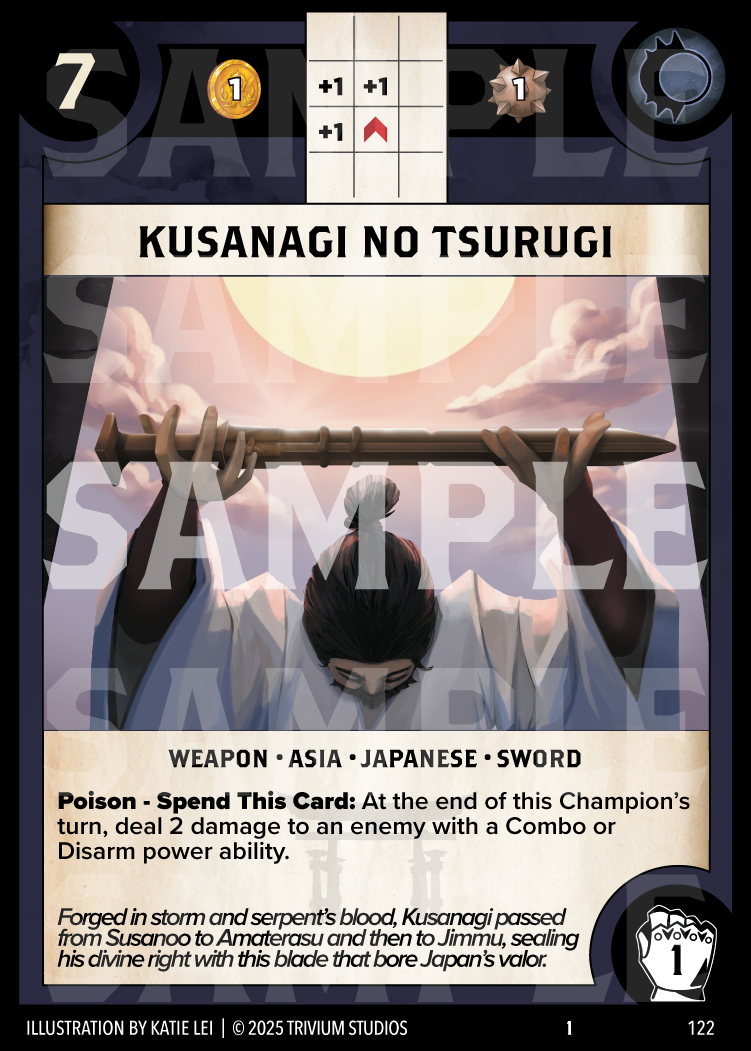
Standard
Weapon
Asia
Japanese
Sword
Poison - Spend This Card: At the end of this Champion's turn, deal 2 damage to an enemy with a Combo or Disarm power ability.
Poison - Spend This Card: At the end of this Champion's turn, deal 2 damage to an enemy with a Combo or Disarm power ability.
The story of Kusanagi begins not in a forge, but in the belly of a beast. According to the Kojiki, Japan’s oldest chronicle, this legendary blade was discovered inside the tail of an eight-tailed and eight-headed serpent Yamata-no-Orochi after the storm god Susanoo defeated the monster. The sword was eventually passed down to the sun goddess Amaterasu and gifted to the imperial line, becoming one of the Three Sacred Treasures of Japan. For Emperor Jimmu, the legendary first emperor who bridged the gap between gods and men, this sword wasn’t just a sidearm; it was his divine "ID card," a physical sign that the heavens themselves had chosen him to lead.
While the legends are filled with magic, the sword’s design tells a story of real-world ancient technology. Kusanagi is typically described as a chokutō—a straight, double-edged blade used long before the famous curved katanas of the samurai existed. During the Yayoi and Kofun periods, Japanese smiths were learning to master iron sand, folding the metal repeatedly to purge impurities and create a weapon that could withstand the chaos of early clan warfare. This blade represents that pivotal moment in history when ironworking began to spread across the Japanese archipelago, giving leaders the tools they needed to build a unified nation.
In the legends of Jimmu’s trek across Japan, the sword acts as a symbol of legitimacy. To the ancient clans, owning Kusanagi meant you weren’t just a warlord; you were the rightful protector of the land. This tradition survived for thousands of years; even today, Japanese emperors are enthroned with the Three Sacred Treasures—the mirror, the jewel, and the sword—to show their connection to their ancestors. Kusanagi represents the idea that a ruler needs more than just a strong army to lead; they need a sense of history and a purpose that connects the past to the future.
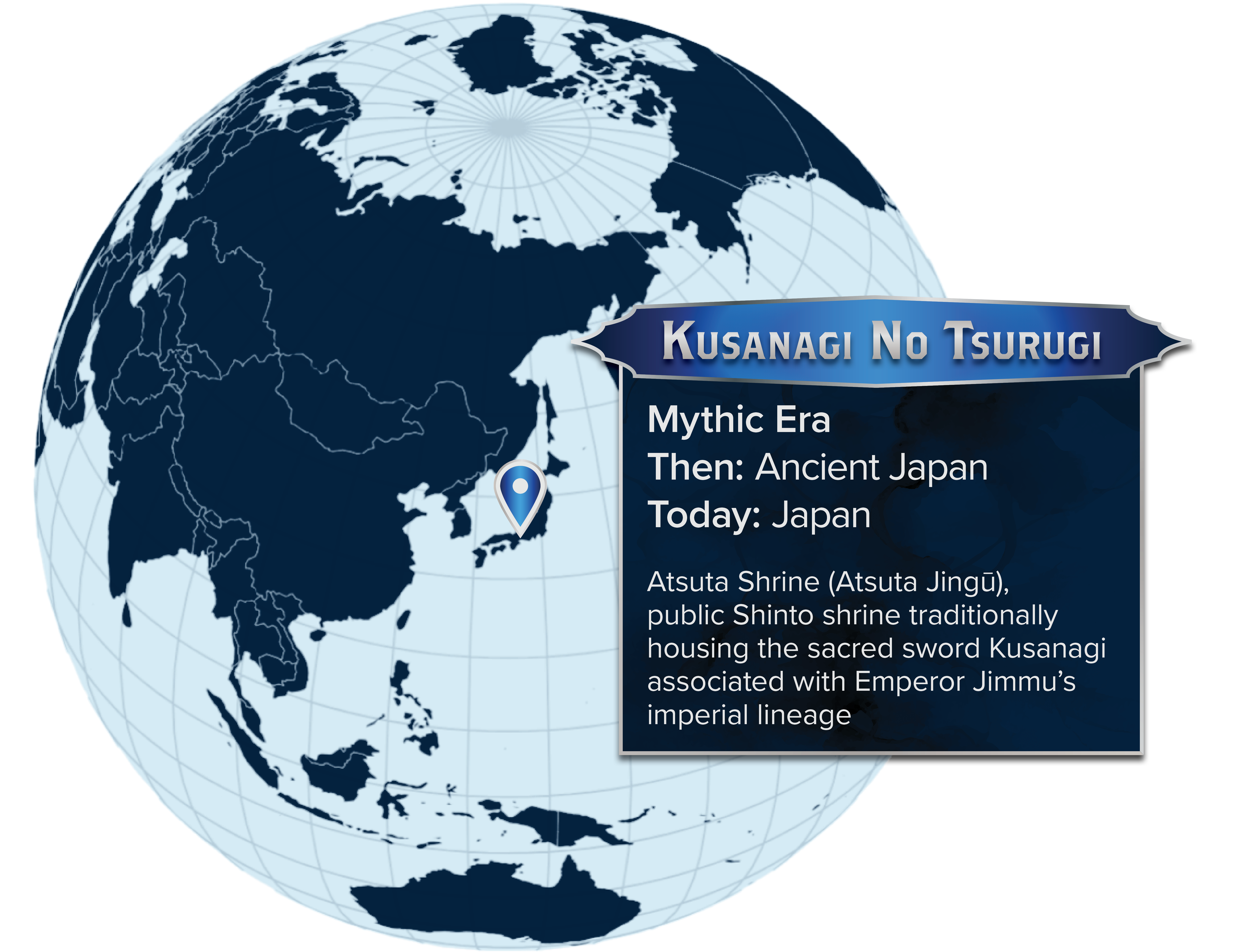
Today, Kusanagi is said to be safely tucked away at the Atsuta Shrine in Nagoya, though it is never shown to the public—not even to the Emperor himself except during specific ceremonies. Its power lies in its mystery. It connects modern Japan to its deepest mythological roots, serving as a reminder that the stories we tell about our origins are often just as sharp and enduring as a blade of steel. Kusanagi remains the ultimate symbol of a nation’s soul, forged in legend and tempered by time.