Encyclopedia Anachronistica


Standard
Armor
Europe
Greek
Light
Reveal: Deal 1 damage to all fire, metal, and void Champions. Then, if this Champion is fire, metal, or void, all Champions gain +2 weapon ATK until the end of the round.
Used by hoplites, especially in city-states such as Corinth and Athens, this iconic helmet bore a full face guard and narrow eye slits for protection and anonymity.
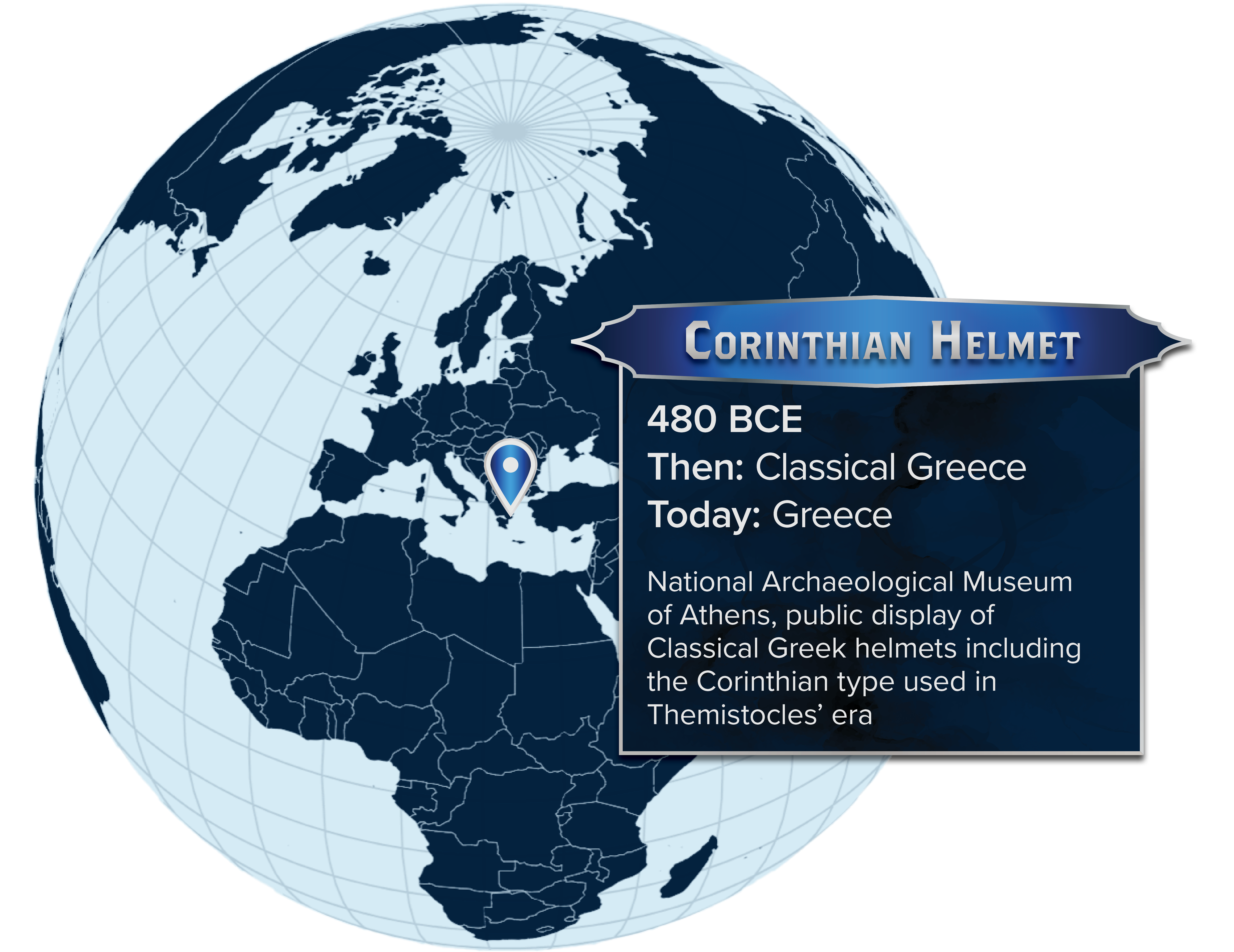
The Corinthian helmet is the "face" of ancient Greece. If you imagine a Spartan or an Athenian warrior, this is likely the helmet you see in your mind. Crafted from a single, heavy sheet of bronze, it was a masterpiece of metalworking that covered the entire head, leaving only two almond-shaped slits for the eyes and a small gap for the mouth. It wasn't just armor; it was a bronze mask that turned a human being into a terrifying, unreadable machine of war.
While the protection was top tier, wearing one was an intense experience. Once the helmet was pulled down, a soldier’s world became very small. Peripheral vision was cut off, and the heavy bronze ears made it almost impossible to hear commands. This is why the Greek phalanx was so important—soldiers didn't need to see the whole battlefield; they just needed to stay locked with the man next to them. Interestingly, many vases show leaders like Themistocles wearing the helmet "pushed back" on top of their heads. This wasn't just for style; it allowed generals to actually see, breathe, and shout orders to their troops before the lines crashed together.
By the time of the Persian Wars, some soldiers were switching to lighter helmets that didn't block their ears or eyes as much, but the Corinthian style remained the ultimate symbol of hoplite pride. To own one of these was to prove you were a citizen-soldier who had the wealth to buy your own gear and the courage to stand in the front rank. It represented the idea that the city was protected not by walls of stone, but by a wall of men in bronze.
Today, the Corinthian helmet has become a global icon, appearing everywhere from museum pedestals to the logos of modern sports teams. When students look at a surviving helmet in a museum—often green with age but still showing the hammer marks of the ancient blacksmith—they are seeing the literal "skin" of the men who fought at Marathon and Thermopylae. It remains a powerful reminder that in ancient Greece, being a citizen meant being ready to put on the bronze and stand your ground.