Encyclopedia Anachronistica

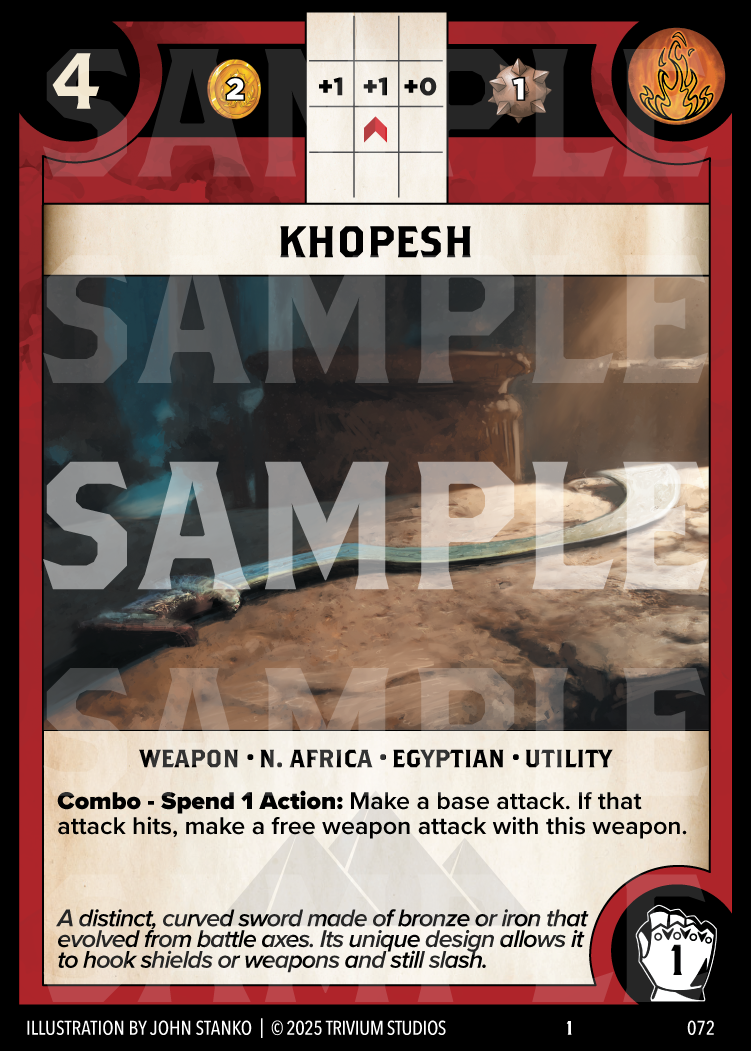
Standard
Weapon
N. Africa
Egyptian
Utility
Combo - Spend 1 Action: Make a base attack. If that attack hits, make a free weapon attack with this weapon.
A distinct, curved sword made of bronze or iron that evolved from battle axes. Its unique design allows it to hook shields or weapons and still slash.
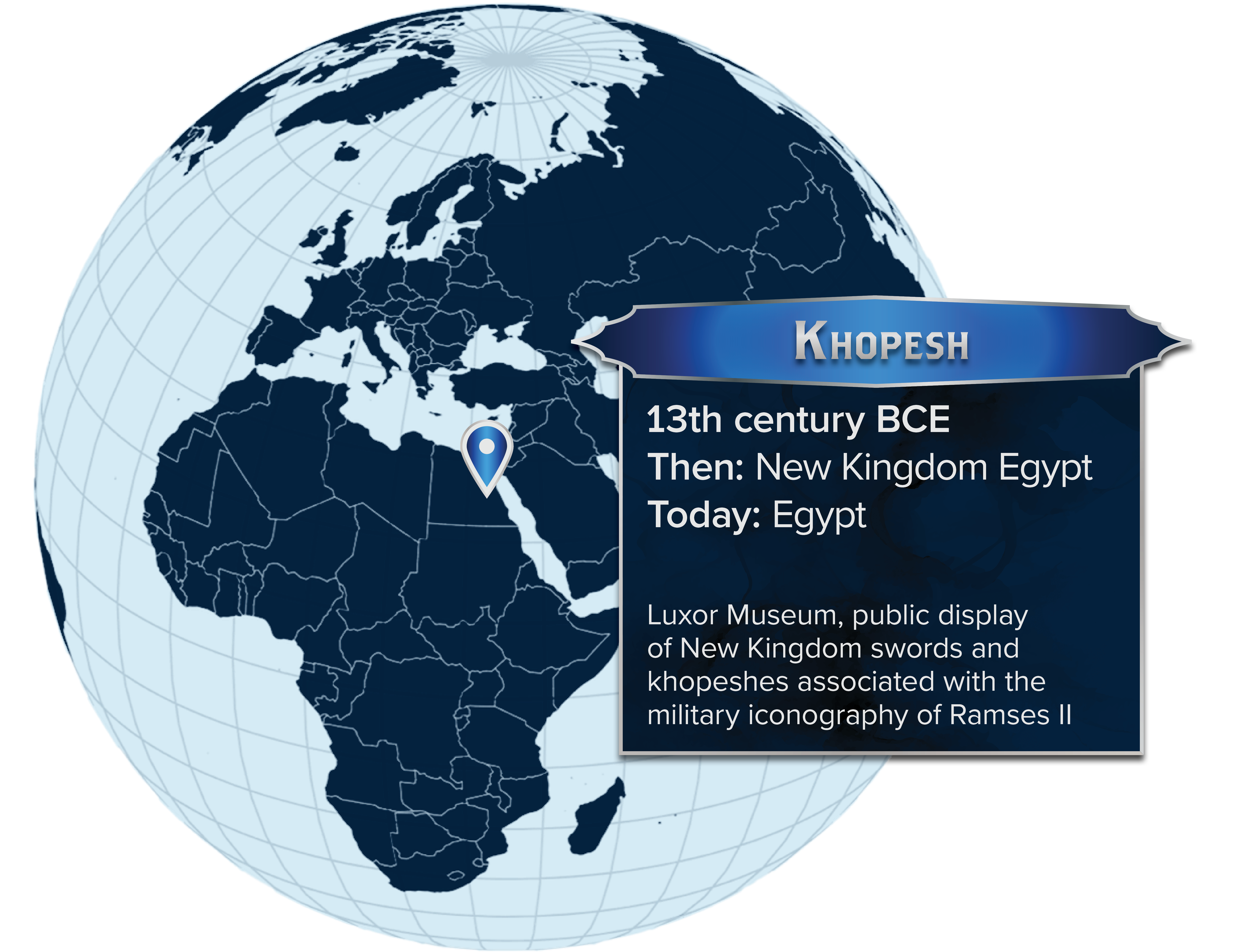
The khopesh is the "signature weapon" of the Egyptian New Kingdom, a sickle-sword that looks like a cross between a traditional sword and a battle-axe. With its distinctive hook-shaped blade, it allowed a warrior to do more than just swing; a fighter could use the curved edge to snag an enemy’s shield, pull it away, and then deliver a powerful slashing blow. Measuring about 50–60 cm (20–24 inches), its weight was concentrated at the top of the curve, giving it the chopping power of a hatchet with the reach of a blade.
While the khopesh didn't actually start in Egypt—it was originally a Near Eastern design from Canaan and Mesopotamia—the Egyptians adopted and perfected it. During the reign of Ramesses II, it became the ultimate symbol of the Pharaoh’s power. You can see it carved into the walls of massive temples like Abu Simbel and Karnak, where Ramesses is shown holding a khopesh while standing over defeated enemies. In these scenes, the weapon isn't just a tool for killing; it is a "divine scepter" used to destroy chaos and protect the order of Egypt.
The khopesh was also a status symbol for elite "Special Forces" and the royal family. In the tomb of the boy-king Tutankhamun, archaeologists found two ceremonial khopeshes. One was made of bronze and the other of gold-covered wood, showing that these weapons were meant to protect the king even in the afterlife. However, as the Iron Age began, these beautiful bronze curves were eventually replaced by straight iron swords, which were easier to produce and better for the changing tactics of Mediterranean warfare.
Today, the khopesh is a favorite for experimental archaeologists who recreate the weapon to see exactly how it felt in a fight. By testing these replicas against wooden shields and ballistic gel, researchers have learned that the khopesh was a terrifyingly efficient "shield-breaker." You can find original bronze examples in major museums like the British Museum and the Louvre, where they still look remarkably sharp and lethal despite being over 3,000 years old.
For students, the khopesh is a perfect example of how technology spreads between cultures. Egypt took a foreign invention, mastered it, and turned it into an icon that still defines our image of the Pharaohs today. It reminds us that ancient kings weren't just politicians; they were "War-Lords" who used the latest military tech to build their legends.