Encyclopedia Anachronistica


Standard
Armor
Middle East
Caliphates
Light
Reveal: Gain +2 DEF against all earth, metal, and void Champion's base attacks until the end of the round.
A single plate of steel and fluted to mimic sacred folds, the Tarikah deflected blades and bore Qur'anic blessings for warriors in Ottoman and Persian campaigns.
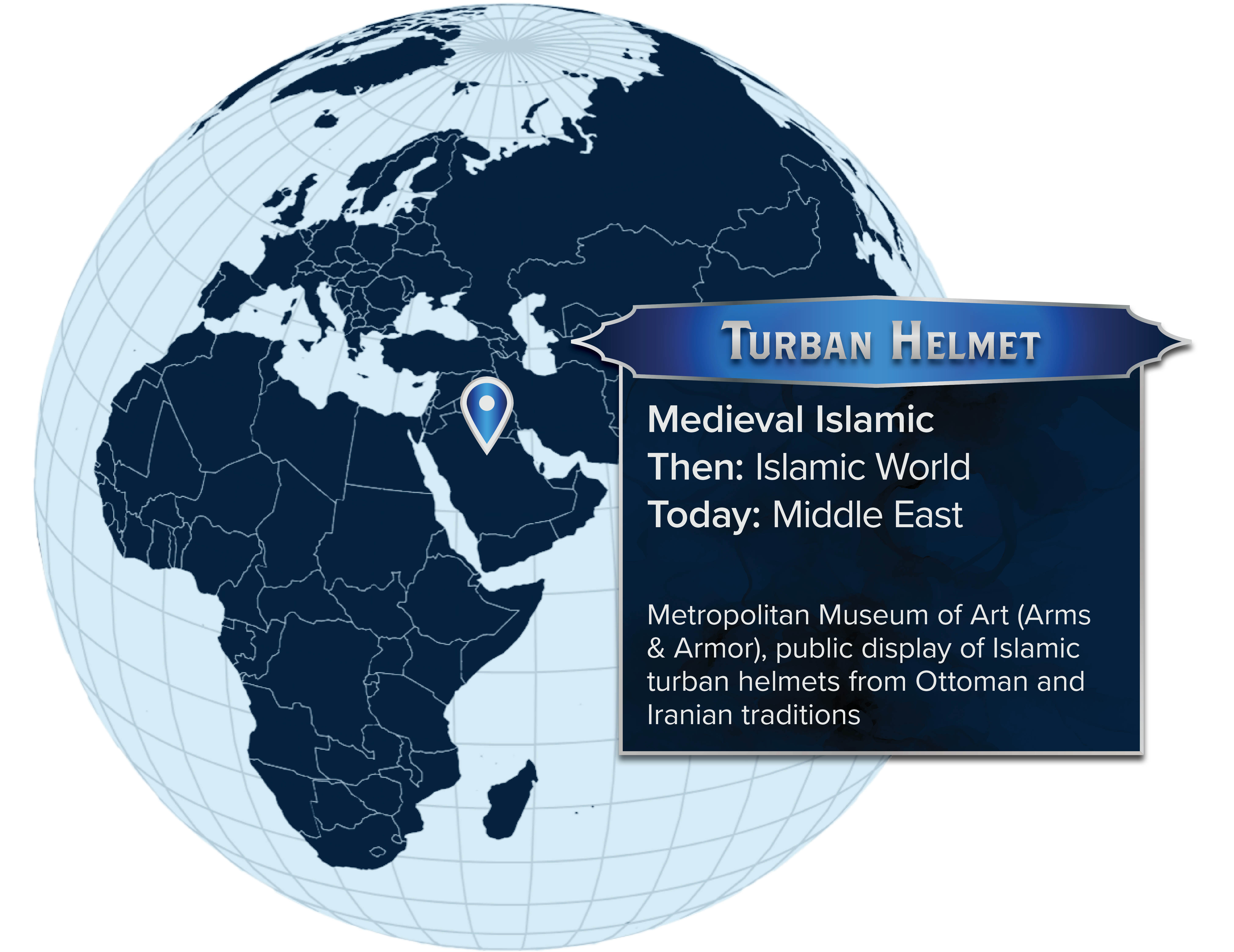
The tarikah was the ultimate "hidden" armor of the 7th century, a cloth turban that looked ordinary but concealed a secret layer of defense. Beneath the soft folds of fabric sat a light iron or bronze skullcap, sometimes called a qalansuwa or bayda’. This design was a stroke of desert genius: the cloth absorbed sweat and cushioned the head, but more importantly, it kept the metal cap from turning into an oven under the scorching sun. For a commander like Khalid ibn al-Walid, the tarikah provided a helmet that was lightweight, breathable, and capable of stopping a sword cold.
Khalid fought in an era where heavy armor could be a death sentence in the heat. While Byzantine knights were weighed down by massive, expensive helmets, the tarikah offered a practical alternative. The thick layers of wrapped cloth acted as a shock absorber, turning a direct hit into a glancing blow. This was essential for Khalid, who famously led his "Mobile Guard" from the front. The wrapping also ensured his protection stayed snug and secure during the high-speed maneuvers and rapid cavalry charges that became his trademark.
According to early historical sources, Khalid was often seen wearing a distinctive black turban in the heat of battle. Legend adds a famous detail: that his headgear contained a strand of hair from the Prophet Muhammad, which Khalid believed brought him divine victory. While historians focus on the practical metal cap hidden inside, the story of the "blessed" turban shows how much value he placed on this specific piece of gear. Whether it was the iron or the inspiration, he was never seen without it during his most dangerous campaigns.
Today, the tarikah is a perfect example of how early Islamic armies used "stealth" technology to overcome better-funded empires. In museums across the Middle East, surviving skullcaps and wrapped headgear show how simple materials—cloth and thin metal—could be combined into effective gear. It reminds us that not all armor was meant to be shiny and intimidating; sometimes the most effective protection was the kind that blended into daily life, allowing a warrior to stay cool, fast, and ready for anything.