Encyclopedia Anachronistica

Standard
Inspiration
Asia
Indian
Event
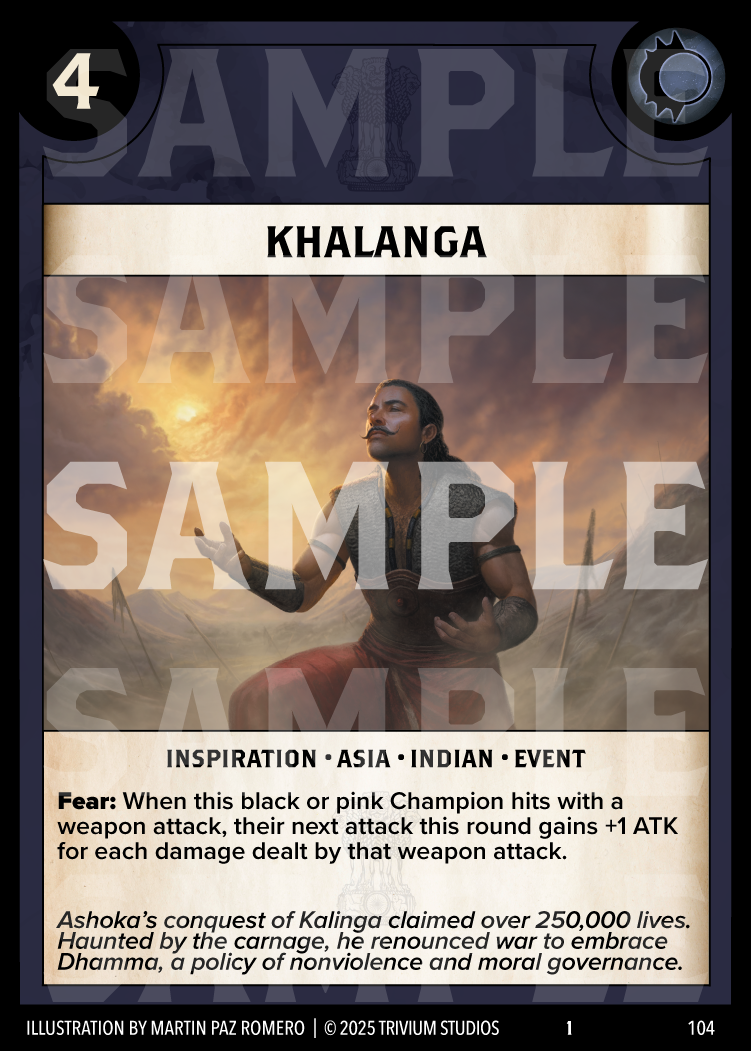
Fear: When this black or pink Champion hits with a weapon attack, their next attack this round gains +1 ATK for each damage dealt by that weapon attack.
Ashoka's conquest of Kalinga claimed over 250,000 lives. Haunted by the carnage, he renounced war to embrace Dhamma, a policy of nonviolence and moral governance.
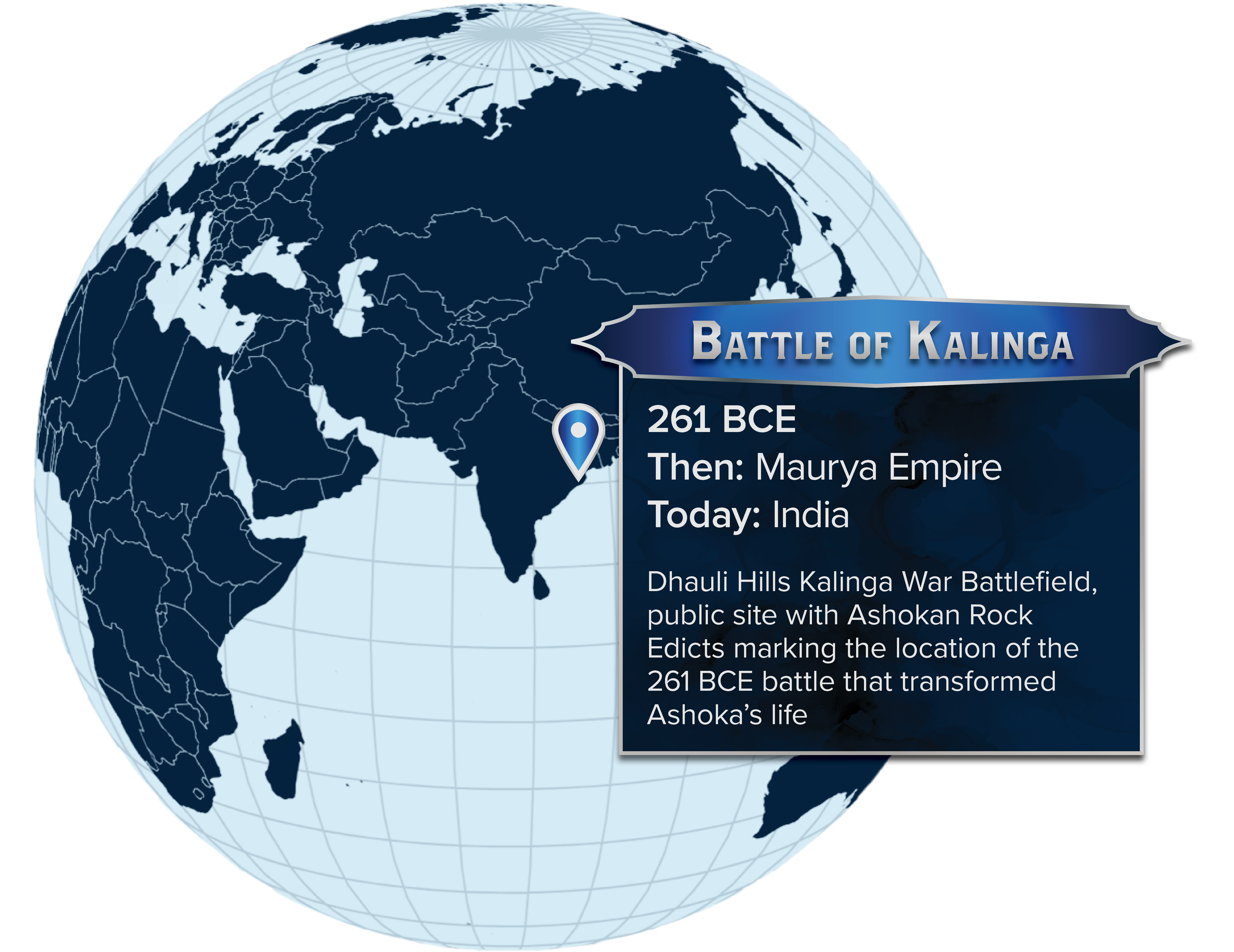
The air over the Dhauli Hills in 261 BCE didn't smell of victory; it smelled of smoke, copper, and damp earth. Standing on those heights, Emperor Ashoka looked down at the Daya River and didn't see water—he saw a current running red with the blood of the Kalinga people. While most ancient kings celebrated their conquests with statues and parades, Ashoka’s victory over the independent state of Kalinga broke something inside him. According to his own inscriptions on Rock Edict 13, the cost of his triumph was staggering: 100,000 people killed, countless more deported, and families shattered. These aren't just legends passed down through whispers; they are the Emperor’s own cold, hard statistics, carved into the very landscape where the slaughter took place.
This wasn't just a military win; it was a soul-crushing realization. In his own words, Ashoka described his actions with a hauntingly modern sense of remorse. He used the Prakrit word anutapa, which literally translates to a "burning" of the heart. He didn't hide behind excuses; instead, he wrote that the suffering of even a small fraction of those who died in Kalinga would now weigh heavily upon him. This "burning" triggered a radical transformation, as he famously declared that "conquest by dhamma"—a victory won through kindness and moral example—was far superior to any conquest won by the sword. He stopped the expansion of his borders and started expanding his mercy, replacing the "drum of war" with the "drum of dhamma."
If you travel to those same hills today, you can still place your hand on the rough surface of the rock edicts where Ashoka’s voice is preserved in stone. These carvings aren't myths; they are 2,000-year-old messages addressed to the future, admitting to a terrible mistake and promising a better way to lead. The Kalinga War remains a landmark in human history because it shows a ruler confronting his own atrocities and choosing a different path. It proves that even at the height of absolute power, a leader can look at the wreckage of their actions and decide that their true legacy will be defined by healing rather than harm.