Encyclopedia Anachronistica

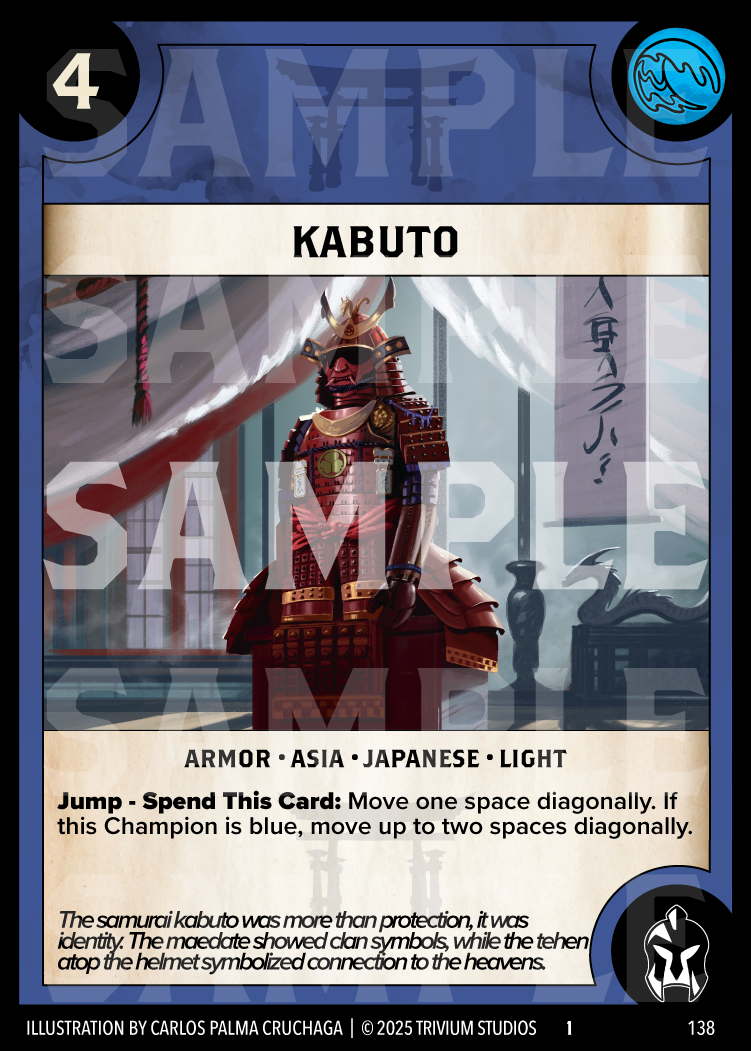
Standard
Armor
Asia
Japanese
Light
Jump - Spend This Card: Move one space diagonally. If this Champion is blue, move up to two spaces diagonally.
The samurai kabuto was more than protection, it was identity. The maedate showed clan symbols, while the tehen atop the helmet symbolized connection to the heavens.
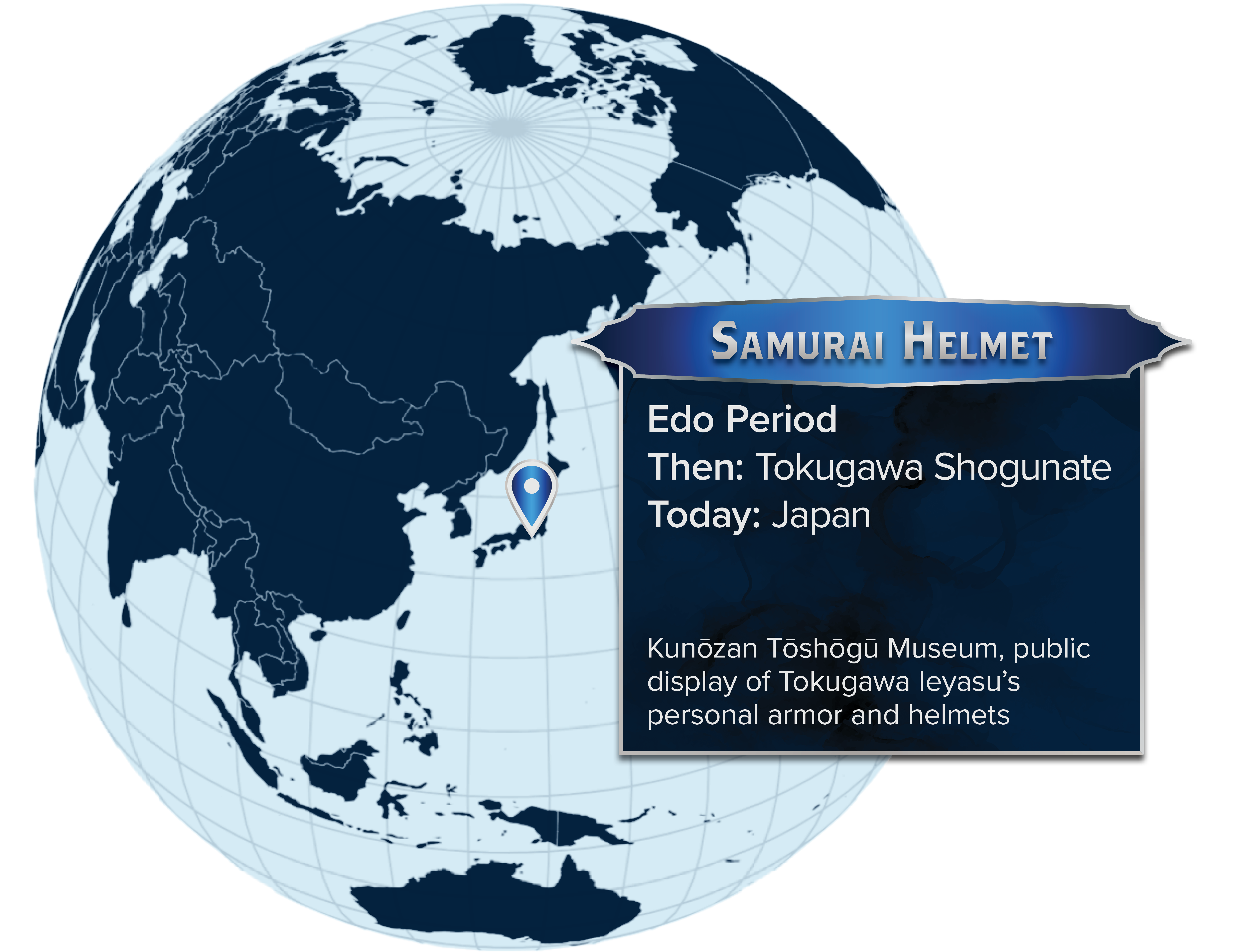
A kabuto is more than just a helmet—it is a piece of kinetic sculpture, a fortress of iron and lacquer designed to keep a warrior’s head on his shoulders while broadcasting exactly who he was. In the era of Tokugawa Ieyasu, these helmets were masterpieces of heavy-duty engineering. Armorers would rivet together multiple iron plates to form a rounded bowl, creating a shape specifically meant to deflect the downward "cleaving" strikes of a sword or the high-velocity impact of an arrow. From the back of the bowl hung the shikoro, a fanned-out curtain of lacquered scales that protected the neck without sacrificing the wearer’s ability to look around.
The most iconic feature of the kabuto was the maedate, the dramatic crest rising above the forehead. These weren’t just for fashion; they were battlefield IDs. In the smoke and chaos of a fight, a commander needed to be visible to his own troops. Crests shaped like deer antlers, crescent moons, or fierce deities allowed a leader to act as a rallying point. Ieyasu’s personal helmets often leaned toward "understated strength"—dark, somber lacquer and sturdy construction that signaled a man who valued reliability and discipline over flashy showmanship.
For Ieyasu, who survived decades of constant warfare before finally seizing control of Japan, a helmet was a piece of life-saving technology. By his time, the threat of the matchlock musket meant that helmets had to be tougher than ever. A well-forged kabuto could survive a glancing blow from a lead bullet, turning a fatal wound into a mere headache. It was the armor of a survivor who understood that you can only build a 250-year dynasty if you live long enough to see the first year through.
Today, these helmets are the centerpieces of collections like the Tokugawa Art Museum in Nagoya. When you stand in front of them, you can still see the tiny hammer marks of the armorer and the deep, glossy layers of protective lacquer. They serve as a reminder that the "Great Peace" Ieyasu established was paid for in iron and sweat. The kabuto remains the ultimate symbol of the samurai: a perfect blend of high-end artistry and the cold, hard necessity of the battlefield.