Encyclopedia Anachronistica


Standard
Special
Middle East
Caliphates
Cavalry
When a cavalry card is revealed, deplete this card and rotate this Champion. When this Champion moves three or more spaces in a turn, deplete this card and gain 1 action.
Swift and disciplined, Rashidun forces balanced infantry and cavalry with strict wartime ethics, avoiding civilian harm, honoring treaties, and praying amid combat.
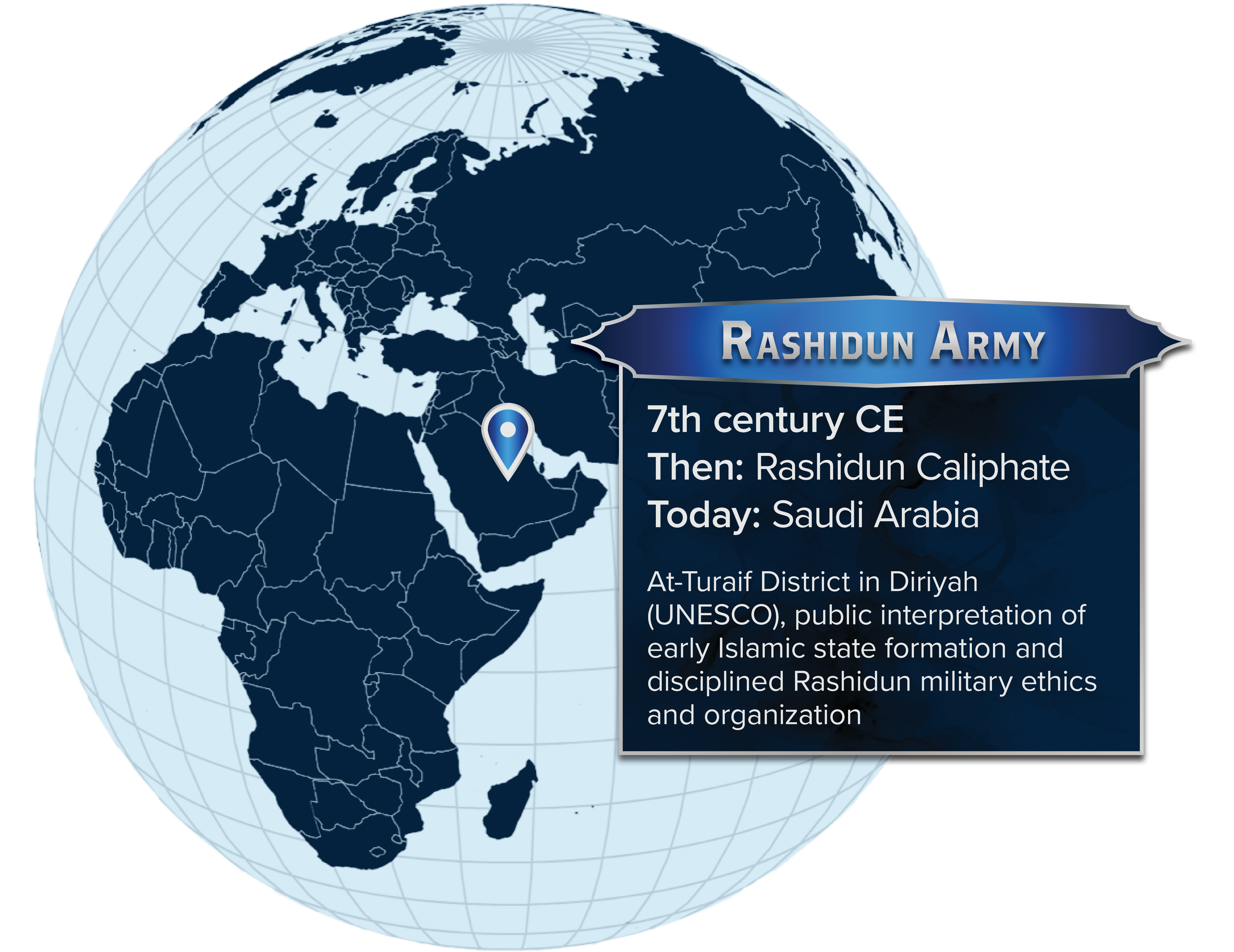
When Abu Bakr became caliph, the Muslim community had no permanent, standing army—only a collection of tribal groups, each with their own leaders and traditional ways of fighting. While they had fought together during the Prophet Muhammad’s lifetime, they had never needed a single, unified military structure. The Ridda Wars changed everything. Facing uprisings across the Arabian Peninsula, Abu Bakr had to act as a master organizer, grouping these scattered fighters into coordinated units with appointed commanders and clear strategic goals. This shift turned a loose collection of volunteers into a disciplined force capable of responding to threats with lightning speed.
The Rashidun Army under Abu Bakr didn’t rely on heavy armor or massive siege engines; its greatest weapons were mobility and desert survival. Fighters carried spears, straight swords, and leather shields, moving fast across terrain that would have exhausted other militaries. Abu Bakr’s leadership was the "steady hand at the helm," emphasizing fairness in distributing supplies and keeping tribes that were once rivals focused on a shared purpose. By insisting on clear communication and disciplined supply routes, he transformed a group of desert warriors into a professional force that would eventually expand Syria, Iraq, and far beyond the borders of Arabia.
While later legends suggest these soldiers were unstoppable, detailed historical records like those from al-Tabari tell a different story. When combined with archaeological evidence from battle sites, they show a military that won through grit and superior organization. They mastered the art of the "desert strike," using the vast sands like an ocean to disappear and reappear where the enemy least expected them. Abu Bakr’s organizational "reboot" of the military ensured that the community didn’t just survive its first major crisis but emerged stronger and more unified than before.
Today, the story of the Rashidun Army matters because it shows how organization can transform a community’s ability to survive. It’s a case study in how a leader can take diverse, independent groups and give them a common direction during a pivotal moment in history. The transition from tribal skirmishes to a unified community, with members ‘in reserve’ ready to defend as needed, wasn’t just about winning battles; it was about creating the infrastructure of a rising state that would soon change the map of the world.