Encyclopedia Anachronistica

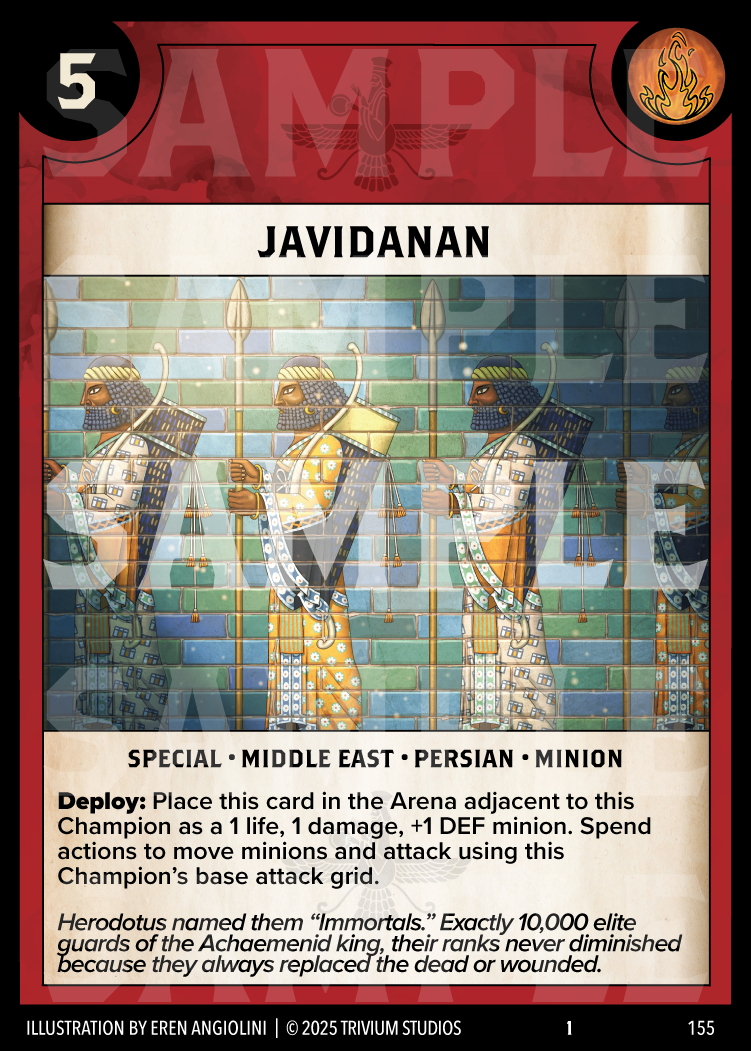
Standard
Special
Middle East
Persian
Minion
Deploy: Place this card in the Arena adjacent to this Champion as a 1 life, 1 damage, +1 DEF minion. Spend actions to move minions and attack using this Champion's base attack grid.
Herodotus named them "Immortals." Exactly 10,000 elite guards of the Achaemenid king, their ranks never diminished because they always replaced the dead or wounded.
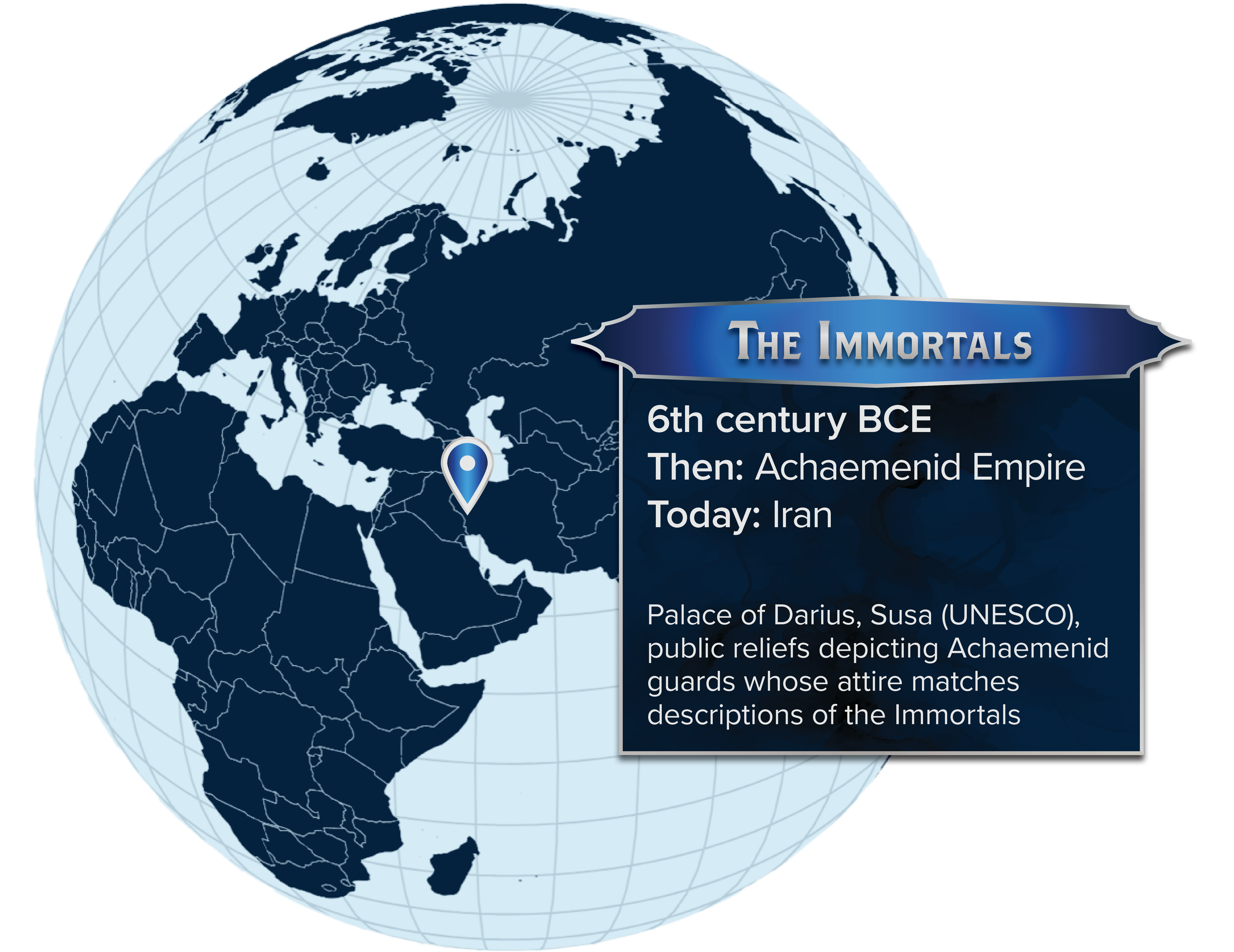
The Immortals—known through the accounts of the Greek historian Herodotus as a 10,000-man elite corps—stand as the most iconic unit of the Achaemenid army. Their name stems from a unique organizational rule: whenever a soldier died, fell ill, or was injured, another was immediately promoted to take his place. This ensured their strength never dropped to 9,999, creating the chilling battlefield illusion that the unit was a single, undying entity. While the details of their structure are still debated by historians, it is widely accepted that this elite royal guard was established during the reign of Cyrus the Great and served as the backbone of the empire for centuries.
Equipped for both versatility and endurance, these soldiers wore scale armor hidden beneath patterned tunics and carried wicker shields that were surprisingly effective at stopping arrows while remaining light enough for long marches. Their arsenal was a "triad" of Persian lethality: a long spear for the phalanx, a composite bow for long-range disruption, and a short sword for the chaos of close-quarters combat. Their distinctive silhouette—defined by the soft felt tiara and trousers—made them instantly recognizable across the diverse landscapes of the ancient world. Reliefs at Persepolis, though carved after Cyrus’s time, immortalize these guards in orderly ranks, their spears held with the perfect vertical symmetry of a "gold-balanced" weapon.
For Cyrus, the Immortals were far more than just a security detail; they were the physical manifestation of his stability and reach. As he expanded his borders from the mountains of Media to the walls of Babylon, he needed a force that was equally at home in a mountain pass as it was on an open plain. The Immortals also served a vital ceremonial role, surrounding the King in a sea of disciplined iron and silk during processions to reinforce his divine authority. They were the ultimate "silent partners" in his diplomacy, reminding every guest and rival that Cyrus’s messages of tolerance were backed by the most disciplined military machine on earth.
Today, the Immortals remain the most enduring image of Persian military might. Their depiction in art and modern media reflects a legacy of organization and multicultural strength. They weren’t just a unit of soldiers; they were a symbol of the vision that allowed Cyrus to build and hold one of the largest empires in history. They remind us that while a single leader may cast a long shadow, it is the disciplined, "undying" support of those standing behind him that truly secures a dynasty.