Encyclopedia Anachronistica

Standard
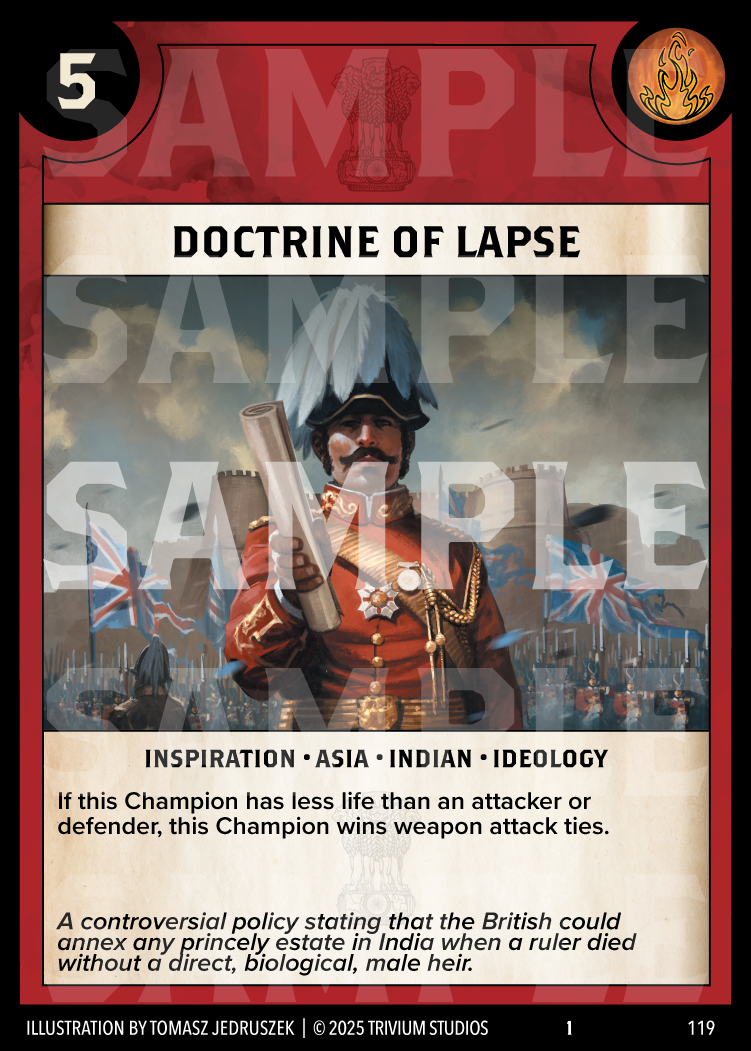
Inspiration
Asia
Indian
Ideology
If this Champion has less life than an attacker or defender, this Champion wins weapon attack ties.
If this Champion has less life than an attacker or defender, this Champion wins weapon attack ties.
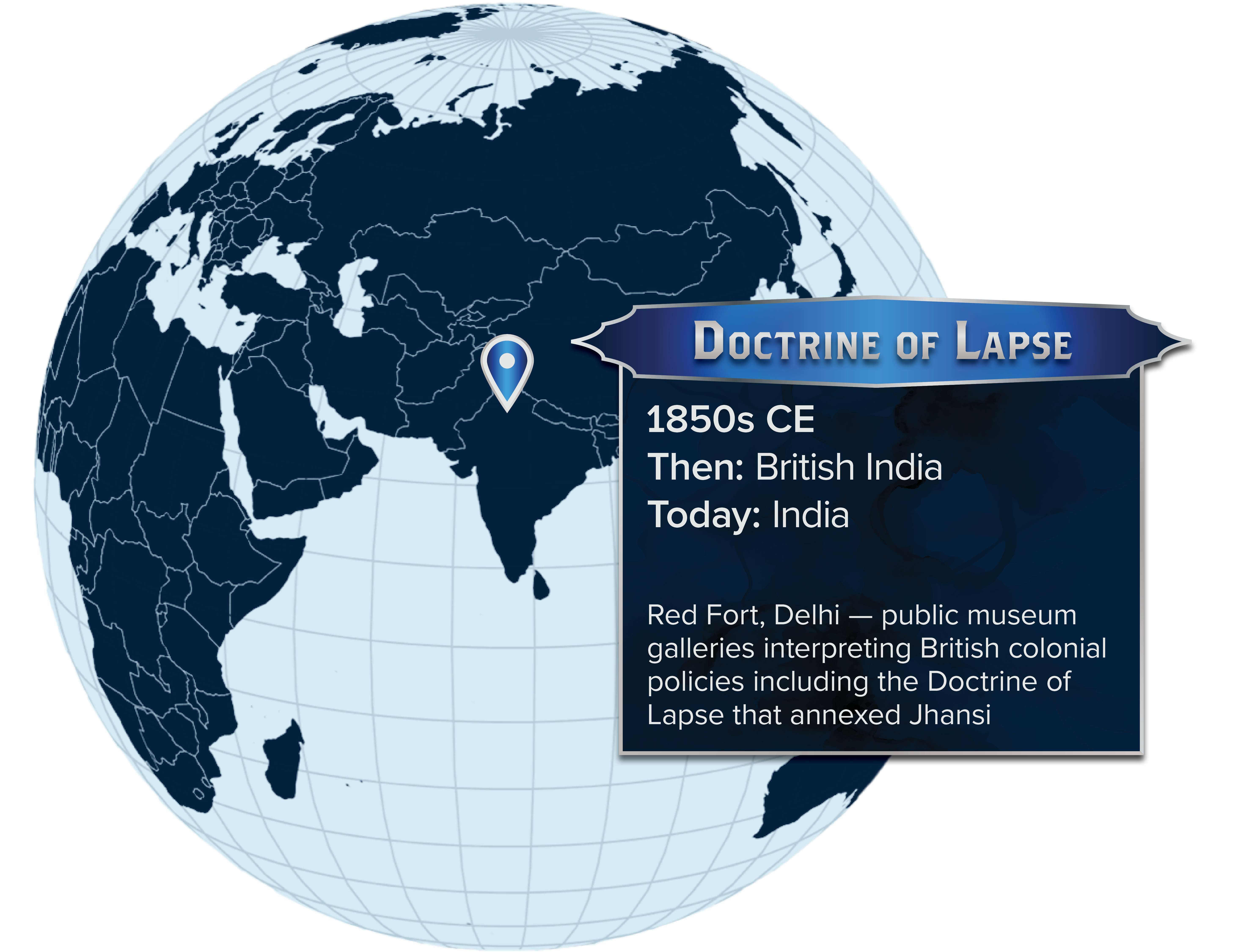
The spark that set Jhansi ablaze didn’t come from a battlefield—it came from a signature on a legal document. This was the Doctrine of Lapse, a ruthless policy introduced by the British Governor-General Lord Dalhousie. Under this rule, the British East India Company claimed the right to seize any princely state if its ruler died without a biological male heir. When Lakshmibai’s husband, Raja Gangadhar Rao, passed away in 1853, the British saw an opportunity for a land grab. Even though the royal couple had legally adopted a young boy named Damodar Rao according to centuries of Indian tradition, the British simply refused to recognize him. To them, Jhansi was no longer a kingdom; it was a line item on a ledger.
The most surprising part of this injustice is that the local British officials in Jhansi actually agreed with the Rani (Queen). Major Ellis, the political agent who knew Lakshmibai and respected her administration and intelligence, was so convinced of her right to rule that he wrote an official letter to his superiors supporting her claim. He argued that the adoption was legal and that the Rani was "highly respected and esteemed" by her people. But his words were ignored by the high-ranking officials in Calcutta. Lord Dalhousie, driven by a desire to expand the Empire’s borders, dismissed the local expertise of his own officers. For Lakshmibai, this was the ultimate betrayal—she had played by the British rules, gained the support of their own representatives, and was still cast aside.
For Lakshmibai, this was the ultimate Political Catalyst. The Doctrine of Lapse wasn’t just a boring legal argument; it was a direct attack on her family and her people. It stripped her son of his future and handed her city over to foreign officials who didn’t understand its culture or its needs. Lakshmibai didn’t start by reaching for a sword; she started by reaching for a pen. She wrote passionate appeals, hired lawyers, and petitioned the British government to respect her rights. Every single door was slammed in her face. This cold, bureaucratic rejection transformed a grieving widow into a revolutionary leader, proving that when you take away someone’s peaceful path to justice, you often leave them with no choice but to fight.
By the time the Great Rebellion of 1857 erupted across India, the people of Jhansi were already at a breaking point. The annexation had brought economic hardship and a deep sense of insult to their local pride. When the first shots were fired elsewhere, Jhansi didn’t need a reason to join; the Doctrine of Lapse had already provided one. Lakshmibai stepped into the power vacuum, not just as a queen, but as a defender of a stolen legacy. She spent her final years transforming a city of weavers and merchants into a fortress of resistance, fueled by the memory of the political betrayal that had started it all.
Today, historians look back at the Doctrine of Lapse as one of the most short-sighted policies in the history of the British Empire. It is studied as a classic example of how a government can "win" a legal argument but lose the hearts of an entire population. The policy was ended by the British in 1858 (yet continued by the Indian government until 1971), but the fire it ignited in Jhansi made Lakshmibai a permanent symbol of defiance. It serves as a timeless reminder that political decisions made in distant offices can have explosive consequences on the ground, turning ordinary citizens into legends of resistance.