Encyclopedia Anachronistica


Chrono
Armor
N. Africa
African
Light
React: When an enemy attacks this Champion with a weapon, roll a d6. On a /6/, gain +3 DEF until the end of the round.
Worn across North Africa, djellabas are robes with pointed hoods, from Berber and Arab roots, that offer warmth, modesty, and are a mark of cultural identity.
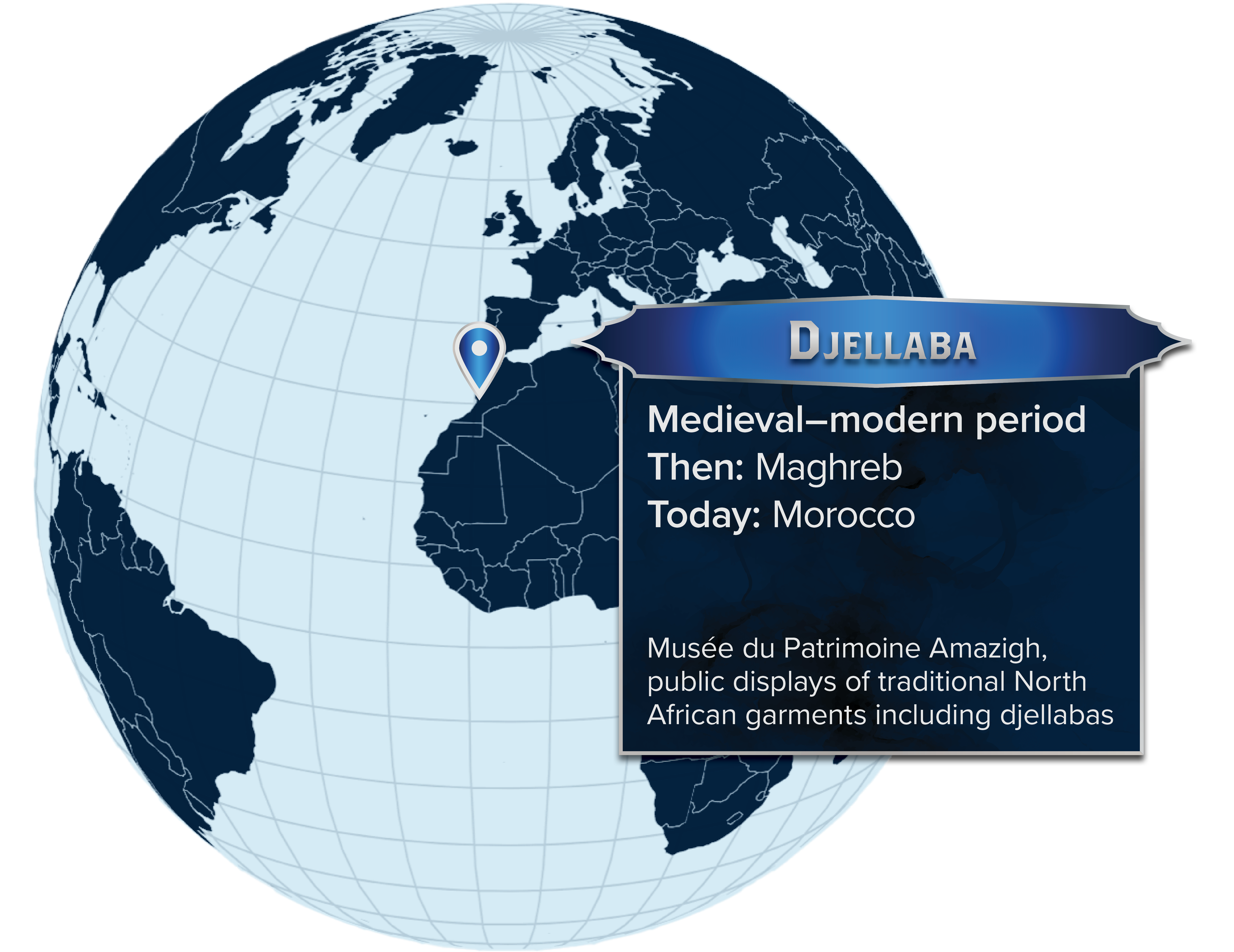
From the snowy peaks of the Atlas Mountains to the sun-scorched markets of Marrakesh, one garment has defined the silhouette of North Africa for centuries: the djellaba. This long, hooded robe is a masterpiece of ancient engineering, designed to tackle a climate that can swing from freezing desert nights to blistering afternoons in a matter of hours. With its loose cut, sweeping sleeves, and iconic pointed hood, the djellaba provided a portable shelter that protected travelers from sun, sand, and wind without ever slowing them down.
The roots of the djellaba reach back to the medieval Maghreb, emerging from the blending of Berber and Arab clothing styles during the 12th-century Almoravid and Almohad dynasties. In these early days, the robe was a survival tool. Most were hand-woven from heavy wool, a material that was both durable and water-resistant—essential for shepherds and merchants navigating the rugged terrain. As the garment moved into the Great Cities like Fez and Tunis, lighter cotton versions appeared for the summer heat, proving that the design was as versatile as the people who wore it.
Beyond its utility, the djellaba was a language of identity and respect. Its most famous feature, the pointed hood called a qob, wasn’t just for blocking the wind; it served as a built-in pocket for carrying bread or grain and became a symbol of modesty and dignity. The colors and patterns of a djellaba could tell you exactly where a person came from. Men often wore the natural, earthy tones of undyed sheep’s wool, while women’s robes might feature intricate embroidery or vibrant dyes, reflecting the artistic flair of their specific village or tribe.
Throughout history, the djellaba was the "uniform" of the Silk Road’s western end. Merchants wore them as they guided camel caravans across the Sahara, and scholars wore them in the quiet courtyards of ancient universities. When 19th-century explorers first arrived in Morocco, they were struck by the sight of entire cities moving in the graceful, rhythmic flow of these hooded robes. Today, the djellaba remains a living piece of history. Whether it’s a hand-stitched heirloom worn at a wedding or a modern version seen on a city street, it remains a powerful link to the craftsmanship and culture of the North African past.