Encyclopedia Anachronistica


Standard
Armor
Asia
Indian
Light
Gain +1 DEF against aether, metal, and water Champion base attacks. Gain +1 DEF against aether, fire, and wood weapon attacks.
For ceremonial or everyday use, this pleated, 4-9-meter length of unstitched cloth can be worn in multiple configurations depending on the occasion.
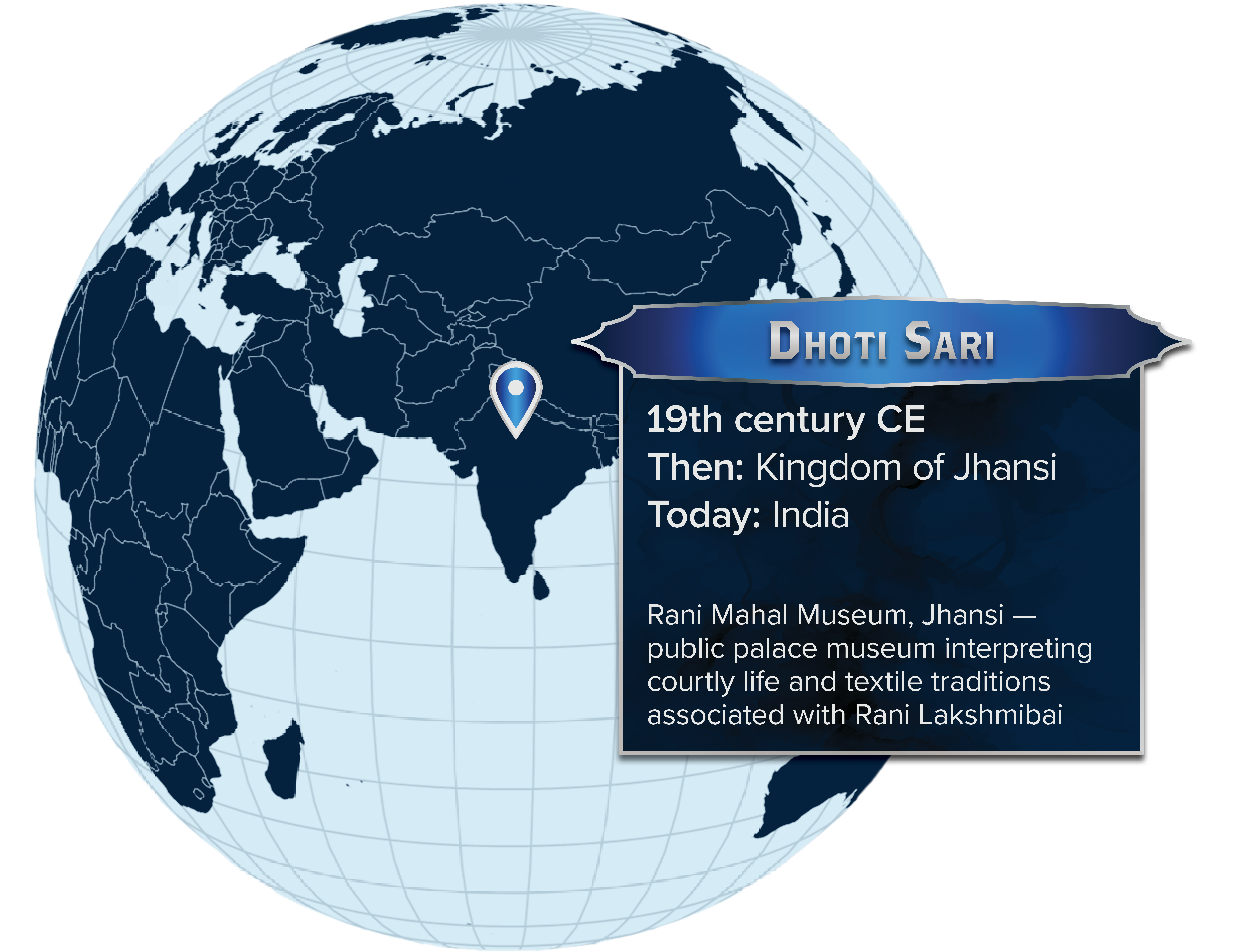
A single length of cotton fabric might seem like a fragile defense for a battlefield, but for Rani Lakshmibai, it was as essential as her sword. While most queens of her era were expected to remain behind palace veils in heavy, flowing silk, Lakshmibai adopted the dhoti-style sari. By wrapping the long fabric around her legs like trousers rather than a skirt, she transformed traditional Indian dress into a high-performance riding suit. This wasn’t just a fashion choice; it was a tactical revolution that allowed her to leap into a saddle and command her cavalry with the same freedom as any male general.
The dynamics of the dhoti sari were perfect for the high-stakes maneuvers of the 1857 uprising. In the heat of a cavalry charge, a standard sari would have been a death trap, tangling in the stirrups or snagging on the pommel of the saddle. By dividing the fabric into secure, pleated folds, Lakshmibai ensured she could mount and dismount in seconds. Eyewitnesses, including the priest Vishnu Bhatt Godse, noted that she often paired this practical wrap with a fitted jacket and a tightly wound turban. This silhouette—part queen, part soldier—became her signature look, signaling to her troops that their leader was ready to bleed and fight right alongside them.
This attire also carried a deep personal meaning. As a widow, Lakshmibai was socially expected to wear simple, unadorned clothing and live a quiet life of mourning. By choosing a plain but rugged dhoti sari, she honored her status as a widow while simultaneously reclaiming her power as a warrior. British officers who pursued her across the plains of Central India were often stunned to see a woman dressed so simply yet riding so fearlessly. Her clothing became a bridge between her duty to her late husband’s kingdom and her role as a revolutionary commander.
Today, the image of the Rani in her dhoti sari is one of the most iconic symbols in Indian history. You can see it in the bronze statues that stand in city squares across the country: a queen with her sari tucked for battle, a sword raised high, and her young son strapped to her back. It serves as a powerful reminder that true leadership often means breaking the rules of tradition to meet the demands of the moment. The dhoti sari proves that courage isn’t just about the weapons you carry, but about having the resolve to stand, move, and fight for your freedom in a way the world never expected.