Encyclopedia Anachronistica

Standard
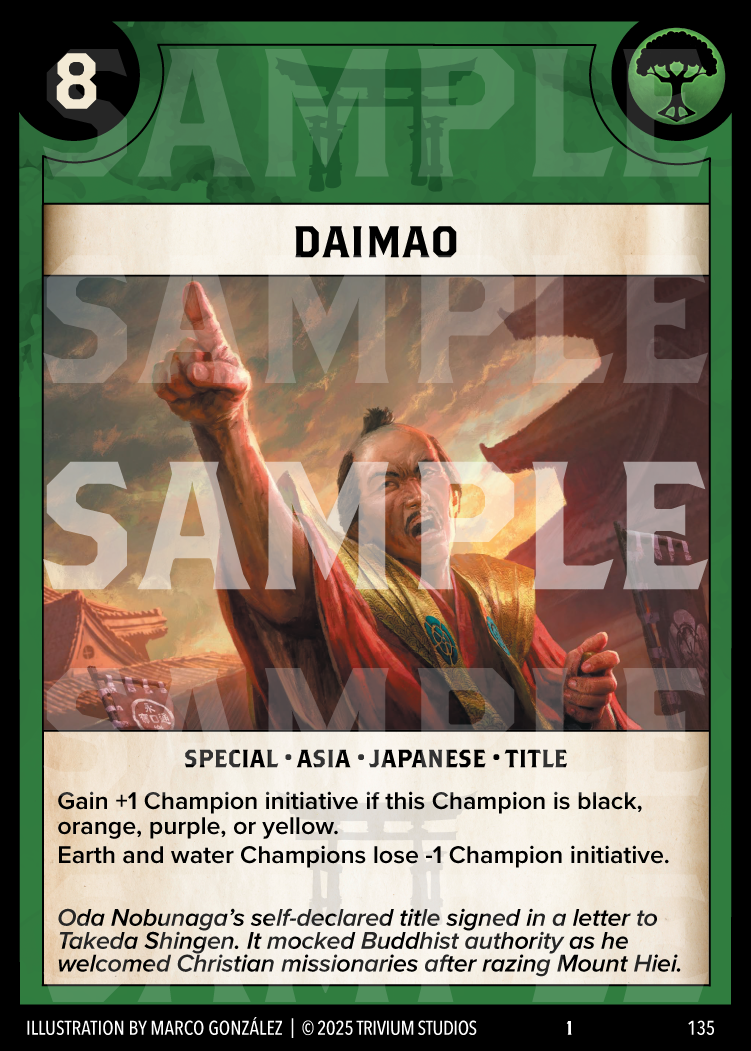
Special
Asia
Japanese
Title
Gain +1 Champion initiative if this Champion is black, orange, purple, or yellow. Earth and water Champions lose -1 Champion initiative.
Oda Nobunaga's self-declared title signed in a letter to Takeda Shingen. It mocked Buddhist authority as he welcomed Christian missionaries after razing Mount Hiei.
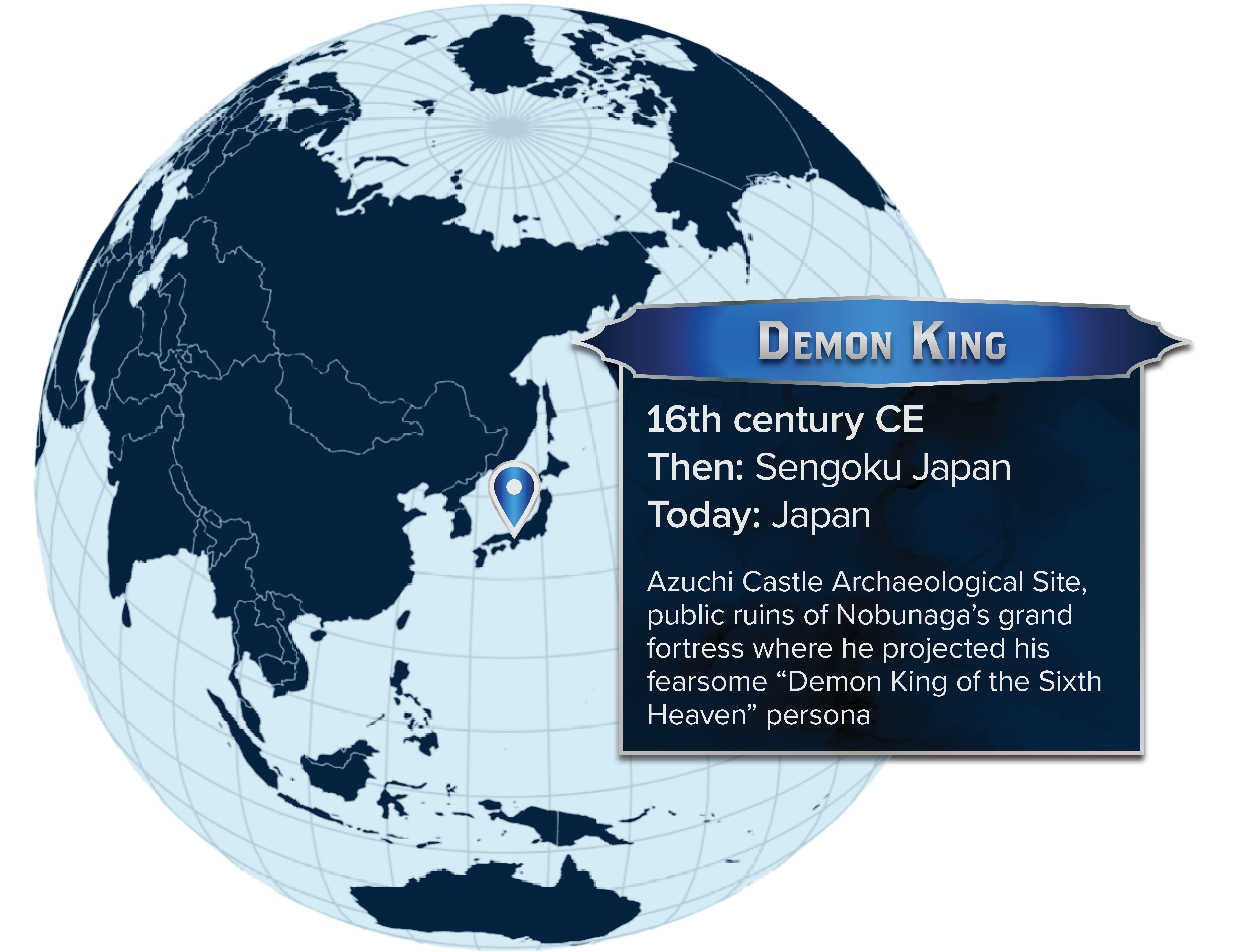
When Oda Nobunaga declared himself the “Demon King of the Sixth Heaven” (Dairokuten Maō), he wasn’t just being dramatic—he was launching a psychological warfare campaign. In Buddhist tradition, this figure is the ultimate disruptor who rules over the realm of desire and dares to challenge the gods. By claiming this title, Nobunaga was sending a clear, terrifying message to the old world: he didn’t care about their traditions, their temples, or their ancient rules. He was the man who would burn down the past to build a unified future.
This wasn’t just a nickname; it was a total rebranding of what it meant to be a leader in the Sengoku era. Nobunaga lived in a time when powerful Buddhist monasteries functioned like mini kingdoms with their own private armies of warrior monks. When he attacked these sacred sites, his enemies called him a monster. Instead of making excuses, Nobunaga leaned into the villainy. He seized the "Demon King" narrative and wore it like a badge of honor. It was a signal to every rival daimyo and rebellious monk that he was a force of nature that couldn’t be reasoned with or intimidated.
This "Demon King" persona acted as a Political Catalyst, attracting the most ambitious and unconventional minds in Japan—men like the "Saru" ("Monkey") Toyotomi Hideyoshi, who cared more about results than status. It also mirrored Nobunaga’s love for revolutionary tech. While other lords were stuck in the past, the "Demon King" was busy importing European globe-maps, wearing "bulletproof" Western armor, and organizing massive formations of peasant soldiers armed with matchlock guns. He proved that to change the world, you first must be willing to be the "bad guy" in the eyes of the people holding it back.
Today, the "Demon King" image is the bedrock of Nobunaga’s massive presence in pop culture. From epic historical dramas to video games and anime, he is almost always portrayed as a tall, imposing visionary who is completely unbound by the limits of his age. The title survives because it captures the raw, unfiltered essence of a man who realized that sometimes, you must be a destroyer before you can be a creator. He didn’t just unify Japan; he terrified it into a new era.