Encyclopedia Anachronistica


Chrono
Inspiration
Asia
Indian
Divinity
Hindu Trinity 1 of 3: Up to three Hindu Trinity cards may be used this game. Whenever this Champion wins initiative, deplete this card and gain 1 life and lose -1 DEF until the end of the round.
Seated on a lotus, Brahma surveys creation. Each face speaks a Veda, each breath stirs the cosmos, order born from divine contemplation and the turning of kalpas.
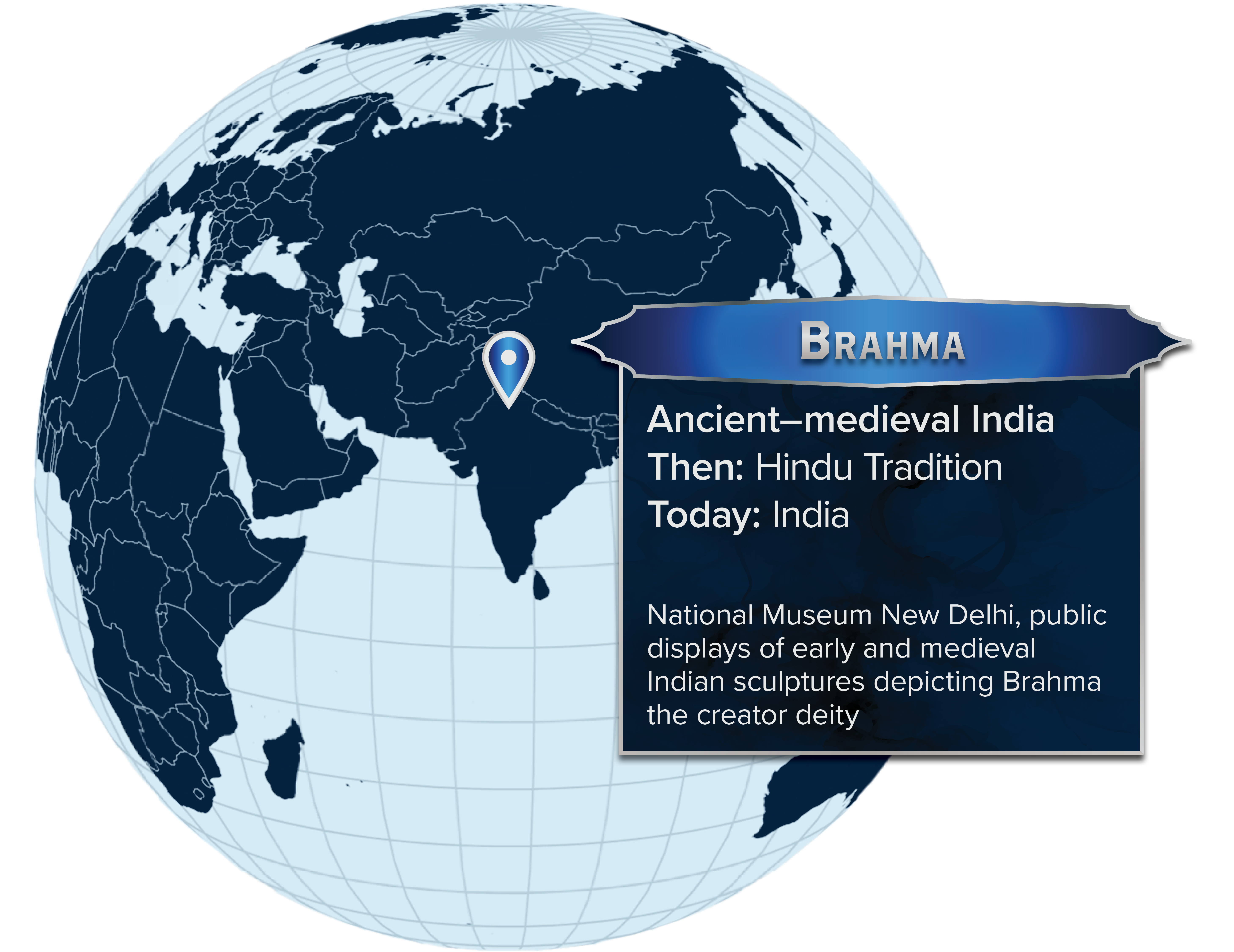
Deep in the earliest layers of South Asian history, more than three thousand years ago, the figure known as Brahma began not as a god with a face, but as a sound. In the ancient Vedic period, the universe was understood through sacred hymns and the precision of ritual. Back then, the word brahman referred to the mysterious power of the spoken word—the invisible force that held the cosmos together. As centuries passed and Indian society evolved, this abstract "ritual power" began to take on a human shape. By around 800 BCE, as philosophical thinkers sought to explain the origins of life, Brahma emerged as the "Great Architect," a personal deity associated with the birth of knowledge, speech, and order.
In the early centuries CE, the Puranas—a vast collection of mythic and historical traditions—transformed Brahma into a central figure of a divine triad. Legend depicts him with four faces, each reciting one of the four Vedas, the oldest sacred texts of India. These stories famously describe him emerging from a golden lotus to shape the world from the raw materials of existence. While these accounts are legendary, they reflect a very real historical shift: a move toward explaining the universe through organized wisdom rather than the chaotic battles of early warrior gods.
Interestingly, while Brahma was vital to the story of creation, he never became the focus of massive, widespread worship like other deities. If you were to walk through ancient India, you would find thousands of temples dedicated to the gods Vishnu or Shiva, but very few dedicated solely to Brahma. Archaeologists believe this is because his role as a creator was seen as a finished task—he had already set the world in motion, so people turned their prayers to the gods who managed their daily lives.
Despite this, Brahma’s influence traveled far beyond India’s borders, appearing in sculptures and temples from the jungles of Cambodia to the islands of Indonesia. His four faces were more than just art; they were a visual encyclopedia, representing the four directions of the compass and the four ages of time. Today, his presence in museums and ancient ruins offers a window into how early civilizations navigated the bridge between ritual and philosophy. Brahma stands as a symbol of the human search for beginnings, reminding us that every great civilization starts with an attempt to find the order hidden within the noise of the universe.