Encyclopedia Anachronistica

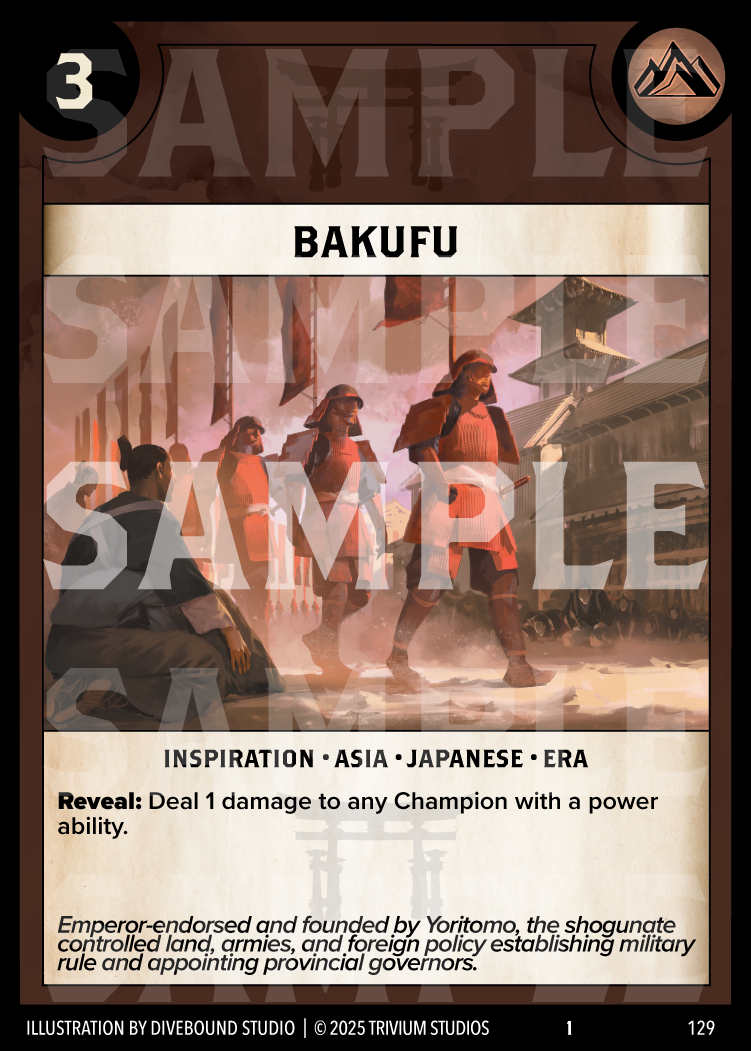
Standard
Inspiration
Asia
Japanese
Era
Reveal: Deal 1 damage to any Champion with a power ability.
Emperor-endorsed and founded by Yoritomo, the shogunate controlled land, armies, and foreign policy establishing military rule and appointing provincial governors.
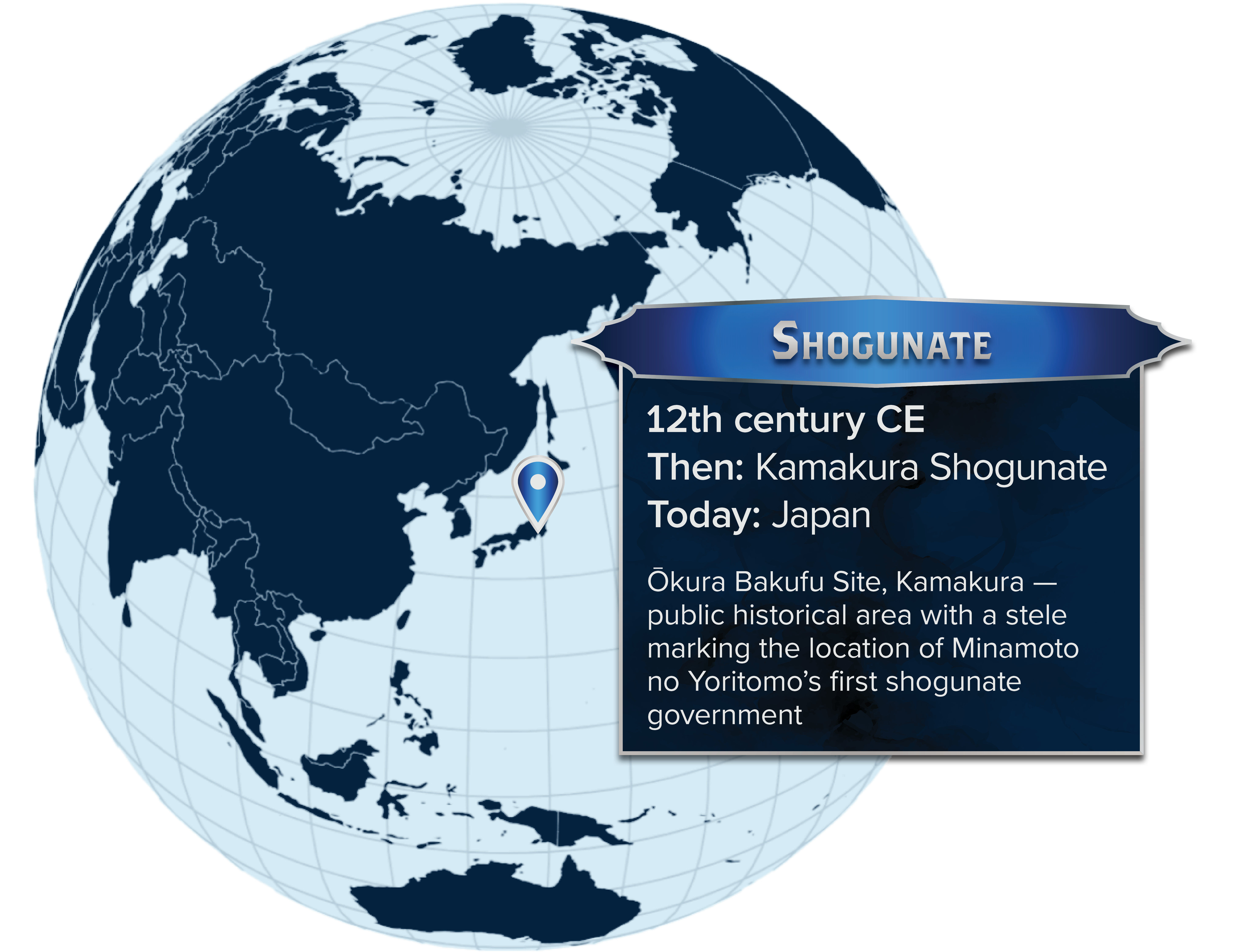
The creation of the Shogunate wasn’t something Yoritomo forged in a fire or built with stone—it was a masterpiece of political engineering that rewrote the rules of Japan. Before his rise, the Emperor in Kyoto was the center of the universe, but the real power was trapped in a web of elegant, out-of-touch aristocrats. Yoritomo saw the cracks in that old system. After crushing the Taira clan in 1192, he didn’t just take a seat at the old table; he built an entirely new house in the seaside town of Kamakura. By becoming the first Shogun, he turned the warrior class from hired muscle into the actual CEOs of the country.
This new system, known as the Bakufu (or "tent government"), worked like a high-stakes network of loyalty. Yoritomo realized he couldn’t be everywhere at once, so he appointed military governors called shugo and land stewards called jitō to act as his eyes and ears in the provinces. These weren’t soft-handed courtiers; they were battle-hardened vassals who collected taxes and kept the peace in exchange for the Shogun’s protection. It was a "handshake" government: Yoritomo provided the land and the law, and the samurai provided the loyalty. This early form of feudalism took a fractured, chaotic landscape and snapped it into a disciplined military order.
For Yoritomo, the shogunate was a solution to the chaos of the late Heian period. He knew that for his clan to survive, they needed more than just better swords; they needed a system that could outlive any single general. By moving the center of power away from the distractions of the Imperial court in Kyoto, he created a parallel government that focused on the gritty realities of ruling a nation of warriors. This wasn’t a temporary fix—it was a blueprint that would define Japanese life for nearly 700 years, lasting through three different dynasties of Shoguns until the mid-1800s.
Today, the legacy of Yoritomo’s "tent government" is etched into the very soil of Kamakura, where temples and shrines still stand as monuments to his vision. It marks the precise moment when the samurai stopped being just soldiers and started being statesmen. His innovation shows us that the most enduring power doesn’t come from winning a single battle, but from building a structure that can weather the storms of history. Yoritomo didn’t just win a war; he invented a way of life that would shape the identity of a nation for centuries.