Encyclopedia Anachronistica


Chrono
Inspiration
Europe
Greek
Divinity
All earth and metal Champions gain +1 base ATK and +1 DEF. All fire and wood Champions gain +1 weapon ATK and +1 Champion initiative.
The golden ram saved Phrixus from sacrifice, soaring to Colchis. Zeus cast it to the stars-Aries, first of the zodiac, bold herald of spring and fiery beginnings.
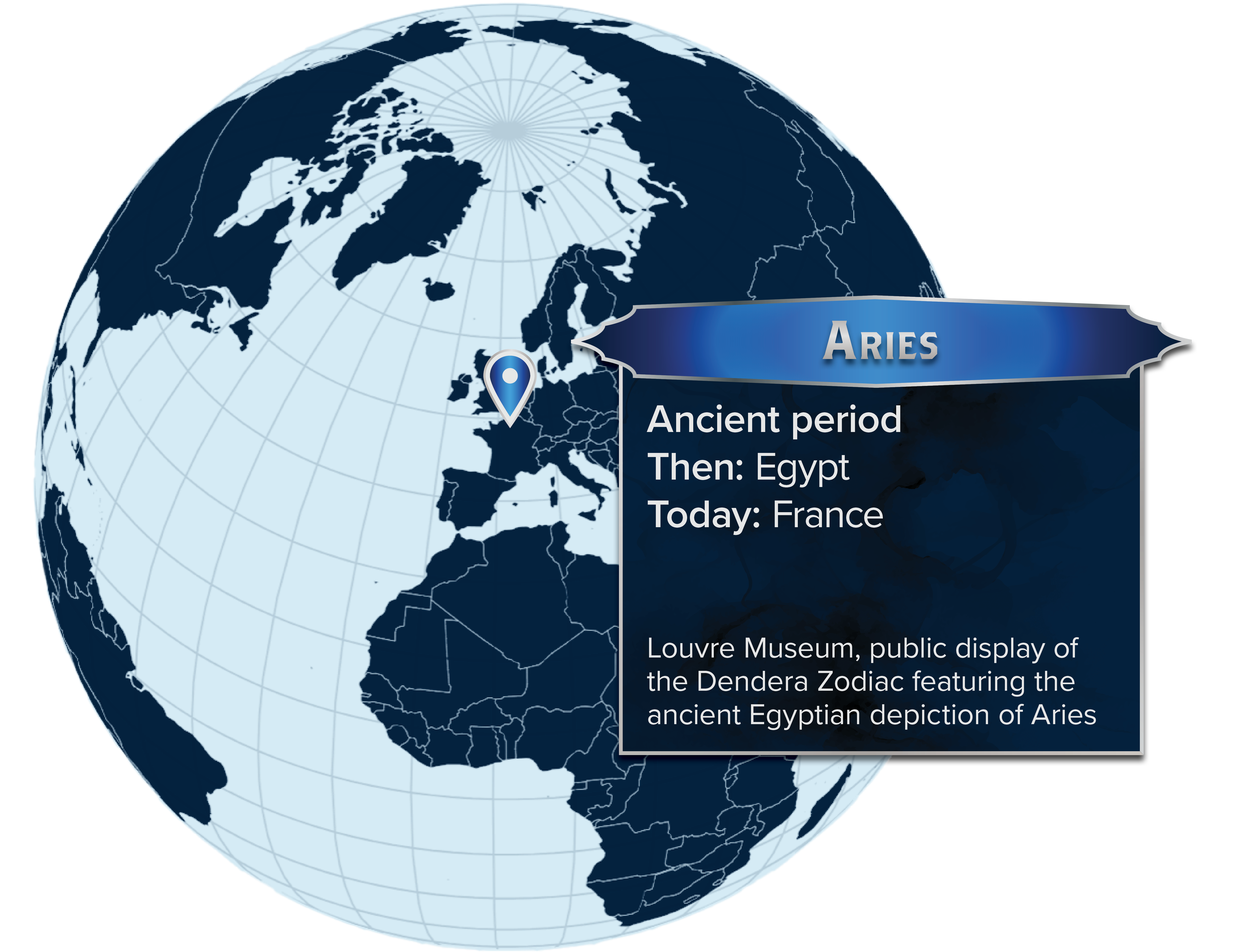
High in the spring sky, a small curve of stars marks one of the oldest stories ever told: the leap of a golden ram racing to save two children from a king’s deadly plot. The constellation we call Aries began not as a mere zodiac sign, but as a myth carried across the ancient Mediterranean, where storytellers used the night sky as a grand map of memory.
In Greek tradition, the story begins with Phrixus and Helle, the children of King Athamas. Their stepmother, driven by jealousy, convinced the king that the children had to be sacrificed to end a famine. According to legend, their true mother, the cloud-nymph Nephele, pleaded for divine help. A ram with a fleece of pure gold appeared, its wool shining like sunlight and its wings strong enough to lift both children into the air. The ram carried them eastward, but tragedy struck as they crossed the narrow strait between Europe and Asia; Helle lost her grip and fell into the waters below. To this day, that sea is known as the Hellespont in her memory.
Phrixus survived the journey and reached the distant land of Colchis. In gratitude, he sacrificed the ram and presented its Golden Fleece to King Aeëtes. This legendary prize would later spark the quest of Jason and the Argonauts, one of the most famous epic journeys in Greek mythology. Zeus eventually honored the ram’s courage by placing it among the stars, where its curved horns and forward-leaning posture still mark the beginning of the zodiac.
Long before the Greeks claimed this story, the same cluster of stars held profound meaning for other civilizations. Babylonian astronomers identified the region as the “Hired Man,” a figure tied to the agricultural calendar and the renewal of the labor year. In ancient Egypt, these stars were associated with Amun-Ra, the ram-headed god of creation and kingship. Across these diverse cultures, the arrival of Aries in the night sky signaled the return of spring, the start of planting, and the promise of new life.
Today, Aries remains one of the most recognizable constellations. Its myths appear in museums, literature, and planetarium shows, reminding viewers how ancient people used the sky to explain courage, loss, and the turning of the seasons. The constellation endures as a symbol of beginnings, a celestial marker of the moment when winter gives way to light.