Encyclopedia Anachronistica

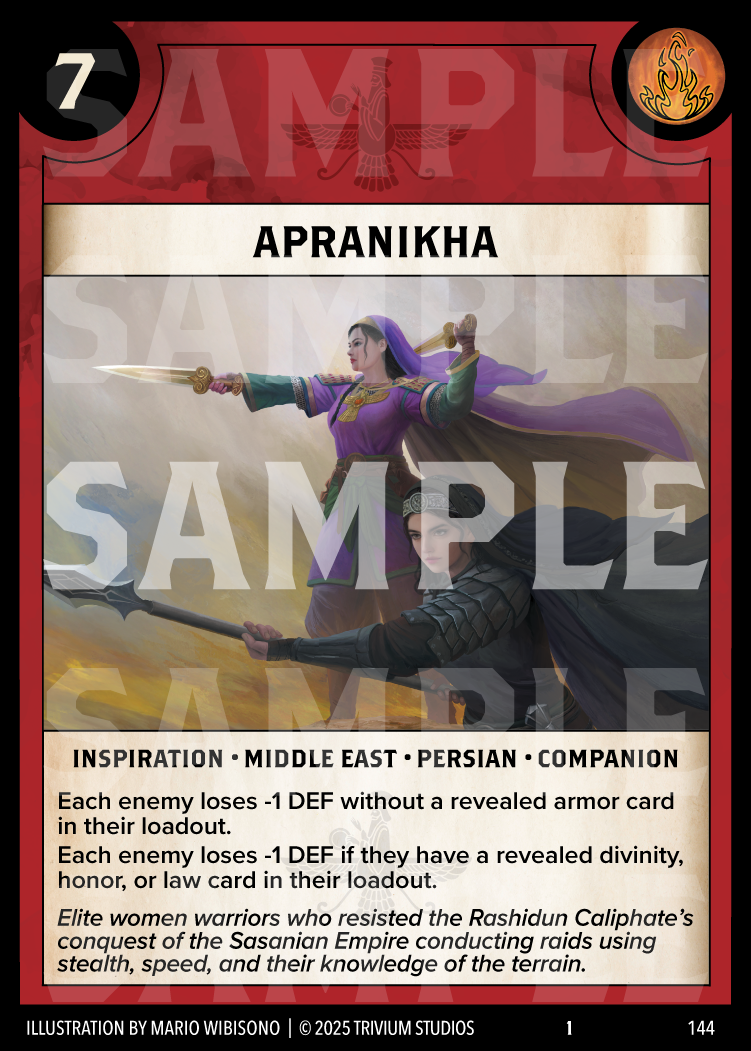
Standard
Inspiration
Middle East
Persian
Companion
Each enemy loses -1 DEF without a revealed armor card in their loadout. Each enemy loses -1 DEF if they have a revealed divinity, honor, or law card in their loadout.
Elite women warriors who resisted the Rashidun Caliphate's conquest of the Sasanian Empire conducting raids using stealth, speed, and their knowledge of the terrain.
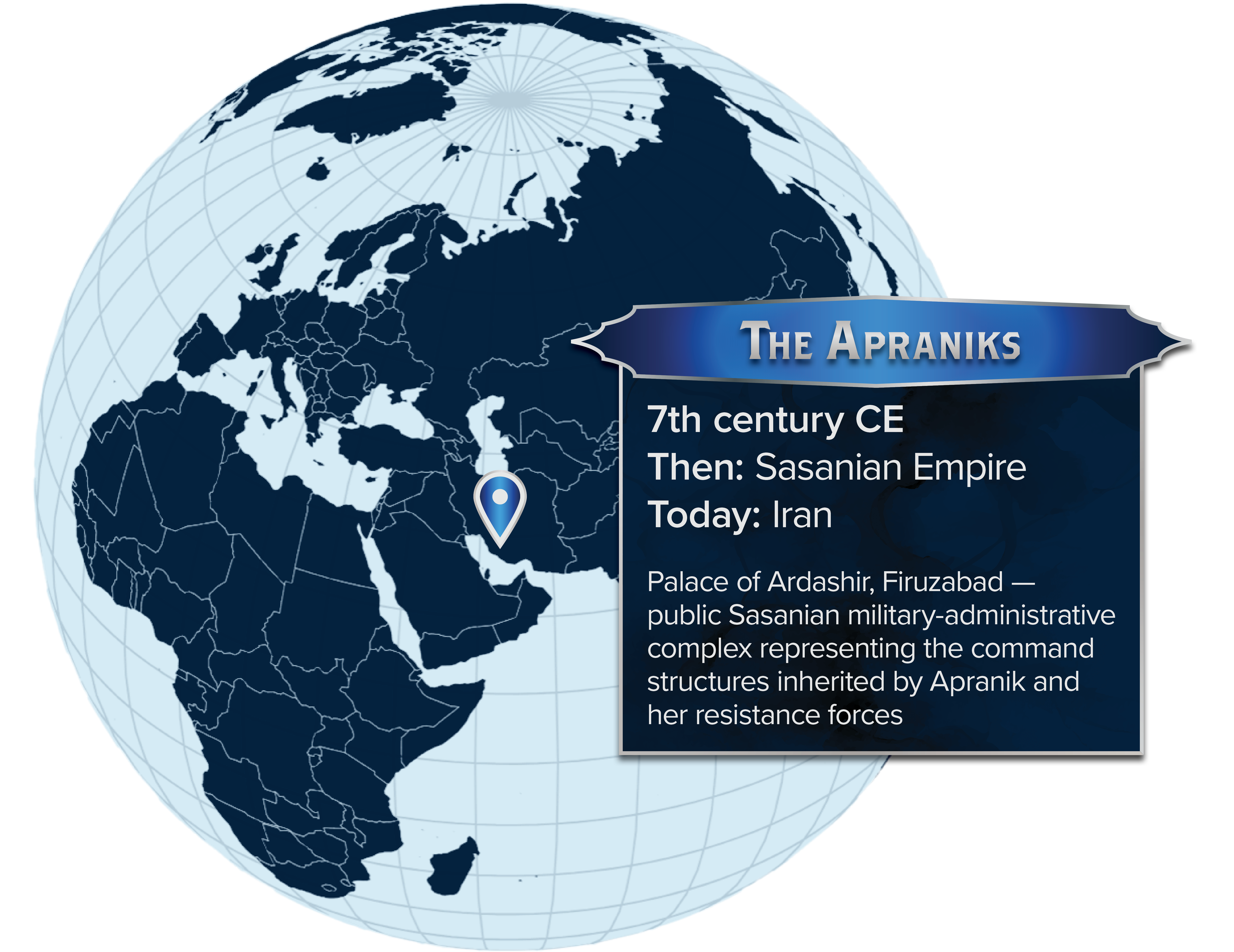
The dust of a collapsing empire rises around a line of riders—women in belted tunics, their hair bound tightly under helmets, gripping spears as their horses surge toward the front. This is the image of the Apraniks, the women fighters of the late Sasanian Empire. Named after the legendary female commander Apranik, these forces emerged in the 7th century during the desperate final years of the Persian resistance against the Arab invasions. When the professional frontiers collapsed, these women didn't retreat; they stepped into the vacuum, transforming from noblewomen and estate managers into a fierce guerrilla force. While detailed records are scarce, multiple Persian and later Islamic sources describe women taking up arms during the empire’s final years, fighting alongside regular troops when the frontiers collapsed.
The Apraniks were a unique "emergency" unit born of pure necessity. Unlike the elite Savaran—the heavy iron-clad knights who had been the backbone of Persia for centuries—the Apraniks were a flexible, mixed force of cavalry and infantry. They were often drawn from noble households and frontier communities where women were already trained in riding and hunting. Apranik herself is remembered as a general who refused to surrender after the fall of the central government, leading her troops into the mountains to wage a relentless hit-and-run campaign against the advancing armies.
In Sasanian society, women held a surprisingly high degree of legal and economic power, owning property and running businesses. This independence translated to the battlefield when the empire faced an existential threat. Archaeological evidence from late Sasanian border regions has uncovered female burials alongside swords and arrowheads, suggesting that in the "danger zones" of the empire, defense was a family business. The Apraniks represent the moment when the traditional lines of society were erased by the urgency of survival.
Today, the story of Apranik and her fighters is a powerful symbol of defiance in Iranian history and literature. While the Sasanian Empire eventually fell, the memory of these women serves as a reminder that the defense of a culture doesn't always come from the standing army—it comes from whoever is brave enough to pick up a blade when the walls come down. They remain the ultimate examples of finding strength in unexpected places when everything is on the line.