Encyclopedia Anachronistica

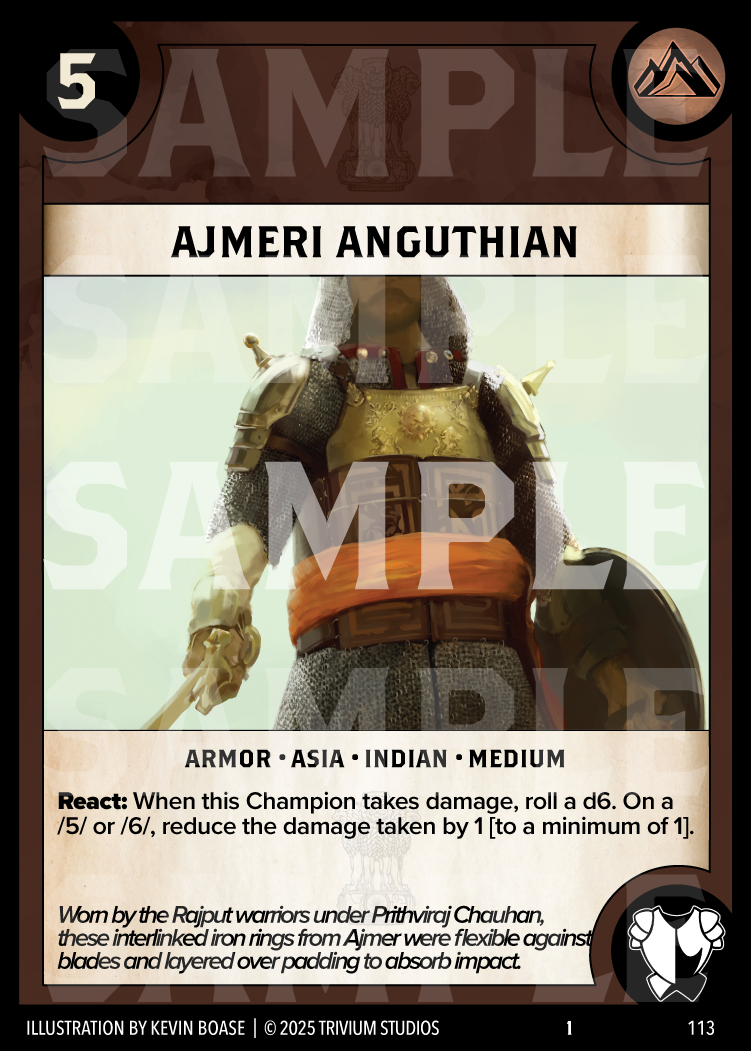
Standard
Armor
Asia
Indian
Medium
React: When this Champion takes damage, roll a d6. On a /5/ or /6/, reduce the damage taken by 1 [to a minimum of 1].
Wom by the Rajput warriors under Prithviraj Chauhan, these interlinked iron rings from Ajmer were flexible against blades and layered over padding to absorb impact.
Picture a 12th-century armor maker in Ajmer sitting by a forge, painstakingly connecting thousands of tiny, glowing iron loops. These are the Ajmeri Anguthian—not rings for the finger, but the "ring-mail" that formed the flexible, steel skin of the Rajput warrior. To create a single shirt, an armorer had to rivet or weld tens of thousands of individual metal rings into a dense, interlocking mesh. The result was a suit of armor that moved like silk but protected like stone, designed to absorb the lethal slash of a curved sword or the piercing thrust of a spear while allowing a rider to move with lightning speed in the saddle.
This chain armor was the perfect high-tech solution for Prithviraj Chauhan’s era. The Rajput and Ghurid battlefields of the late 1100s were fast and chaotic, defined by rapid cavalry charges and intense archery duels. A warrior couldn’t afford to be weighed down by clunky, solid plates of metal under the sweltering Indian sun. The Anguthian style provided a breathable, lightweight defense that was far more flexible than the scale armor used in earlier centuries. Often worn over a thick, quilted tunic to cushion the bones from the sheer force of a blow, this "zirah" (mail shirt) was the elite standard for Prithviraj’s household guards and cavalry commanders.
While no surviving suit can be definitively tied to Prithviraj’s army, archaeological finds and textual descriptions confirm that Rajput warriors used zirahs and mail-and-plate combinations. The Chauhan court at Ajmer was a major political and military center, and its armorers would have produced equipment suited to elite cavalry and household guards. Mail shirts typically reached mid-thigh, sometimes paired with padded under-jackets to cushion blows. Helmets, shields, and arm guards completed the ensemble.
The Ajmeri Anguthian also reflects the social world of Rajput warfare. Armor was expensive, requiring skilled labor and high-quality iron. Owning a well-made mail shirt signaled status and readiness for battle. For a ruler like Prithviraj—whose reputation rested on martial valor—such armor symbolized both protection and identity.
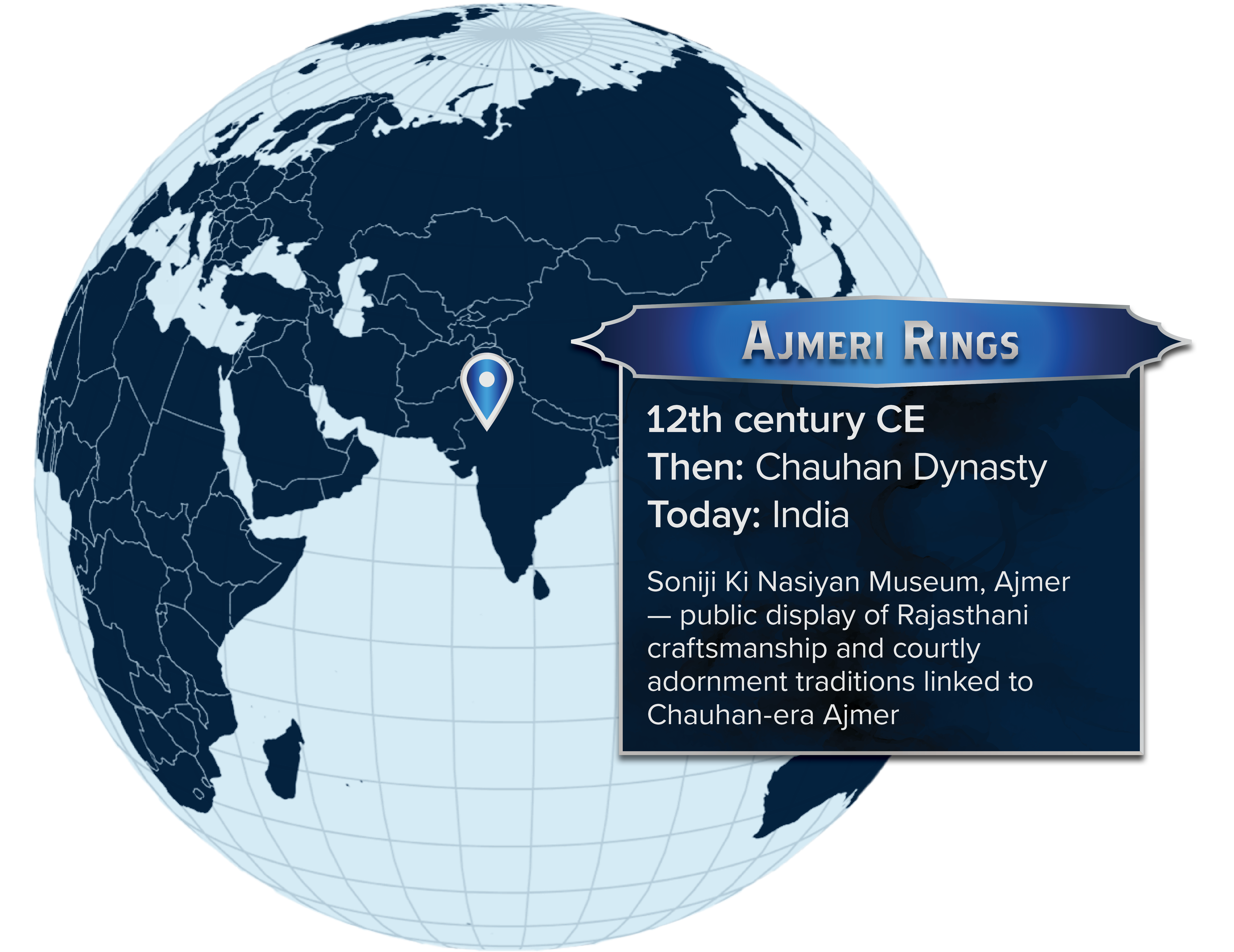
Today, you can see these interlinked masterpieces in museums across Rajasthan and Delhi, and abroad. Even though many surviving pieces come from later centuries, they use the same ancient "ring-by-ring" techniques that were used in the 12th century. Looking closely at the mesh, you can almost hear the metallic chime of the rings clinking together as a soldier mounts his horse. It serves as a gritty reminder that the legends of Prithviraj Chauhan weren't just built on songs and poems, but on the hard labor of craftsmen who forged the safety of an empire, one ring at a time.